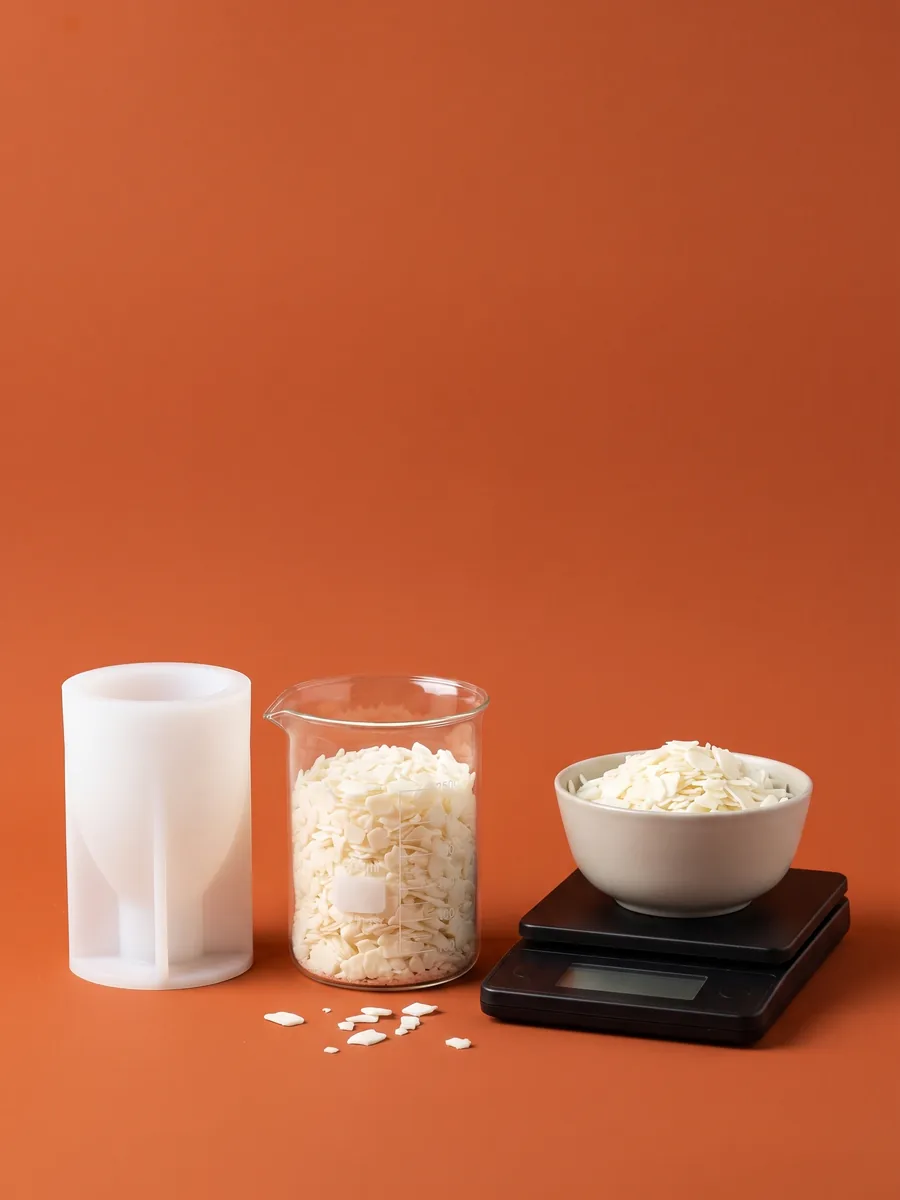
Making Candles in Silicone Molds: Pouring, Wicks, Unmolding
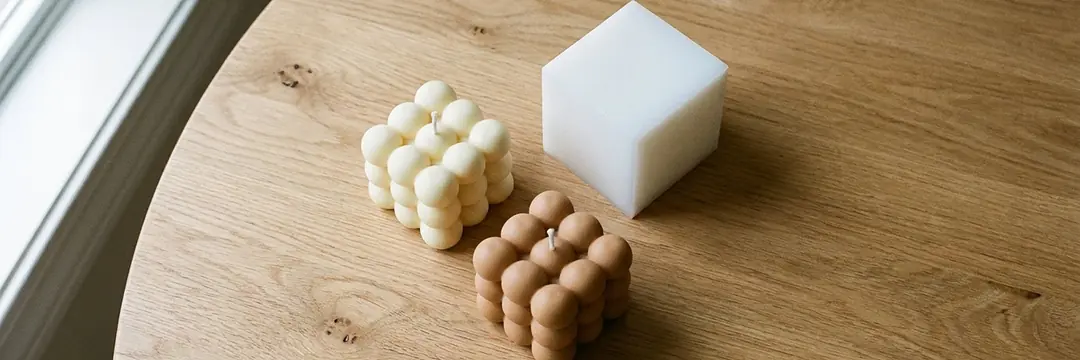
Making candles in a silicone mold takes three skills that a jar candle doesn't: a hard wax suited to the mold, a wick that runs through the mold, and getting the candle out without tearing or breaking it. In this guide we explain the method we use for bubble, spiral and figure molds, with grams, temperatures and the most common mistakes.
In short
- A hard wax for molded candles: Pillar Soy Wax or paraffin + 10% stearic acid. Jar wax sticks in the mold.
- Add the fragrance oil off the heat at 80–85 °C; pour Pillar Soy Wax at 55–65 °C.
- Wax amount = grams of water the mold holds × 0.82. The Large Bubble mold holds about 135 g.
- Fragrance oil in molded candles is 6–8%; for the second pour, set aside 10% extra wax.
- If the candle sticks, chill it in the fridge for 5 minutes; the freezer cracks the candle.
- Wash the mold in warm soapy water; no dishwasher, no solvents; store it flat and out of the sun.
In this guide
- Which wax goes in a silicone mold?
- How much wax does a mold hold?
- How do you wick a mold?
- Pouring candles in a silicone mold, step by step
- What temperature do you pour into the mold?
- When and how does the candle come out?
- Colored and layered molded candles
- Bubbles, sinking, a candle that won't unmold: fixes
- How do you clean and store a silicone mold?
- Frequently asked questions
Which wax goes in a silicone mold?
A demolded candle has no container: it holds its own shape. Soft jar-candle wax sticks to the mold and deforms during removal. There are two suitable options for a silicone mold.
| Pillar Soy Wax | Paraffin + stearic acid | |
|---|---|---|
| Source | Plant-based (soy) | Petroleum |
| Form | Pellets, easy to weigh | Pellets or block |
| Pouring temperature | 55–65 °C | About 70 °C |
| Additive | Not needed | 10% stearic acid: 100 g per 1 kg |
| Look | Creamy, matte finish; pastel colors | Shinier finish; vivid colors |
| When to choose it? | A molded candle with plant-based ingredients | Vivid color and sharp detail |
Stearic acid hardens paraffin, makes the candle more opaque and makes unmolding easier. The ratio recommended on our product page is 10%; overseas manufacturers suggest starting at 5%, and too much can make the candle brittle. For details, see our paraffin guide and our soy wax types article.
Golden Soya Wax is a soft container wax that melts at about 51–55 °C; it gets crushed when you unmold it and its surface stays oily. Gel candle wax is made to burn inside a container; gel taken out of a mold does not hold its shape.
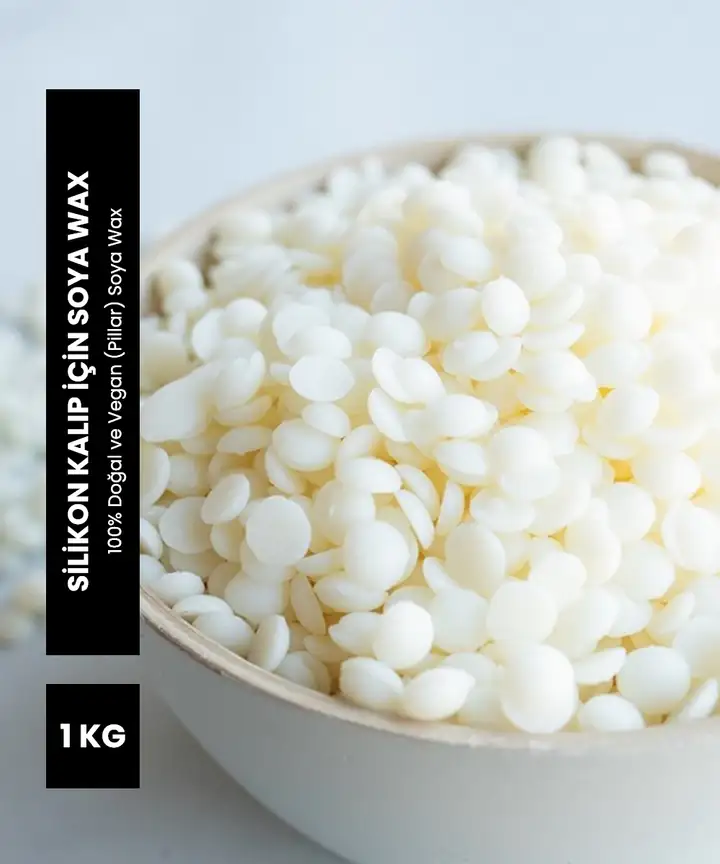 Silikon Kalıp İçin Soya Wax 1 Kg (Pillar Soy Wax)View
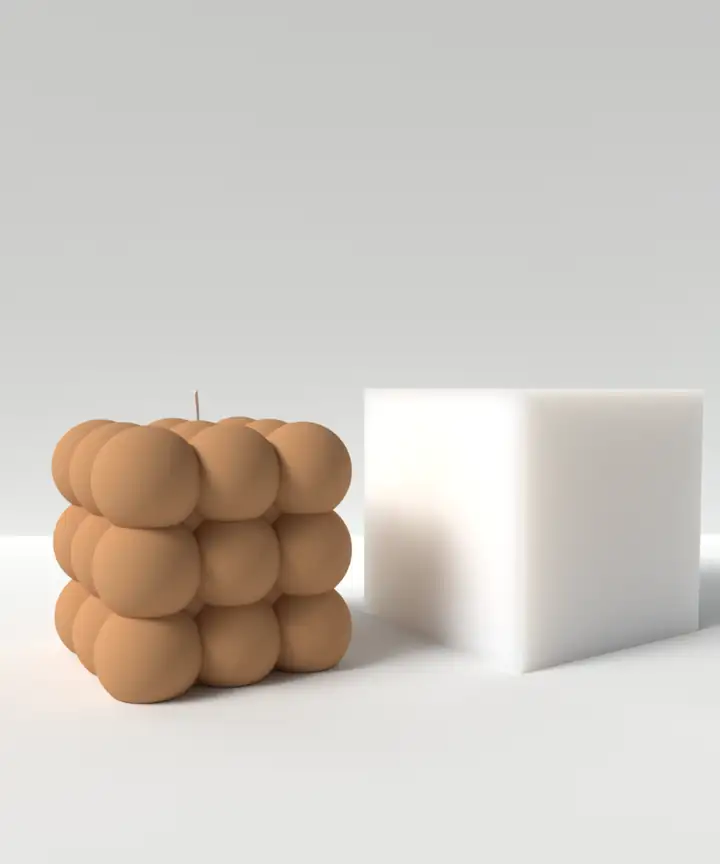 Büyük Bubble Mum silikon KalıbıView
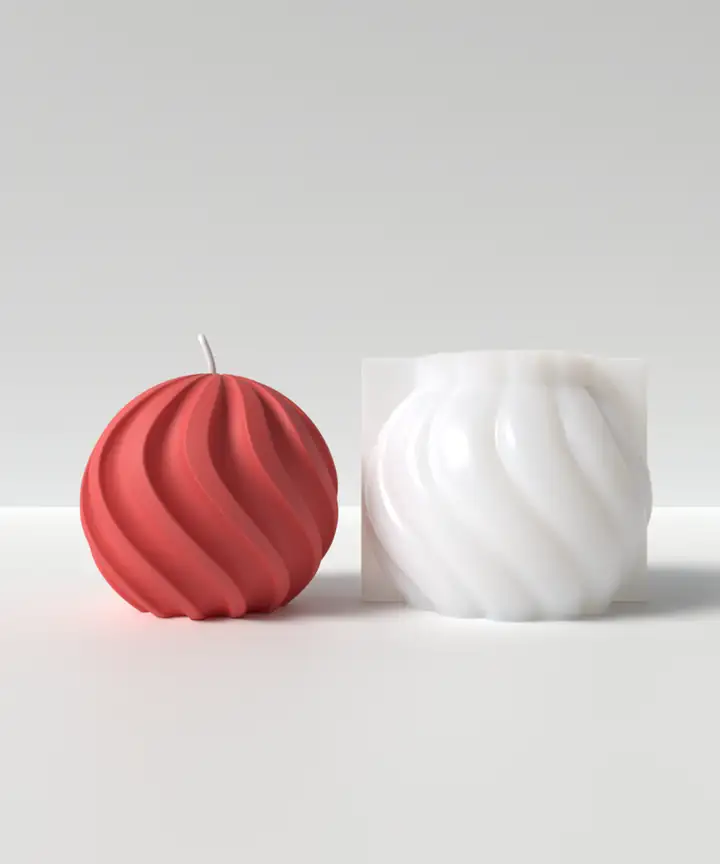 Swiral Küre Mum Silikon KalıbıView
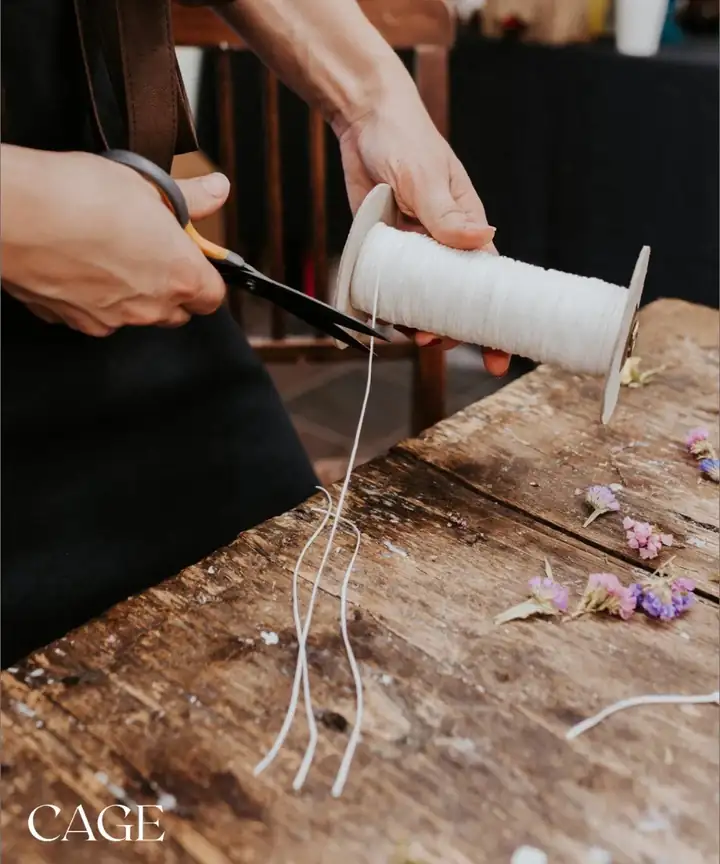 Mumlanmış İnce Mum Fitili 10 MetreView
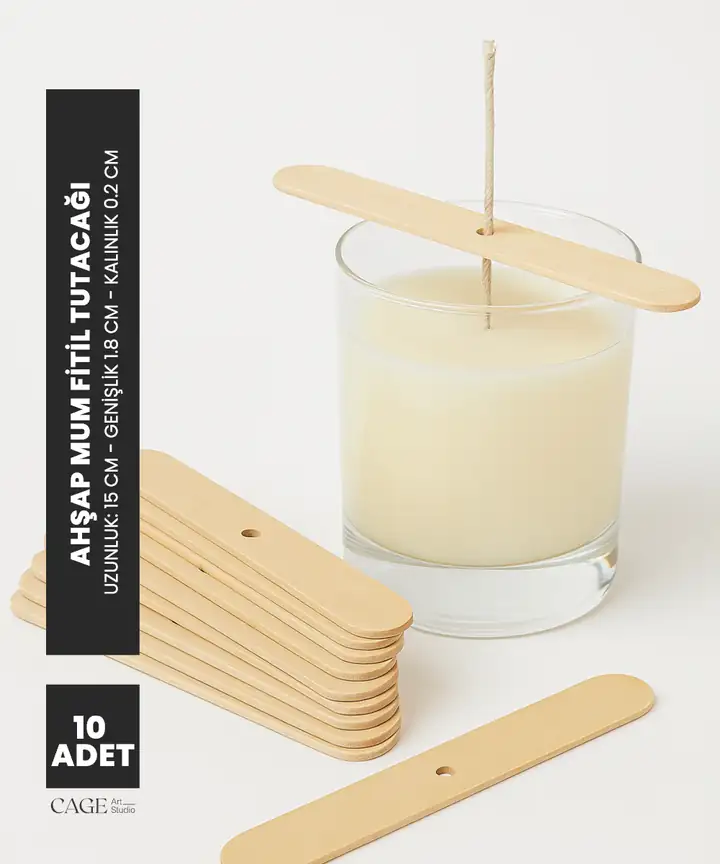 Ahşap İp Fitil TutucuView
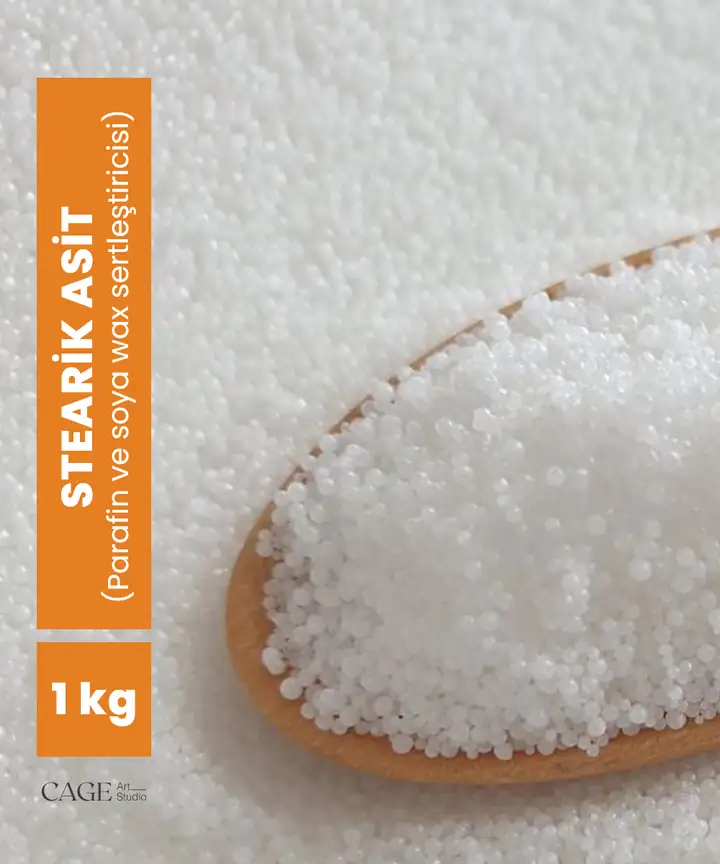 Stearik Asit - Starin 1 KgView
If you are unsure which mold to start with, browse our Christmas candle and gift candle ideas. Compare rigid and flexible molds in our polycarbonate versus silicone mold guide.
How much wax does a mold hold?
Our product pages list each mold’s estimated candle capacity. If it is missing, tare the mold on a scale, tape over the wick hole and fill it to the rim with water. The water weight in grams gives the mold volume. Wax is lighter than water, so the required wax weight is about 0.82 times the water weight; our Calculator and silicone mold candle calculator do this for you. Use the candles per 1 kg of wax table for batches and our bubble candle tutorial for that model.
Next, dry the mold completely; any leftover water droplet will spatter in hot wax. The table uses 6% fragrance oil: divide the total by 1.06 and the result is the wax; the rest is fragrance oil.
| Mold | Object size | Estimated candle | Wax (at 6% fragrance oil) | Fragrance oil |
|---|---|---|---|---|
| Mini Bubble | 3.5 × 3.5 cm | ~47 g | 44 g | 3 g |
| Large Bubble | 6 × 6 cm | ~135 g | 127 g | 8 g |
| U-Shaped Candle | 9 cm long | ~165 g | 156 g | 9 g |
| Swirl Sphere | 7.3 × 8 cm | ~184 g | 174 g | 10 g |
| Large Spiral | 18 × 9 cm | ~557 g | 525 g | 32 g |
You need wax for the second pour too. Wax set aside from the same batch matches the color and scent exactly; a separate batch shows a color difference.
See how to use silicone molds for first use, closing cuts with tape or bands and working with different materials.
How do you wick a mold?
Molded candles don't use pre-tabbed wicks the way jar candles do. The candle is poured upside down: the opening of the mold is the base of the candle, and the small hole at the bottom of the mold is the top of the candle. The wick passes through this hole; use a pre-waxed thin wick for it.
- 1
Open the hole
Open the wick hole at the bottom of the mold with a thick needle or a thin wooden skewer. Go slowly; sudden force can tear the silicone.
- 2
Thread the wick
Cut the wick a few centimeters longer than the mold and thread it through the hole.
- 3
Seal the hole
Fasten the outer end to the mold with a small piece of tape or wick stickers. A little wax may seep out of the hole, so fill the mold on a tray.
- 4
Center it and pull it taut
Pass the end at the opening through a wooden wick holder and pull it lightly taut. A loose wick curls inside the candle and the candle burns crooked.
- 5
Close split molds
Our Taper Candle M1–M11 and Ghost Taper Candle molds are shipped with a side cut; all our other molds come uncut. Wrap a cut mold tightly with a rubber band or packing tape; otherwise the wax runs out through the seam.
The widest part of the candle determines the wick thickness; to choose one, see our guide How to Choose a Candle Wick.
Pouring candles in a silicone mold, step by step
The steps below are the same for Pillar Soy Wax and paraffin; only the pouring temperature changes. Melting methods are covered in detail in our how to melt candle wax article.
- 1
Prepare the mold
Wash the mold and dry it completely. Thread the wick, close split molds with a rubber band, and set the mold on a flat tray.
- 2
Weigh and melt the wax
Weigh 10% more than the amount you need; the extra is for the second pour. Heat it to 80–85 °C in a double boiler or melting pot.
- 3
Add the stearic acid and dye
If you use paraffin, melt the stearic acid together with the paraffin. Add the dye to fully melted wax and stir until no granules remain; check the color by dripping some onto a white plate.
- 4
Add the fragrance oil
Take the pot off the heat, add the weighed fragrance oil, and stir slowly for 1–2 minutes without whipping up foam. 6–8% fragrance oil is enough for molded candles.
- 5
Wait for the pouring temperature
Pour Pillar Soy Wax at 55–65 °C and paraffin at about 70 °C; don't guess without a thermometer.
- 6
Pour slowly and tap
Pour the wax in a thin stream along the side of the mold. If you're using the mold for the first time, pour about 2.5 cm first and check for leaks. After pouring, tap the outside of the mold lightly so the bubbles rise to the surface.
- 7
Open a vent hole
Once a thin skin forms on the surface, poke a few holes with a thin skewer around the wick, away from the edges; this lets the air in the cavity inside escape. If the area around the wick isn't sinking, skip this step.
- 8
Make the second pour
When the area around the wick sinks, heat the wax you set aside to about 3 °C hotter than the first pour and fill only up to the level of the first pour.
- 9
Cool, unmold, rest
Let the candle cool completely at room temperature in a spot with no drafts, and unmold it without waiting days. Trim the wick to 0.5 cm at the top and flush at the base. Wait at least 24 hours before burning.
What temperature do you pour into the mold?
In molded candles, temperature determines both the surface and how easily the candle comes out of the mold. Wax poured too hot shrinks more as it cools and sinks deep in the middle. Wax poured too cold shows bubbles, surface blotches and trouble unmolding. Pillar Soy Wax is usually poured at 55–65 °C; if the room is cold, you can go up to 70 °C.
| Stage | Pillar Soy Wax | Paraffin + stearic acid |
|---|---|---|
| Melting | Heat to 80–85 °C | 80–85 °C; don't exceed 93 °C |
| Dye | Into fully melted wax, at 80–85 °C | Into fully melted wax, at 80–85 °C |
| Fragrance oil | Off the heat, at 80–85 °C | Off the heat, at 80–85 °C |
| First pour | 55–65 °C | About 70 °C |
| Second pour | About 3 °C hotter than the first pour | About 3 °C hotter than the first pour |
If you see step-like lines or matte patches on the paraffin surface, pour a few degrees hotter; overseas makers of pillar paraffin use 77–82 °C for a glossy surface.
Keep the mold away from stoves, ovens and flames. The plastic supports supplied with some molds are not heat resistant.
When and how does the candle come out?
How many hours until the candle comes out of the mold? With Pillar Soy Wax, usually after 3–5 hours; the time depends on the mold size. To be sure, check these three signs:
The outside of the mold doesn't feel warm to your hand; it's at room temperature.
The surface at the opening of the mold, which is the base of the candle, leaves no mark when you press it with a fingernail.
The surface of the second pour has also hardened completely, with no soft center.
Don't leave the candle in the mold for days; this habit shortens the life of the mold.
Getting it out without tearing or breaking it
- 1
Loosen the edges
Stretch the opening of the mold outward and separate it from the candle; once air gets in, the vacuum effect is gone.
- 2
Peel the mold off the candle
Instead of pulling the candle out of the mold, peel the mold off over the candle by rolling it back, like taking off a sock. You can use the wick for a little support, but don't pull the candle out by hanging it from the wick.
- 3
Open it at the seam
On split molds, remove the rubber band and open the seam. If a mold without a seam keeps fighting you, you can cut a small, permanent slit in the back with a utility knife.
- 4
Chill briefly if it sticks
If the candle still won't let go, put the mold in the fridge for about 5 minutes; the wax shrinks a little more and releases. Don't put it in the freezer: sudden cooling cracks the candle.
In a candle that is still warm inside, thin parts (a swan's neck, leaf edges, the tips of figures) break off with the mold. With detailed figures, waiting is always cheaper than pouring again.
Colored and layered molded candles
10 g of granule candle dye colors about 10–15 kg of wax; 0.7–1 g is enough for 1 kg of wax. Start with a few granules, and freeze a few drops on a white plate to see the true color; melted wax always looks darker.
Layered molded candles
Prepare a separate pot for each color. Pour the second color once the surface of the first layer has hardened enough to carry the new wax, but while the layer is still warm; this way the layers fuse together. A layer that has cooled completely can separate and crack, while a color poured too hot melts the one below and they mix. The first color you pour appears on top once the candle is turned over.
Bubbles, sinking, a candle that won't unmold: fixes
Air bubbles and holes on the surface
Sinking in the middle or around the wick
The candle won't come out of the mold
For more problems and fixes, see our candle making tips article.
Choose a method for the residue left after casting by following the cleaning and storage steps in our silicone mold cleaning guide.
How do you clean and store a silicone mold?
Wax doesn't wear away a mold's fine detail; abrasive materials like concrete wear the detail down faster. As we note on our product pages, you can get hundreds of pieces out of one mold; the condition is proper cleaning and storage.
First wipe off residue with a paper towel. Then wash with warm water and a little dish soap, using a soft sponge or cloth. For stubborn residue, soak the mold in soapy water for at least 30 minutes.
Dishwashers, hard brushes, metal pads, solvents and similar chemicals. These scratch the surface of silicone or damage its structure.
Rinse with plenty of water; detergent residue leaves marks on the next candle. Dry with a clean cloth and don't dry it in the sun.
Store it on a flat surface in its natural shape. Don't stack molds on top of each other or squeeze them into a bag. A cool, dry shelf out of the sun is ideal.
If the mold no longer flexes like it used to or its thin edges are cracking, it's time to replace it. Our molds are not for food use. Details are in our mold use & care guide. If the shape you want isn't in the catalog, you can have a mold of your own design made with our custom silicone mold service.
Silicone releases the candle on its own. Oil-based release agents and petroleum jelly can make silicone swell and soften. If candles start sticking in a heavily used mold, clean and dry it thoroughly and switch to a wax with stearic acid or one made for molds.
Frequently asked questions
What wax can you use in silicone molds?
A candle that comes out of a mold has to hold its shape, so use a hard wax: Pillar Soy Wax for Silicone Molds, or paraffin with 100 g of stearic acid added per 1 kg. Jar waxes such as Golden and Natural Soy Wax, and gel candle wax, are not suitable for molds.
At what temperature do you pour soy wax into a mold?
Pillar Soy Wax is usually poured at 55–65 °C; if the room is cold, you can go up to 70 °C. Heat the wax to 80–85 °C, add the fragrance oil off the heat, then wait for it to cool to the pouring temperature. The working temperature for paraffin pellets is about 70 °C.
How long to leave a candle in the mold before removing it?
With Pillar Soy Wax, usually after 3–5 hours; the time depends on the mold size. Unmold when the mold doesn't feel warm to your hand and the base of the candle is hard. A 47 g mini bubble cools much faster than a 557 g spiral. Don't leave the candle in the mold for days; wait at least 24 hours before burning it.
Why does the candle break when I take it out of the mold?
The most common causes are unmolding the candle while it's hot, using a soft wax made for jars, and cooling the candle quickly in the freezer. Peel the mold off the candle; if it sticks, chill it in the fridge for about 5 minutes.
How much wax does a bubble candle take?
Our Large Bubble mold (6 × 6 cm) takes about 135 g and the Mini Bubble (3.5 × 3.5 cm) about 47 g of wax. For another mold, fill it with water and multiply the grams of water by 0.82.
Do you grease a candle mold?
No. Silicone releases the candle on its own; no mold release is needed for candles. Petroleum jelly and oil-based release agents can make silicone swell and soften, and they also leave marks on the surface of the candle.
Pick your mold, and the rest comes in one order
Candle molds, Pillar Soy Wax, wicks, stearic acid and fragrance oil: all in one order, shipped in 1–3 business days.