How Many Candles from 1 kg Soy Wax? Paraffin and Gel
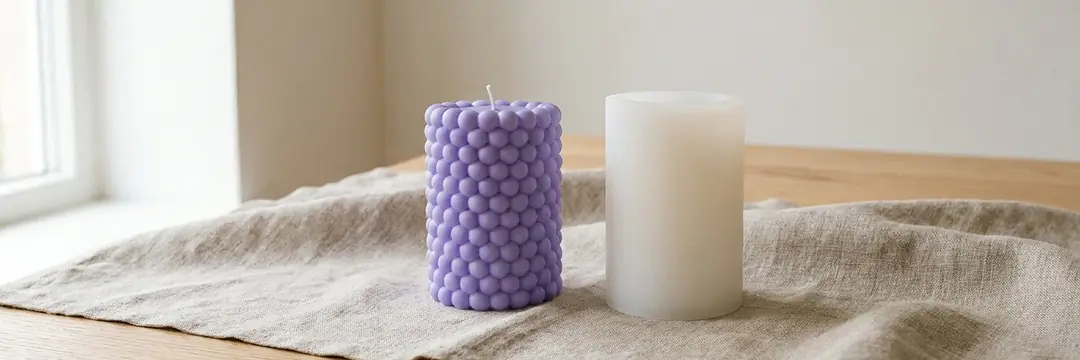
From 1 kg of soy wax, you can make 21 Mini Bubble candles at approximately 47 g each, or 7 Large Bubble candles at approximately 135 g each, excluding fragrance and waste. Actual yield depends on fill weight. Account separately for added fragrance, leftover wax and a second pour; confirm capacity with a test casting.
In short
- 1 kg = 1,000 g of wax; without fragrance or waste, the quantity is 1,000 ÷ grams per candle.
- Mini Bubble ~47 g: 21 full candles; Large Bubble ~135 g: 7 full candles.
- Fragrance is calculated at 6–10% of the wax weight; at 8%, use 1 kg wax + 80 g fragrance oil.
- The volume table uses the mold guide's water weight × 0.82 estimate, not an exact density.
- The example 5% waste allowance is neither a guarantee nor an industry average; weigh your own losses.
How many candles does 1 kg of soy wax make?
First identify what your 1 kg product contains: plain wax or a blend with fragrance already added? Adding fragrance to plain wax increases the total mass. A ready-made blend already includes fragrance, so adding the same percentage again misrepresents both the quantity and the recipe.
A fractional result does not mean you have another full candle. For example, 1,000 ÷ 135 is about 7.4: you can pour 7 candles, with 55 g left over. Save that remainder for a second pour or a later batch of the same recipe; do not combine different colors and fragrances without keeping records.
How many ml is 1 kg of soy wax?
Grams express weight and ml volume. Our mold guide estimates wax using water weight × 0.82. Reversing it gives 1,000 ÷ 0.82 ≈ 1,220 ml, about 1.22 liters of water-measured mold volume. This is not an exact molten-wax volume or density for every product; verify your formula by weighing a sample.
Tare the mold on your scale and fill it with water to the intended fill level. The water weight in grams approximately equals its volume in ml. Empty the water and dry the mold completely. Then pour and weigh a test candle. Water gives a preliminary estimate; the cooled candle's measured weight is the final reference.
How much wax fills a 200 ml or 300 cc jar?
The table's volume is the amount you actually fill. A jar name may state nominal capacity, brimful volume or recommended candle capacity; check the fill line separately. Approximate weights below use water weight × 0.82 and must be remeasured for fragranced mixtures.
| Fill volume | Approximate fill weight | Full candles from 1 kg of blend |
|---|---|---|
| 100 ml | 82 g | 12 |
| 150 ml | 123 g | 8 |
| 200 ml | 164 g | 6 |
| 250 ml | 205 g | 4 |
| 300 ml / 300 cc | 246 g | 4 |
Our 100 cc amber jar description gives an approximate candle capacity of 75 g, and the 250 cc version gives approximately 190 g. These are not errors that invalidate the table: usable fill level and recipe differ. Start with the product's own weight information.
Find the procedure for container candles in our soy candle guide. Assess wick thickness against the jar's inside diameter rather than its height; calculating quantities alone does not select the right wick.
How much wax does a mold hold?
The capacities below come from the “Estimated candle capacity” lines in our mold descriptions. The final column is for 1,000 g of unscented wax, with no allowance for waste or a second pour. Do not multiply the mold's outside dimensions to estimate capacity: recesses and cavities change the actual volume.
| Mold | Estimated candle capacity | 1 kg wax: full candles |
|---|---|---|
| Mini Bubble | ~47 g | 21 |
| Large Bubble | ~135 g | 7 |
| Bubble Pumpkin | ~146 g | 6 |
| Cylinder Bubble | ~190 g | 5 |
| Small Heart | ~49 g | 20 |
| Heart | ~96 g | 10 |
| Gift Box | ~138 g | 7 |
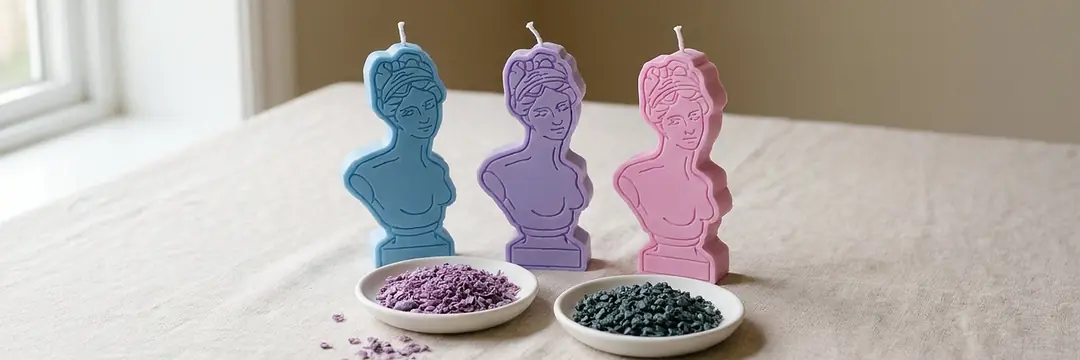
| Venus | ~49 g | 20 |
| Eric Gill Sculpture | ~106 g | 9 |
| Medium Pillar | ~393 g | 2 |
| Large Spiral | ~557 g | 1 |
| Lampshade | ~83 g | 12 |
Filling the same mold with another material changes the weight. The 47 g figure here does not indicate how much stone powder or plaster you need. After choosing your mold, check your plan using the Calculator and Silicone Mold Wax Calculator pages.
How do you calculate fragrance and waste?
| Wax | Fragrance oil ratio | Fragrance oil | Total blend |
|---|---|---|---|
| 1,000 g | %6 | 60 g | 1,060 g |
| 1,000 g | %8 | 80 g | 1,080 g |
| 1,000 g | %10 | 100 g | 1,100 g |
To work backward from the total fill, use wax = total ÷ (1 + load). At 8%, the divisor is 1.08. Setting aside 8% of the total fill as fragrance is a different calculation. Follow the lower of the permitted limits for the wax and fragrance; more fragrance does not guarantee a better result.
Waste includes blend left in the pot or lost during pouring. With an example loss of 5%, usable blend is 95% of what you prepare, so divide the target fill by 0.95. If the remainder can be reused, record it as material for the next batch rather than a loss. Do not count blend reserved for a second pour twice as waste.
How do you calculate wax for a target quantity?
- 1
Verify the capacity
Start with the approximate 47 g capacity in the Mini Bubble product description. Weigh a test casting; if your blend gives a different result, use the measured weight in your next calculation.
- 2
Calculate the total fill
For 20 candles, 20 × 47 = 940 g total fill. This is the combined weight of wax and fragrance; it excludes the wick, packaging and mold.
- 3
Separate wax and fragrance
For an 8% fragrance load, weigh approximately 870.4 g wax: 940 ÷ 1.08. Fragrance is 870.4 × 0.08 = approximately 69.6 g. Together they still total 940 g.
- 4
Plan waste separately
Assuming, for this example, that 5% of the blend is lost, prepare 940 ÷ 0.95 = approximately 989.5 g blend: 916.2 g wax and 73.3 g fragrance. Measure the actual waste in your own process.
- 5
Record the result
Record the number of intact candles, leftover blend and material remaining in the pot. Adjust the next batch from this record; a calculator result does not replace a weighed sample.
Which wax and package size should you choose?
Choose Pillar Soy Wax for molded candles and Golden Soya Wax for jars. Package size does not change the recipe; it simply covers your planned total wax requirement. Checking quantities with a small package first and continuing with the same recipe helps reduce unused material.
 Silikon Kalıp İçin Soya Wax 1 Kg (Pillar Soy Wax)View
 Silikon Kalıp İçin Soya Wax 5 Kg (Pillar Soy Wax)View
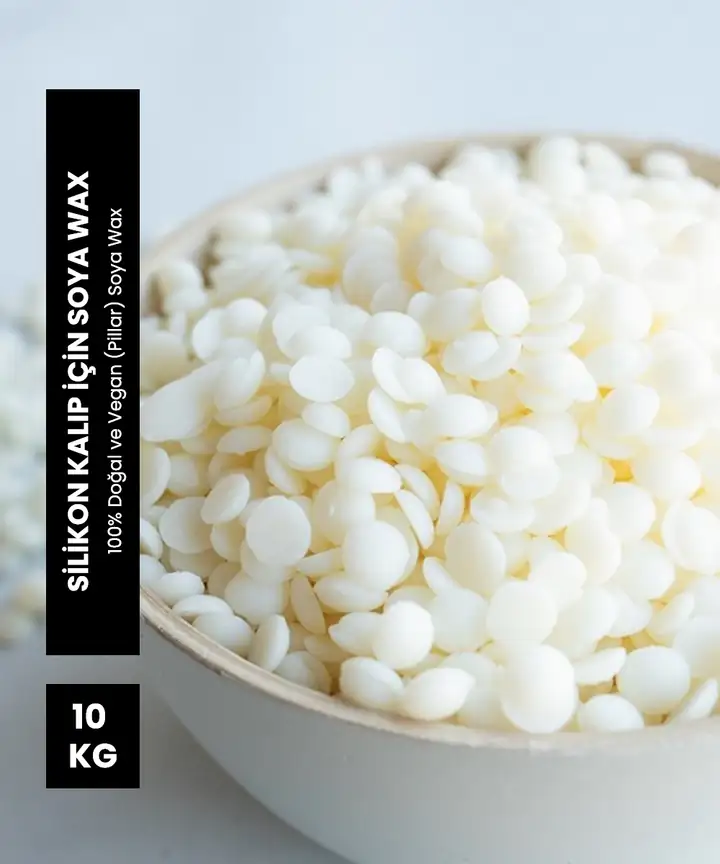 Silikon Kalıp İçin Soya Wax 10 Kg (Pillar Soy Wax)View
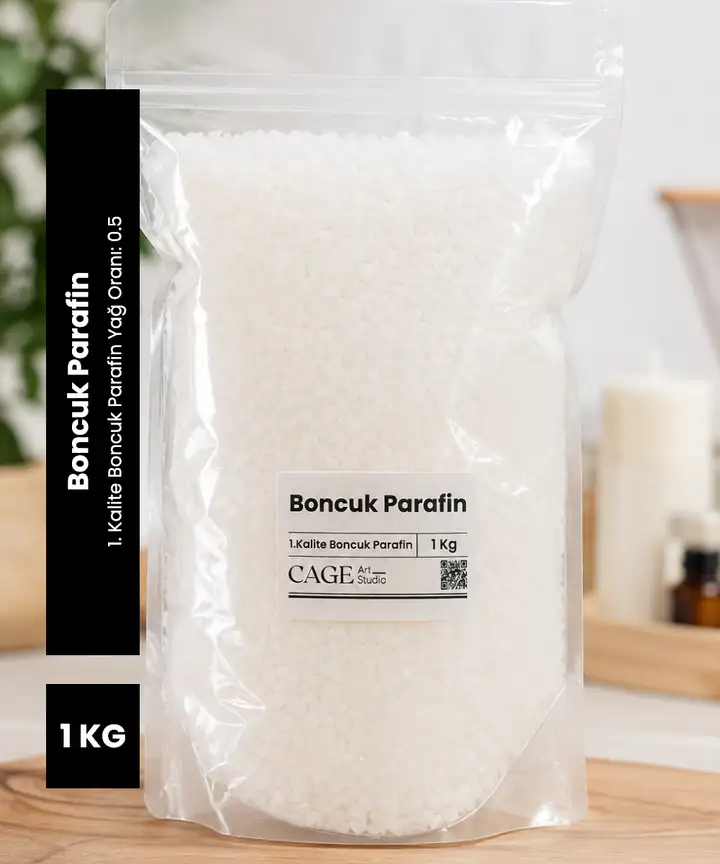 Boncuk Parafin 1 kgView
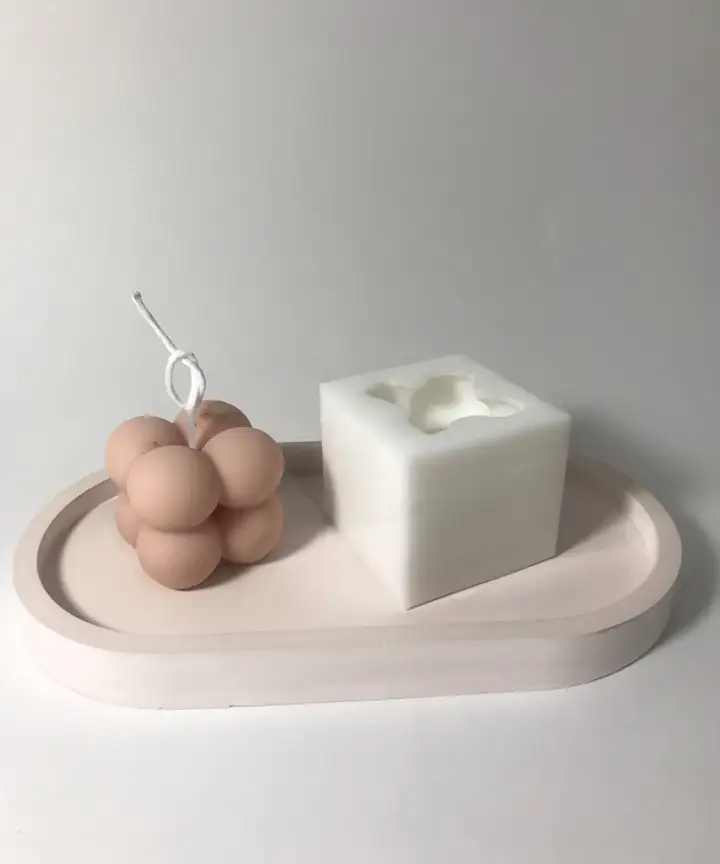 Mini Bubble Mum silikon KalıbıView
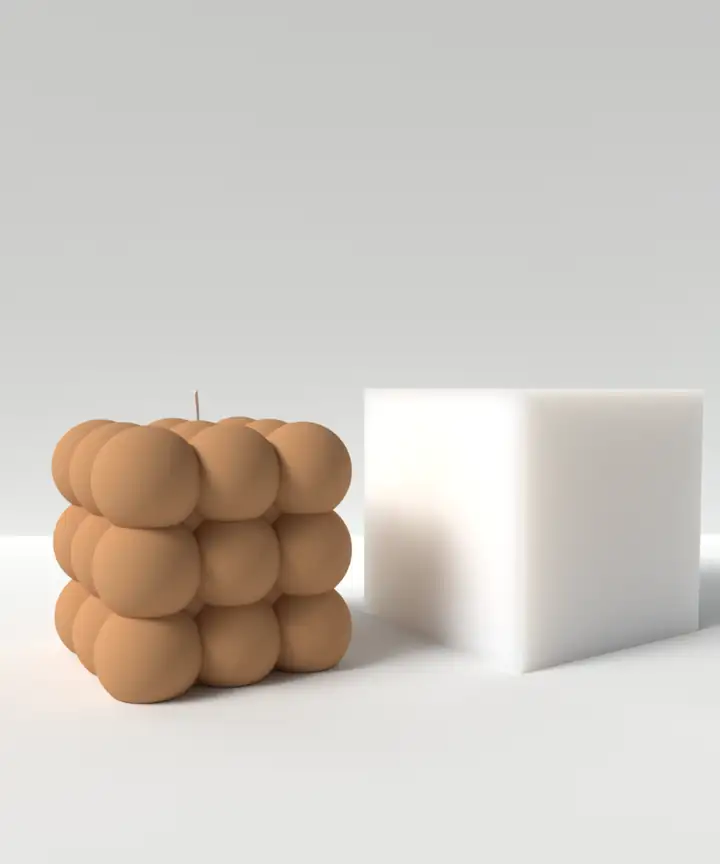 Büyük Bubble Mum silikon KalıbıView
Find the bubble mold procedure in bubble candle making and the fragrance weight table in our fragrance and dye guide. Do not use this density table for gel; follow the separate calculation in our gel candle guide.
How many candles do 1 kg of paraffin and gel wax make?
For 1 kg paraffin, use the same method: divide 1,000 g by a test candle's fill weight. A 100 g unscented, additive-free fill makes 10 complete candles; this is arithmetic only. If adding stearic acid or fragrance, recalculate the total mixture and allow separately for losses.
For 1 kg gel wax, also divide 1,000 by actual fill weight. A hypothetical 125 g fill gives 8 candles. We have no separately verified gel density, so give no ml or liter conversion; do not apply the soy/paraffin 0.82 planning factor to gel.
For the liters represented by 1 kg paraffin, the guide's estimate gives 1,000 ÷ 0.82 ≈ 1,220 ml water volume. This plans approximate mold capacity, not the exact volume of melted paraffin. Remeasure actual fill weight when temperature or formulation changes.
See the silicone candle mold capacity table for model weights and the gel candle guide for gel use. Counting follows the same method; material and temperature instructions remain separate.
What are the common questions about wax quantities?
How many candles can you make with 1 kg of soy wax?
Without fragrance or waste, 1,000 g wax makes 21 complete 47 g Mini Bubble candles or 7 complete 135 g Large Bubble candles. Capacities are estimates; verify the actual yield with a test pour.
How many ml is 1 kg of soy wax?
Reversing the mold guide's water weight × 0.82 estimate gives 1,000 ÷ 0.82 ≈ 1,220 ml water volume. This estimates mold capacity, not exact liters of liquid wax. Weigh the fill using your own wax.
How much wax goes in a 200 ml jar?
With 200 ml usable fill volume and an assumed density of 0.82 g/ml, about 164 g mixture is needed. Brimful jar capacity may differ from actual fill volume.
How much wax goes in a 300 cc jar?
300 cc equals 300 ml. Treating it all as fill volume at an assumed 0.82 g/ml gives about 246 g; prioritise any product-page wax capacity and your test weighing.
How many candles does 1 kg of candle blend make?
Divide 1 kg of finished blend by the fill weight per candle and round down. At a 150 g fill, you get 6 complete candles and 100 g left over; do not add fragrance to that kilogram again.
How many candles does 1 kg of gel wax make?
For gel, too, divide mass by the actual fill weight per candle. Do not apply the soy density assumption to gel; follow the separate calculation in our gel candle guide and the product instructions.
Calculate the quantity and complete your supplies
Bring together silicone molds, soy wax, paraffin, wicks and fragrance oils to suit your project.