
Why Is My Candle Smoking? 7 Causes of Soot and Black Jars
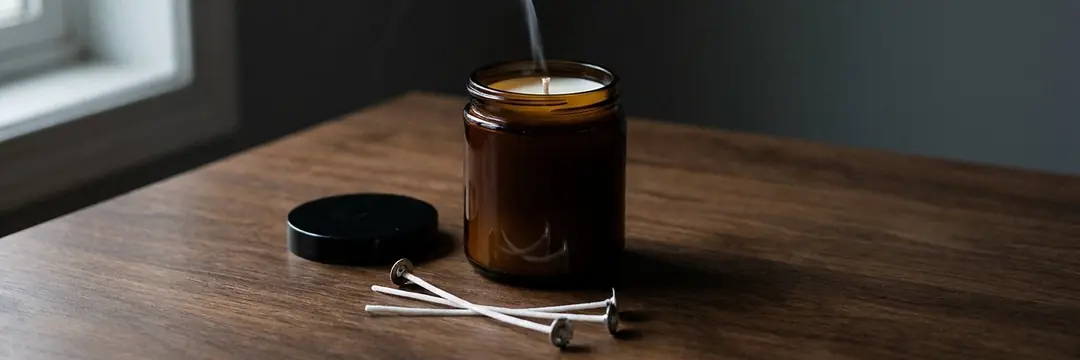
A candle smokes and leaves soot when its fuel doesn't burn completely. The most common causes are an untrimmed or mushrooming wick, drafts, a wick that's too big for the container, and too much fragrance oil or dye. The NCA recommends trimming the wick to about 6 mm before every burn and burning the candle away from drafts. Those two steps fix most problems.
In short
- Soot means the fuel isn't burning completely; the more the flame flickers, the more soot you get.
- Trim the wick to about 6 mm before every burn.
- Air from a window, fan or AC makes the flame flicker and soot.
- If your own candle soots every time, try a wick one size smaller.
- Limit a burn to 4 hours; the wick mushrooms on longer burns.
Why does a candle smoke and leave soot?
According to the NCA's explanation of wicks, the wick determines how much fuel the flame gets: if too much fuel arrives, the flame grows and soots; if too little, the flame sputters and goes out. Soot is a sign that the flame can't completely burn the wax it takes in, in other words that combustion is incomplete.
Anything that upsets this balance causes soot: a wick that has grown long, a flame flickering in a draft, a wick too thick for the container, or more fragrance oil and dye than the wax can carry. The seven causes below are ordered from the easiest to check.
The most common cause. Trim it to 6 mm before every burn.
A flickering flame can't burn the fuel completely.
A wick that's too thick for the container draws too much fuel.
More fragrance oil than the wax can hold causes soot.
What are the 7 causes to check when a candle smokes?
1. The wick was left too long
2. A carbon ball on the wick tip
3. Drafts and moving air
4. The wick is too big for the container
5. Too much fragrance oil
6. Too much dye, or the wrong dye
7. Debris in the wax pool
How do you fix a sooting candle step by step?
A candle you bought and a candle you poured yourself go through the same checks first. The first four steps fix usage problems; the last two are for fixing the recipe of your own candle.
- 1
Put the candle out and let it cool
Don't keep burning a candle that soots. Put it out and don't move it until the wax has set completely.
- 2
Trim the wick to 6 mm
The NCA recommends shortening the wick to about 6 mm before every burn. If a carbon ball (mushroom) has formed on the tip of the wick, break it off and discard it once it has cooled.
- 3
Cut the draft
Move the candle away from open windows, fans, AC and air vents. A flickering flame is a sooting flame.
- 4
Relight it and watch the flame
The flame should be steady and about 2.5 cm tall. If it flickers and soots again after a short while, the problem may be the wick size.
- 5
Limit a single burn to 4 hours
On long burns the wick lengthens and mushrooms and the flame grows. Put it out after 4 hours and wait for it to cool before relighting.
- 6
If it's your own candle, go down a wick size
If a candle you made yourself soots every time, try a wick one size smaller from the same series in your next pour, and don't take the fragrance oil above 10%.
Don't keep burning a candle that soots constantly, has a growing flame or has a container that overheats. Put it out, let it cool, and relight it only after you have found the cause. Never leave a burning candle unattended.
Why does the inside of the jar turn black, and how do you clean it?
The black ring on the inside of the jar is soot from the flame sticking to the glass. It most often shows up with a long wick and a draft together. In narrow, deep jars the flame sits close to the glass, so the blackening is noticed sooner.
Once the candle is out and fully cooled, you can wipe the soot off the glass with a dry paper towel. We explain the steps for removing leftover wax and cleaning a jar for reuse in the how to remove candle wax guide. When choosing a container for a new candle, see the choosing candle jars post.
| Symptom | Likely cause | First thing to check |
|---|---|---|
| Black ring on the glass | Long wick, drafts | Trim the wick to 6 mm and move the candle to a sheltered spot. |
| Tall, flickering flame | Oversized wick or long wick | Shorten the wick; if it continues, try a smaller wick. |
| Lump on the wick tip | Long burn, too much fragrance oil | Remove the lump once it's cool; don't go past 4 hours. |
| Black smoke when put out | Ember on a wick that was blown out | Use a snuffer or dip the wick in the wax. |
Do soy candles soot too?
Any candle can soot if the wick is left long or the candle is burned in a draft. According to CandleScience, the difference is in the color of the soot: soy wax soot is whitish, so it's hard to notice, while paraffin soot looks black. So it isn't correct to say that soy candles never soot.
Whatever the type of wax, what decides soot is how well the wick suits the container and the conditions of use. When pouring your own candles, use the burn test in the how to choose a candle wick guide to pick the right wick. Raising the fragrance oil because you think the scent isn't strong enough also increases soot; instead, run the checks in our why your candle has no scent post.
 Ready-Made Pre-Tabbed Candle Wick 8 cmView
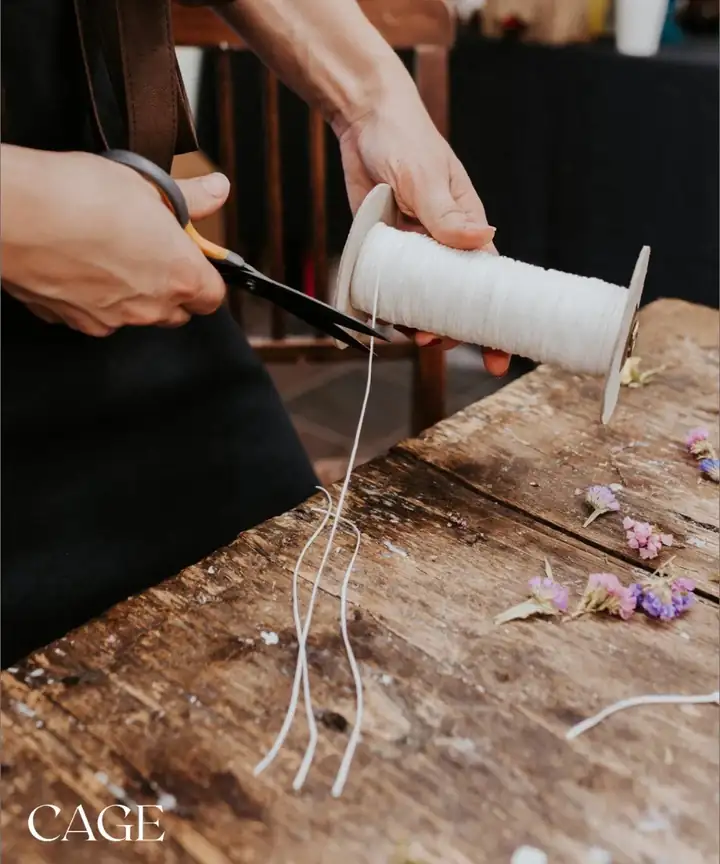 Pre-Waxed Thin Candle Wick 10 mView
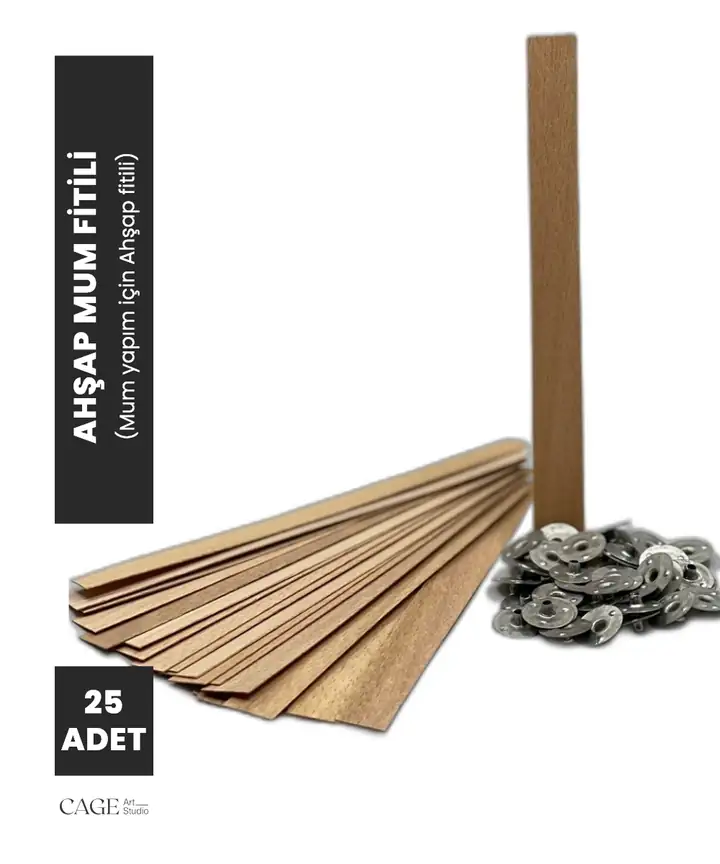 Wooden Candle Wick 25 PiecesView
 Golden Soya Wax 1 kg (Leaf Shape)View
How do I prevent smoke when I put a candle out?
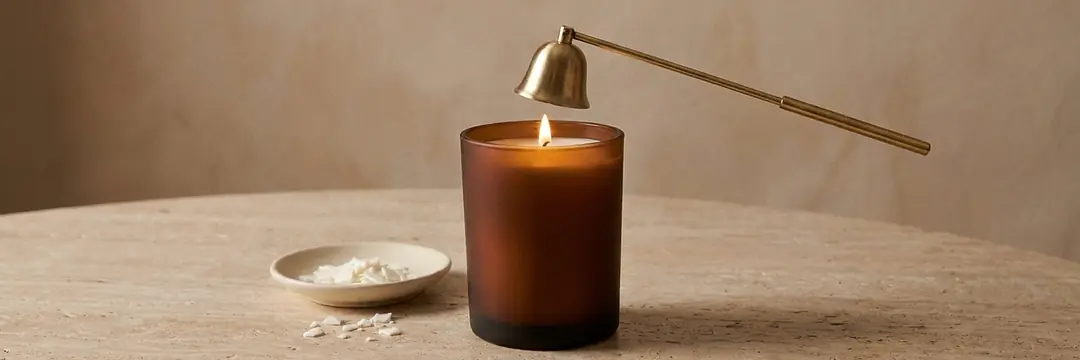
When you blow a candle out, the tip of the wick stays as an ember for a while and smoke rises into the air. This is different from the soot made while burning, but you notice it in the same room. Using a candle snuffer, or dipping the wick into the pool of melted wax and lifting it straight out, reduces this smoke.
We cover all the ways to put a candle out and the safety rules in the how to put out a candle guide. For good burning habits, see the how to burn a candle post too.
Frequently asked questions
Why does a candle smoke and leave soot?
A candle soots when its fuel doesn't burn completely. The most common causes are a long or mushrooming wick, drafts, a wick too big for the container, and too much fragrance oil or dye. Trimming the wick to 6 mm and cutting the draft fixes the problem in most cases.
Why does a candle flicker?
A wavering flame mostly comes from moving air: an open window, fan, AC or someone walking past. Move the candle to a sheltered spot; if it keeps flickering, shorten the wick.
Why is the inside of the jar turning black?
Blackening is soot from the flame building up on the glass surface. Keep the wick short and cut the draft. You can wipe built-up soot off a cooled jar; the details are in our candle wax removal guide.
Do soy candles soot?
Any candle can soot if conditions aren't right. According to CandleScience, soy wax soot is whitish and hard to notice, while paraffin soot looks black. What matters is the wick length, the wick choice and a draft-free spot.
Why does a candle smoke when you put it out?
The tip of a wick that was blown out stays as an ember for a while and gives off smoke. Using a candle snuffer, or dipping the wick into the wax pool and lifting it out, reduces this smoke.
What happens if you don't trim the wick?
A long wick makes a large, flickering flame; the flame can't completely burn the fuel and soots. A carbon ball builds up on the tip. The NCA recommends trimming the wick to about 6 mm before every burn.
Choose the right supplies for your project
Compare the product descriptions and instructions, then get your test pour ready.