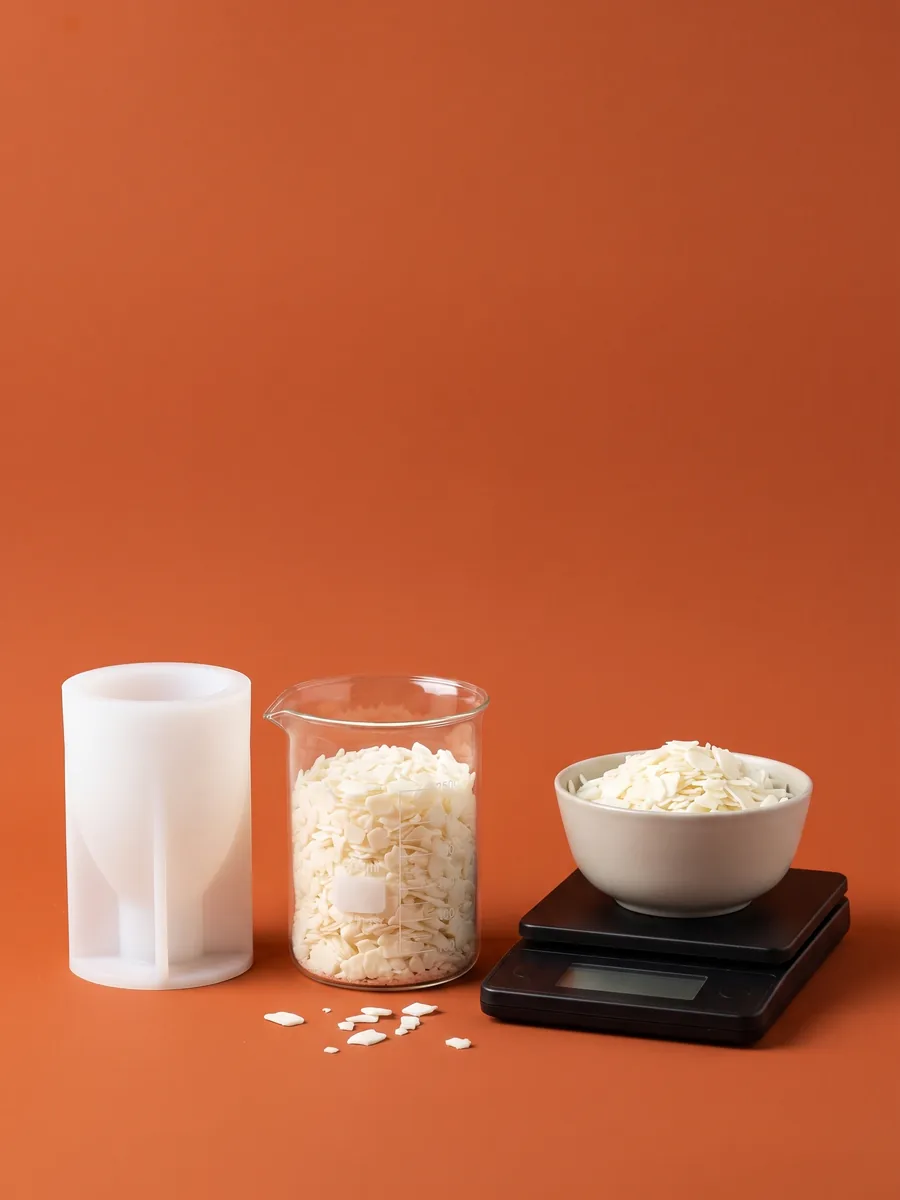
How to Melt Candle Wax: Double Boiler, Melting Pot and Old Candles
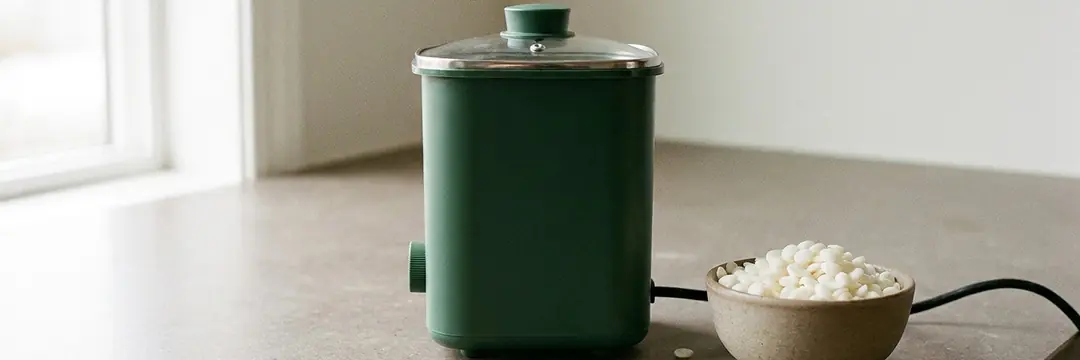
How do you melt candle wax? The short answer: in a double boiler or in a wax melting pot with adjustable temperature, with your eye on the thermometer. Putting a pot straight on the burner or using the microwave leaves the temperature out of control. In this guide you'll find both safe methods step by step, plus how to melt down store-bought and old candles, safety tips and how to clean your pots.
In short
- Melt the wax in a double boiler or a wax melting pot; no direct heat and no microwave.
- Heat soy wax to 80–85 °C (176–185 °F) and paraffin to 85–88 °C (185–190 °F); never take paraffin above 93 °C (199 °F).
- Our wax melting pots come in 1.2–30 liters, with temperature adjustable within 60–100 °C.
- Before melting old candles, remove the wick, wick tab and soot, then strain the wax once it's melted.
- If the wax catches fire, don't pour water on it: turn off the heat and cover the container with a lid.
In this guide
Ways to melt candle wax: which are safe?
When you put wax in a pot directly on the stove, the bottom of the pot heats up much faster than the rest of the wax. The wax at the bottom burns and turns yellow, and the reading on your thermometer no longer matches the temperature at the bottom of the pot. In a double boiler, the pouring pot sits in boiling water. Since water doesn't go above 100 °C, the wax can't heat up suddenly or uncontrollably. A melting pot does the same job with a thermostat. Here's how the methods people use at home compare:
| Method | Suitable? | Why? |
|---|---|---|
| Double boiler (water in a saucepan, pouring pot inside) | Yes, the easiest at home | Heat comes slowly through the water, so the wax melts evenly |
| Wax melting pot | Yes, for regular production | Adjustable within 60–100 °C; the thermostat holds it steady |
| Pot directly on the burner | No | Wax at the bottom overheats, burns and yellows; no temperature control |
| Microwave | We don't recommend it | Heats unevenly and can't be measured; metal wick tabs can spark |
| Heat gun, hair dryer | Surface only | Won't melt a batch; fixes a rough surface or a small sinkhole |
| Hot glue gun | Not for candles | Its glue stick (sometimes called "candle silicone" in Turkey) is adhesive, not wax |
Direct heat and microwave
The wax at the bottom burns and yellows, and the fragrance oil's scent is spoiled. In a microwave, wax doesn't heat evenly and you can't tell what temperature it's at.
Double boiler or melting pot
In a double boiler, heat comes slowly through the water. A melting pot holds the temperature you set. With either one, you monitor the temperature with a thermometer.
Looking for how to melt wax in a silicone mold, or how to melt hot glue? Those are two separate topics: remelting wax left in a silicone mold is covered in the old and store-bought candles section below. If your hot glue gun won't melt its glue stick, see our hot glue gun not melting post.
How to melt candle wax in a double boiler
A double boiler is the easiest and cheapest method at home. It's also the right way to melt wax in a pot: the water goes in the saucepan, not the wax. You'll need a saucepan, a heat-resistant pouring pot or steel pitcher, a digital thermometer and a scale.
- 1
Put water in a saucepan
Add a few inches of water to the saucepan and put it on the stove. Use enough water to surround the bottom and sides of the pouring pot without making it float.
- 2
Weigh the wax and put it in the pouring pot
Weigh the wax in grams on a scale, put it in a heat-resistant pouring pot or a steel pitcher, and set the pot in the water in the saucepan.
- 3
Heat over medium heat
If the water starts bubbling hard, turn the heat down so water from the saucepan doesn't splash into the wax. If the water gets low, add warm water.
- 4
Stir and monitor with a thermometer
Stir the wax gently now and then. Hold the tip of the digital thermometer in the middle of the wax, without touching the bottom of the pot.
- 5
Add dye at the target temperature
Once the wax has fully melted and reached the target temperature (80–85 °C for soy wax), add the dye granules and stir until not a single granule is left.
- 6
Take it off the heat and add fragrance oil
Take the pouring pot off the heat, dry the bottom, add the fragrance oil you weighed out and stir for 1–2 minutes without creating bubbles, scraping the bottom of the pot as well.
- 7
Wait for the pouring temperature
When the wax cools to the pouring temperature of the material you're using, pour it into the container or mold.
When you lift the pot out of the water, wipe the bottom and sides with a cloth. A single drop of water running off the bottom of the pot as you pour leaves a hole in a wax candle and cloudiness in a gel candle.
If you don't know how much wax to melt, fill the container with water, weigh it and enter the grams on our Calculator page; for silicone molds there's the Silicone Mold Candle Calculator. Melt about 10% more than you need; leftover wax goes into your next pour.
How to use a wax melting pot
A double boiler is enough for a few glasses of candles. If you regularly melt kilos of wax, pour into lots of molds at once or want to hold the temperature steady for a long time, a melting pot saves you time. Our melting pots were developed with ToAuto for candle makers: the temperature is adjustable within 60–100 °C, they run on 220 V mains power, they're CE, FCC and RoHS certified, and every pot ships with a user manual.
- 1
Read the manual
Fill limits, cleaning and usage rules vary from pot to pot; check the manual first.
- 2
Add the wax and set the temperature
Set 80–85 °C for soy wax and 85–88 °C for paraffin. The pot's maximum is 100 °C.
- 3
Double-check with a thermometer
For the first few weeks, check the wax's actual temperature with a digital thermometer; that way you'll hit the right moment for fragrance oil and pouring every time.
- 4
Empty it and wipe it out
At the end of the day, pour the leftover wax into molds and wipe the inside of the pot with paper towels while it's still warm.
| Double boiler | Melting pot | |
|---|---|---|
| Temperature control | You monitor it with a thermometer | Adjustable within 60–100 °C, stays steady |
| Capacity | As much as the pouring pot holds | From 1.2 to 30 liters |
| Caution | Splashing water, water running low | Fill and cleaning rules in the manual |
| Best for | Occasional candle making at home | Workshops with regular production |
A liter is a measure of volume: since soy wax is a little lighter than water, a 1.2-liter pot filled to the brim holds about 1–1.1 kg of melted wax. Follow the pot's manual for fill levels.
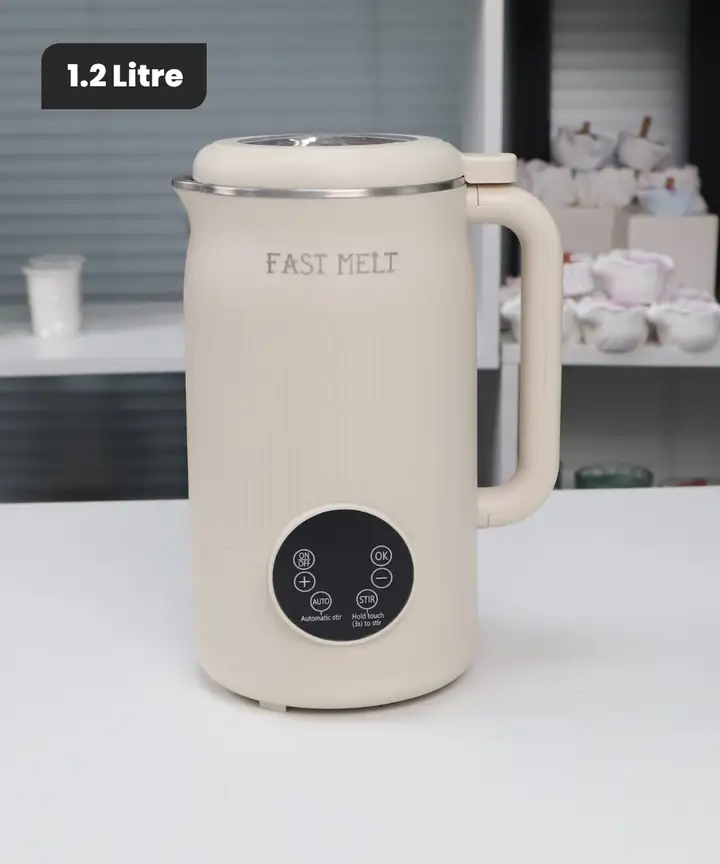 Wax Melting Pot 1.2 L (With Stirrer)View
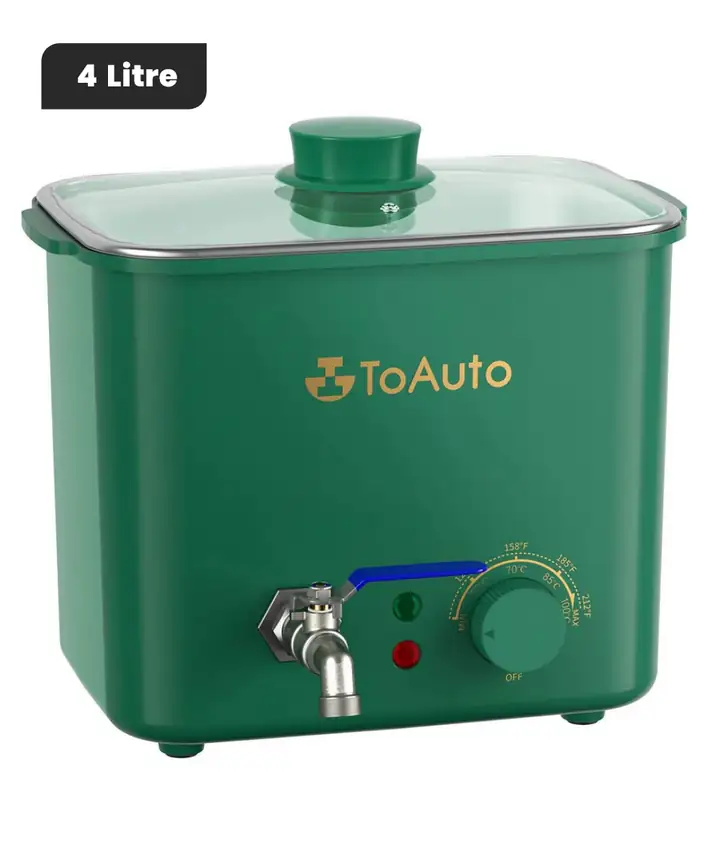 Wax Melting Pot 4 LView
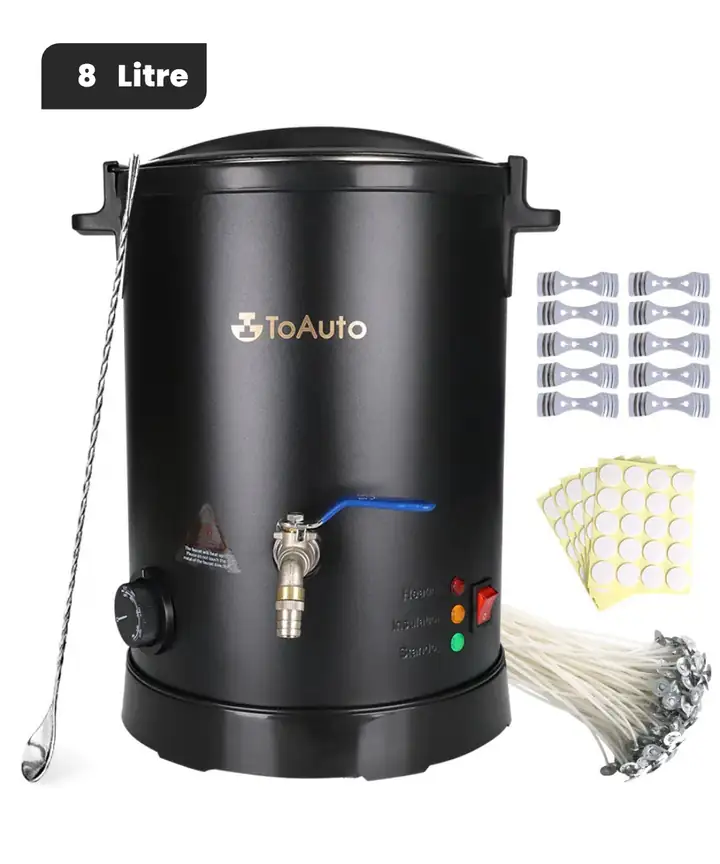 Wax Melting Pot 8 LView
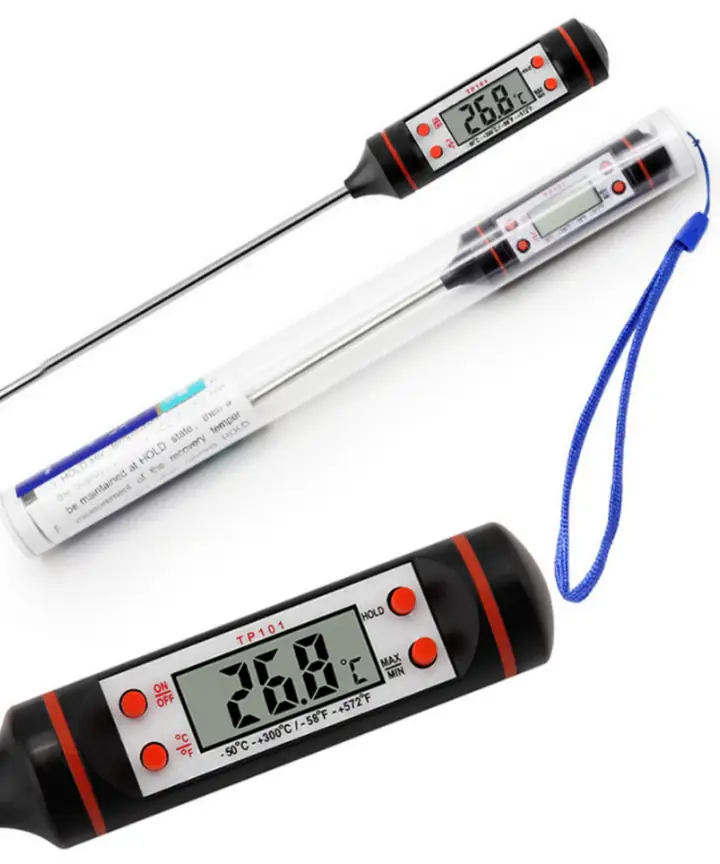 Digital ThermometerView
How to melt soy wax, paraffin and beeswax
The method is the same for every wax: a double boiler or melting pot, occasional stirring and a thermometer. What changes is the wax's melting point and how far you heat it. The melting point is the temperature at which the wax turns liquid; for dye and fragrance oil, you heat the wax well above it. A quick table:
| Raw material | Melting point (product page) | Heating, dye and fragrance oil |
|---|---|---|
| Golden Soya Wax | About 51–55 °C | 80–85 °C |
| Pillar Soy Wax (silicone molds) | Not specified | 80–85 °C |
| American Soy Wax | Not specified | 80–85 °C |
| Paraffin Pellets | 54–70 °C | About 85–88 °C, 93 °C max |
| Domestic Paraffin Wax Grade A | Drop point 56–58 °C | About 85–88 °C, 93 °C max |
| Gel Candle Wax | 90–95 °C | In a double boiler, stirring slowly |
The pouring temperature depends on the wax and on whether you're using a container or a mold; all the pouring values are in our What Temperature to Pour Candle Wax post. For how the waxes differ, see Soy Wax Types and Paraffin Candle Guide.
How to melt beeswax
Beeswax is melted the same way, stirring in a double boiler or melting pot; don't put it over direct heat. Since we don't sell beeswax, we don't give its melting point here: check the melting point on your supplier's label and work with a thermometer.
How do you melt gel candle wax?
Gel wax behaves differently from regular wax: our Gel Candle Wax melts at 90–95 °C, and a single drop of water can cloud it. Melt gel only in a double boiler or a melting pot with adjustable temperature, stirring slowly with a metal spoon. For the temperature chart, bubble-free pouring and dye, see our How to Make Gel Candles guide.
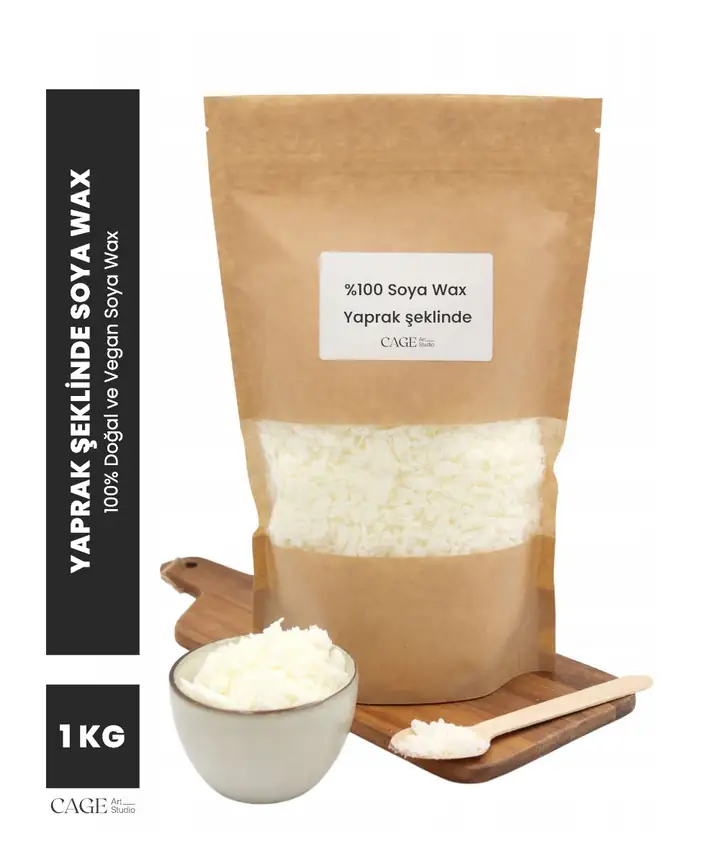 Golden Soya Wax 1 kg (Leaf Shape)View
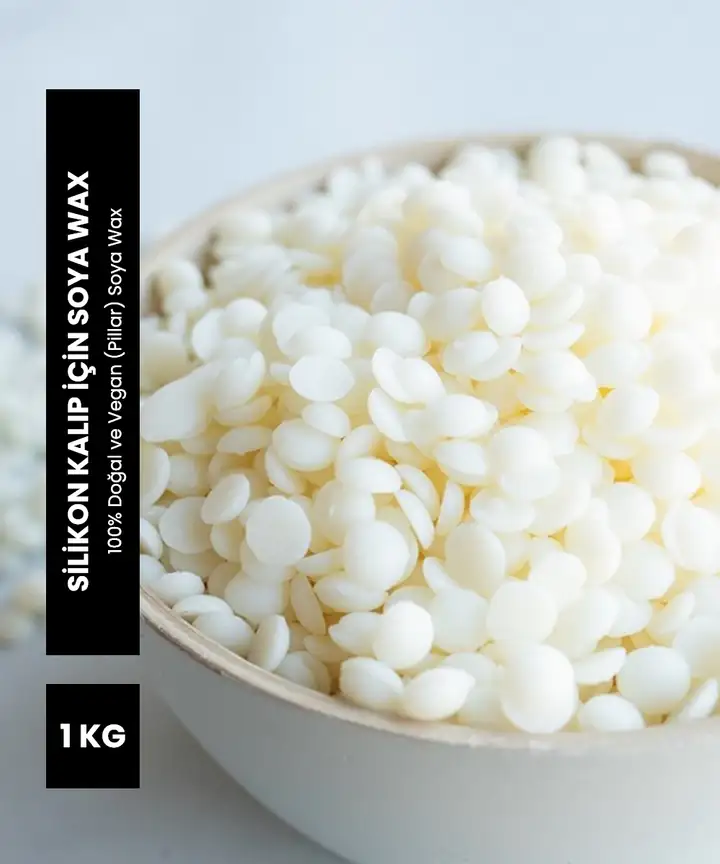 Pillar Soy Wax for Silicone Molds 1 kgView
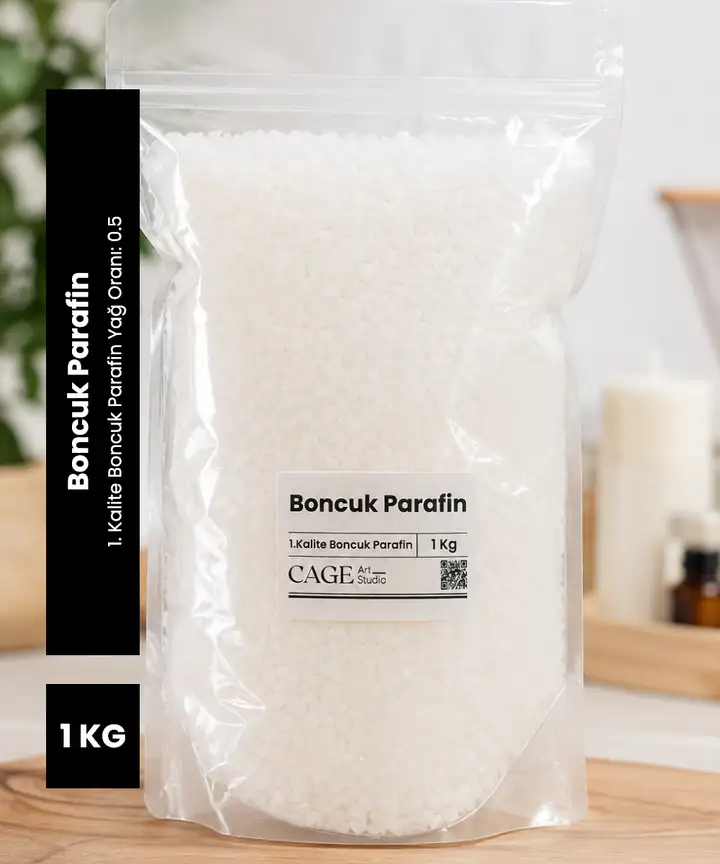 Paraffin Pellets 1 kgView
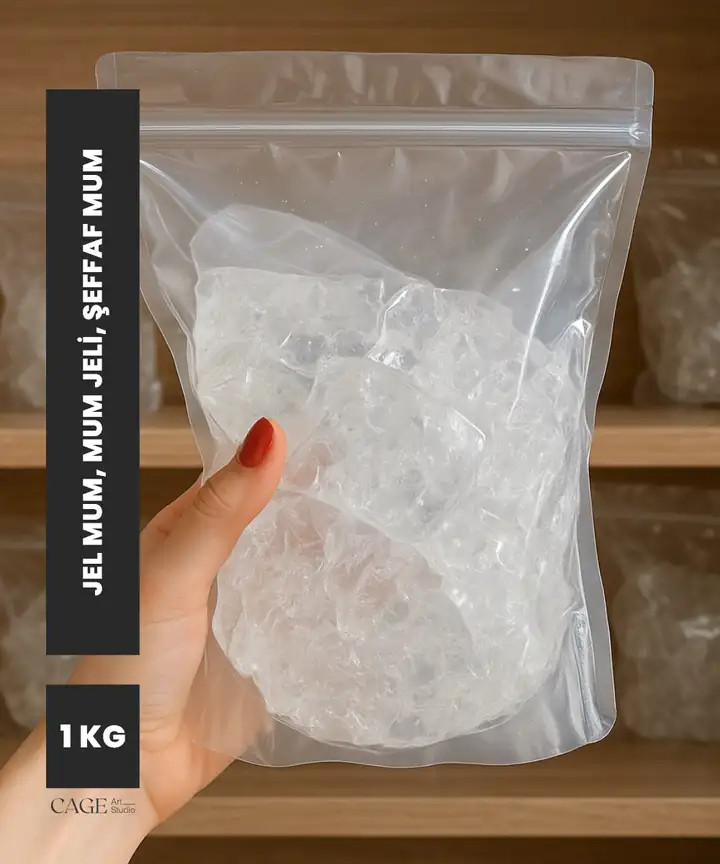 Gel Candle Wax 1 kgView
How to melt old candles and store-bought candles
Half-burned jar candles, candles that came out of the mold misshapen, or wax left over in the pot don't have to go in the trash. You can melt down old candles and pour them again; just follow a few rules:
- 1
Sort by wax type and color
Don't mix soy wax, paraffin and gel; their melting and pouring temperatures are different, and you can't know how the blend will burn. Mixing different colors also gives a muddy shade.
- 2
Get the wax out of its container
Don't put the jar directly on the stove. Set it in a double boiler that starts with warm water; a sudden temperature change can crack the glass. Once the edges melt, spoon the wax into the pouring pot.
- 3
Remove the wick, tab and soot
Take out the old wick, the metal wick tab, leftover bits of matches and any blackened pieces.
- 4
Melt and strain
Melt the wax in a double boiler and pour it through a fine strainer to catch any remaining debris.
- 5
Pour with a new wick
Don't reuse the old wick; choose a wick that suits the diameter of the new candle. More detail: how to choose a candle wick.
Every time you cool and reheat scented wax, its scent gets a little weaker. Since you don't know how much fragrance oil the old candle contains, go light on new fragrance oil; don't exceed 10% in total.
Wax left in a silicone mold or a candle that came out wrong
Don't try to melt it inside the mold. Take the candle out of the mold, remelt it in the pouring pot and pour it again at the right temperature. Washed with warm soapy water and a soft sponge and dried completely, the mold can be used again. To get candles out without breaking them, see our How to Get a Candle Out of a Mold post.
Safety when melting wax
Don't walk away from wax on the heat. Keep children and pets out of your work area.
Water that falls into hot wax spatters and burns. Don't let the double boiler water bubble up into the pouring pot; keep the pot and spoon dry.
Never pour water on it. Turn off the heat and cover the container with a lid to starve the flame of air.
Ventilate the room when melting paraffin and don't breathe in its fumes directly; our product page recommends wearing a mask.
Flash point is the temperature at which an oil's vapor can ignite with an open flame or a spark. Adding fragrance oil to hot wax doesn't set the fragrance oil on fire. The real risks are open flames, direct heat and overheating. More detail: Candle Fragrance Oil and Dye Ratios.
How to clean a wax melting pot
Wax is easiest to clean before it cools and hardens: compare methods for glass jars, metal melting pots and other surfaces in how to remove candle wax.
Pour the leftover wax into a small mold while it's still warm and label it with the wax type and scent. Wipe the inside with paper towels, then wash it in hot soapy water and dry it.
Empty the pot and wipe it out with paper towels while it's warm. For using water and detergent, follow the cleaning rules in the manual.
Warm soapy water and a soft sponge. Don't use abrasive sponges or harsh solvents, and dry it completely.
Melted wax cools and hardens in the drain. Let leftovers set in a container and throw them in the trash, or use them in your next pour. Keep your wax pot separate from your cookware.
Frequently asked questions
How do you melt candle wax?
The safest way is a double boiler: put the wax in a pouring pot, set the pot in a saucepan of boiling water and stir as it melts. For regular production, use a melting pot adjustable within 60–100 °C. Heating soy wax to 80–85 °C (176–185 °F) is enough.
How do you melt down old candles?
Sort the candles by wax type and color, remove the wick and metal tab, melt them in a double boiler and pour the wax through a fine strainer. Pour it with a new wick; don't reuse the old one.
Can you melt wax in a pot on the stove?
Use the saucepan for the water; don't put the wax directly in it. Over direct heat, the wax at the bottom heats faster than the rest, burns and turns yellow. The wax goes in a pouring pot, and the pouring pot goes in the water in the saucepan: that's a double boiler.
Can you melt candle wax in the microwave?
We don't recommend it. In a microwave, wax doesn't heat evenly, you can't measure the temperature and the container can overheat; metal wick tabs in old candles can spark.
How do you melt soy wax?
In a double boiler or melting pot, stirring now and then. Golden Soya Wax melts at about 51–55 °C; for dye and fragrance oil, heat it to 80–85 °C, and no higher.
How do you melt paraffin wax?
In a double boiler or melting pot, just like soy wax. Heat paraffin to about 85–88 °C (185–190 °F), don't go above 93 °C (199 °F), and ventilate the room.
How do you clean a wax melting pot?
While the pot is still warm, pour the leftover wax into a mold, wipe the inside with paper towels, then wash it in hot soapy water and dry it. Don't pour leftover wax down the sink; throw it in the trash.
What should you do if melted wax catches fire?
Never pour water on it; the hot wax will spatter. Turn off the heat and cover the container with a lid; the flame goes out once it's cut off from air.
Melt your wax at the right temperature
Melting pot, digital thermometer, scale and wax: the basics of your workshop in one order, shipped in 1–3 business days.