Polycarbonate vs Silicone Candle Molds: A Comparison

Choose rigid polycarbonate molds for straight, glossy pillar candles and flexible silicone molds for demolding detailed figures. Both require wax suitable for freestanding candles. Pillar Soy Wax’s usual pouring range is 55–65 °C, or up to 70 °C if the room is cold; this is a wax processing temperature, not a mold heat-resistance rating. Follow the mold’s care and demolding instructions separately.
In short
- Polycarbonate is rigid; silicone flexes to peel away from recessed shapes.
- Polycarbonate is a strong option for glossy pillars; the result also depends on the mold surface.
- Use shape-holding wax for molded candles; container wax is not automatically equivalent.
- Our Pillar Soy Wax pouring range is 55–65 °C; this is not the mold’s heat-resistance rating.
- Cage Art Studio does not sell polycarbonate molds; we offer silicone molds and custom mold services.
What is a polycarbonate mold, and how does it differ from silicone?
Polycarbonate is a rigid plastic used for candle molds. A product labeled “plastic mold” is not necessarily polycarbonate. Product information should specify the material, intended use and temperature limit. A mold designed for chocolate or another craft needs separate confirmation of suitability for candle wax.
Silicone is flexible: you can open the mold outward or peel it off a detailed candle. This helps when removing a wide figure through a narrow opening. Fine candle details can still break, and a split mold can leave a seam. Flexibility alone does not solve every casting problem.
Cage Art Studio does not sell polycarbonate molds. This comparison explains why you might choose one; we recognize its advantages for glossy, regular pillars. Explore silicone options in candle molds or discuss a specific design through our custom silicone mold service.
How do candle mold advantages compare?
| Criterion | Polycarbonate | Silicone |
|---|---|---|
| Shape flexibility | Rigid walls make release geometry important. | Flexes around recessed and three-dimensional shapes. |
| Release | Shrinkage and product release-agent instructions matter. | Can be peeled outward from the candle. |
| Surface | An option for gloss and crisp edges. | Can give a satin finish or other textures depending on its surface. |
| Lifespan | Reusable with proper care; protect from scratches and impact. | Protect from sharp tools, overstretching and unsuitable cleaning. |
| Temperature | Follow the product’s technical limits. | Follow the mold’s own instructions; do not apply direct heat. |
| Cleaning | A manufacturer-approved method that does not scratch the surface. | Lukewarm soapy water, a soft sponge and thorough drying. |
| Wax choice | A suitable pillar blend that releases from the mold. | Shape-holding pillar wax or suitable paraffin. |
Some source comparisons of polycarbonate and silicone reflect suppliers’ experience. We do not infer guarantees such as “always glossy,” “never leaves marks” or a fixed number of pours. Inspect the first sample’s surface, ease of release and integrity together for a more useful comparison than material names alone.
Which mold suits which candle?
Consider polycarbonate for straight edges and a pronounced gloss. Check the rigid body’s release direction and wick arrangement.
Consider silicone when flexibility helps release protrusions. Support very fine points from below during removal.
Flexible silicone helps with recessed, three-dimensional designs. Align split mold edges carefully and never pull the figure by its wick.
Record sample fill weight, release sequence and surface finish. The same mold does not guarantee identical results with different wax recipes.
For your first candle, a shape that is easy to hold may make the process easier to learn than one with very fine protrusions. This is not a durability ranking; consider how to support the shape during release. For detailed figures, plan cooling space and vulnerable packaging points as well as the finished appearance.
Batch planning depends on mold turnaround, fill weight per pour and the number of intact candles. We give no universal timing or yield figures. Weigh and record your own trial, then calculate how many candles 1 kg of wax makes using the actual fill weight.
Which wax works in polycarbonate and silicone molds?
A molded candle must stand without a jar after removal. Soft container wax and harder pillar wax therefore serve different purposes. We offer Pillar Soy Wax for our silicone molds. For polycarbonate, check suitability information from both the mold manufacturer and wax supplier.
The 55–65 °C pouring range listed for our Pillar Soy Wax is a processing guideline for that wax. Do not apply it to all soy waxes or interpret it as every mold’s heat limit. Assess additives to paraffin blends only against the specific recipe. Check material choice in types of soy wax and temperatures in what temperature to pour candles at.
How do you remove a candle from a polycarbonate mold?
Before removing a candle from polycarbonate, let it cool completely and meet the product’s release conditions. The rigid body cannot fold back like silicone. Forcing a stuck candle with sharp tools or hitting the mold can damage both surfaces. If a release agent is needed, use only one recommended for that mold and wax.
With silicone, peeling the mold away is more controlled than pulling the wick. Support large figures and thin protrusions; do not force a still-soft base. For detailed guidance on waiting, breakage and sticking, see how to remove a candle from a mold rather than repeating the full process here.
Why do gloss and seam marks vary on molded candles?
Look beyond a single variable
Do not blame a matte candle solely on silicone. Wax, cooling, mold surface and pouring conditions all affect appearance.
Compare using the same recipe
Use the same wax and color where possible; record each model’s surface texture separately. Distinguish removal scratches from the mold’s transferred pattern.
Edge alignment affects seam marks in split silicone molds. Follow the mold’s closure method without overtightening and distorting it. Even a one-piece silicone mold cannot be guaranteed mark-free in every design. Set gloss expectations from product photos, surface texture and your own trial, checking a sample before batch production.
How can you preserve a silicone mold’s lifespan?
Our mold instructions call for lukewarm soapy water, gentle cleaning and complete drying. Do not use a dishwasher, harsh solvents, sharp tools or direct heat. Store flat, in shape and away from sunlight. Folding a mold or placing heavy objects on it can distort the next casting.
Using a mold with an abrasive casting material other than wax changes its care needs. Keep the candle mold surface clean and check for tears or deformation before use. We promise no fixed number of uses. Read silicone mold cleaning and the usage instructions for details.
When should you consider metal and other plastic molds?
Metal molds are rigid too; assess shape, wick hole, joints and release method. “Plastic” covers several materials. Do not pour hot wax into a mold without stated material and candle-use suitability. Request that product’s technical details instead of copying another mold’s temperature limit.
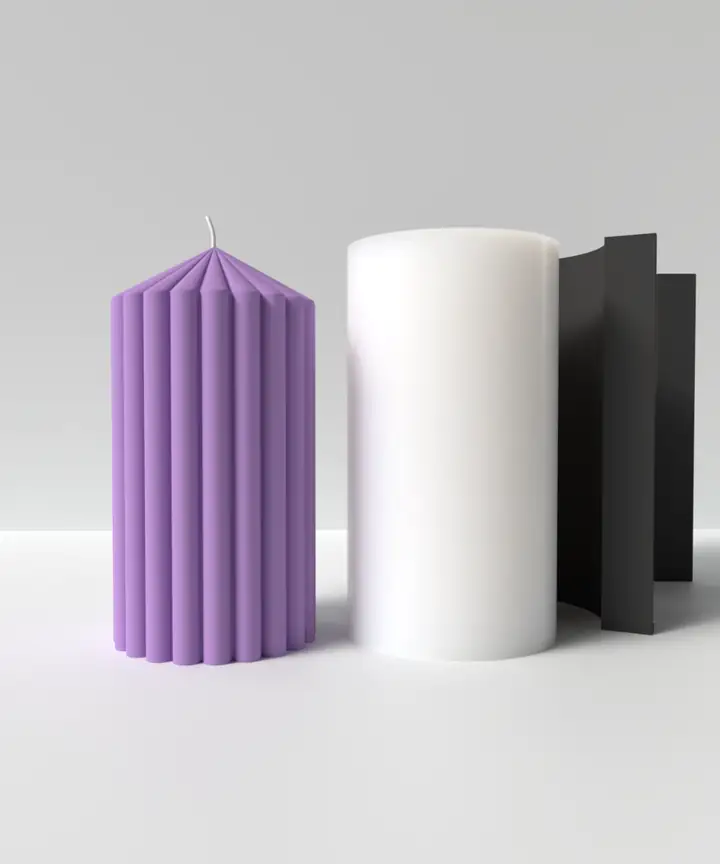 Medium Pillar Candle MoldView
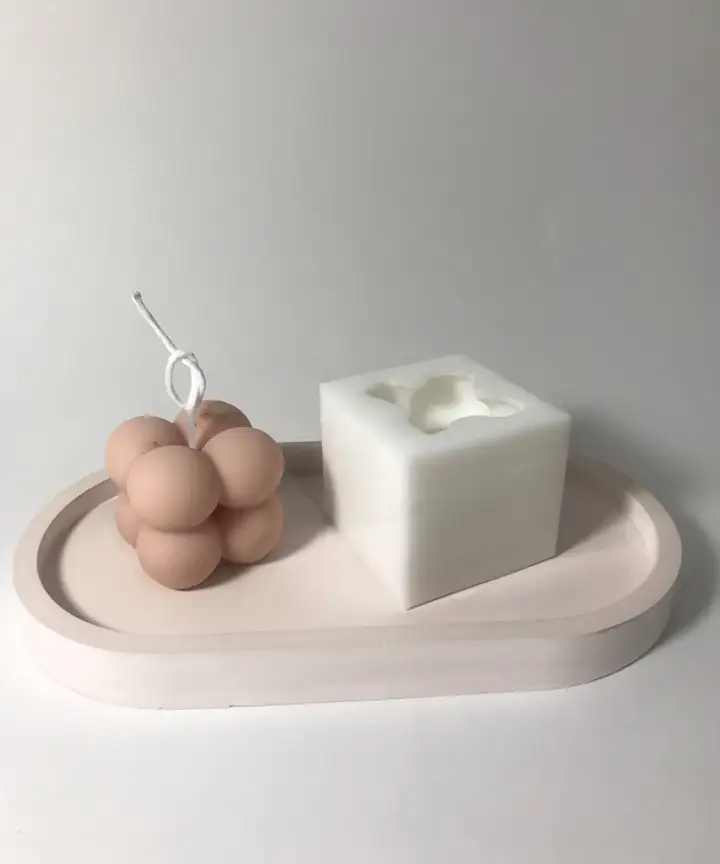 Mini Bubble Candle MoldView
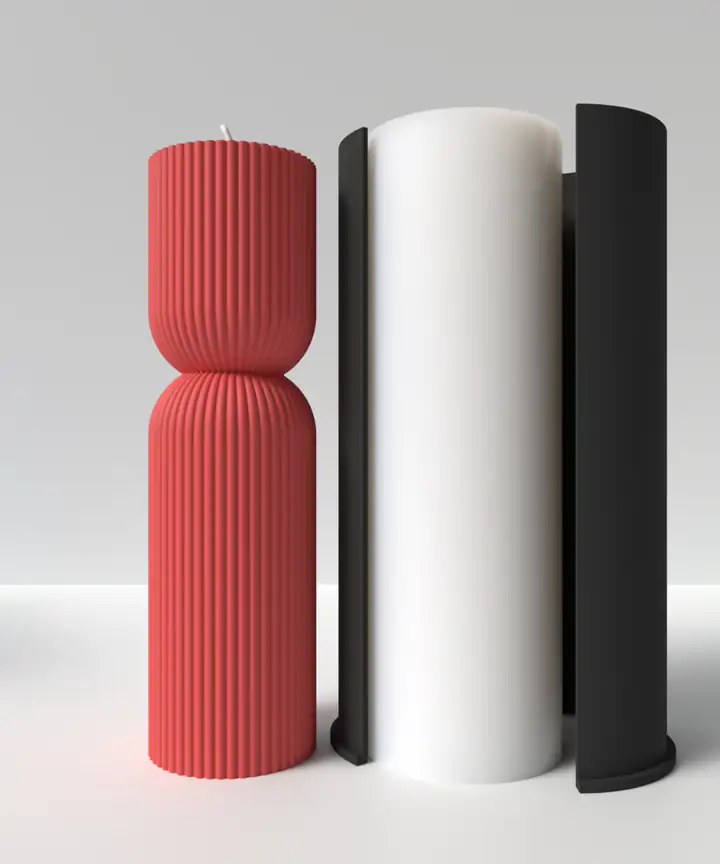 Large Patterned Pillar Silicone MoldView
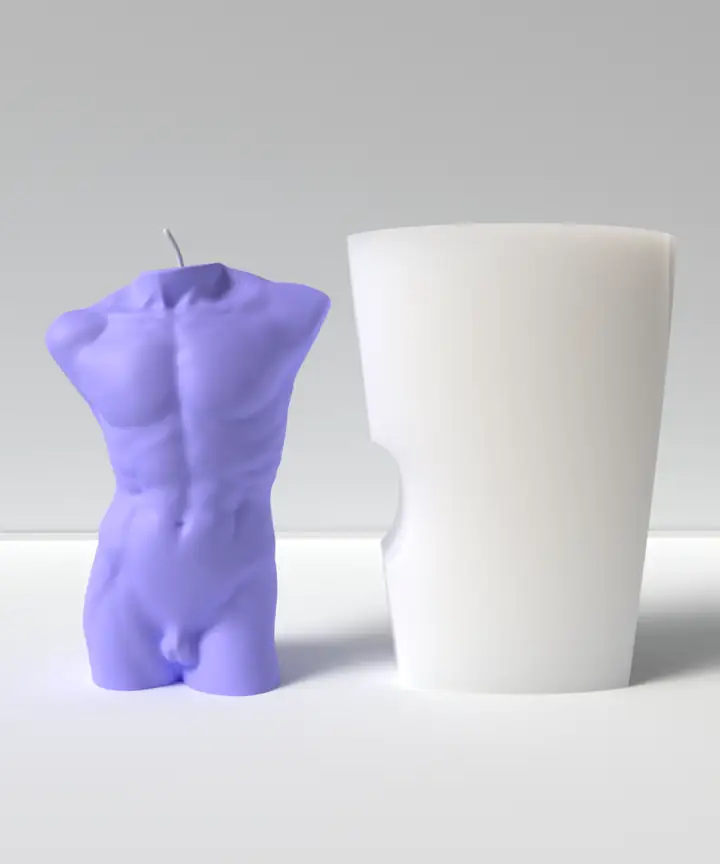 Male Bust Silicone MoldView
What are common questions about choosing candle molds?
Polycarbonate or silicone molds?
Consider polycarbonate for glossy, straight-edged pillar candles and silicone for recessed, figurative and three-dimensional designs. Results depend on the wax, mold surface and release method.
What is a polycarbonate mold?
It is a rigid plastic mold made for candle production. It does not flex like silicone; its geometry and the candle’s shrinkage affect release.
Does Cage Art Studio sell polycarbonate molds?
No, we do not sell polycarbonate molds. Explore our silicone molds for candle projects or contact our custom silicone mold service for a different design.
Can any soy wax be used in silicone molds?
The wax must hold its shape after demolding. Pillar Soy Wax is our option for molds; do not substitute soft container wax simply because it is soy-based.
Do silicone candle molds need a release agent?
Candle wax generally needs no release agent; follow our mold’s instructions. Do not automatically apply oil or release advice intended for another mold to silicone.
Which mold lasts longer?
We cannot give a universal reuse count or a winner for every condition. Scratches and impact affect rigid molds; overstretching and unsuitable cleaning affect silicone. Proper care is decisive.
Find the right mold for your candle’s shape
Explore pillar, bubble, patterned and sculpture silicone molds; use our custom mold service for a different design.