
How to Choose a Candle Wick: Size, Wooden Wicks, Securing

A candle wick determines how a candle burns more than the wax or the fragrance oil does: a thin wick tunnels down the middle, a thick wick soots. In this guide we explain, step by step, the wick types, the right thickness for the container diameter, and the burn test that shows whether a wick is right.
In short
- Choose the wick by the container's inner diameter; as the diameter grows, the wick gets thicker or the number of wicks goes up.
- With the right wick, the flame is calm and 1–2.5 cm, the melt pool reaches the edge in 3–4 hours, and there is no soot.
- Before every burn, trim cotton wicks to 0.5 cm, and wooden wicks to 3–5 mm.
- The burn test takes at least 4 cycles: burn for 4 hours, then let it cool for at least 5 hours.
- Plain cotton string is no substitute for a wick; a wick is cotton in a specific braid, and waxed.
In this guide
How does a candle wick work?
A wick draws melted wax upward by capillary action; the flame vaporizes and burns this wax. The thicker the wick, the more wax it draws and the bigger the flame. That's why thickness is balanced against the width of the container: the aim is for the flame to bring the melt pool all the way to the container's edge on each burn, but not grow big enough to soot.
The pool doesn't reach the edge, a tunnel opens in the middle, the flame shrinks and may go out early.
Calm flame of 1–2.5 cm. The pool reaches the edge in 3–4 hours, 6–13 mm deep, no soot.
Tall, flickering flame, pool deeper than 13 mm, the wick mushrooms, soot appears, the glass overheats.
Candle wick types
Our cotton wicks are made of 100% raw cotton, waxed to stiffen them, and come ready to use. Our wooden wicks are made of natural wood.
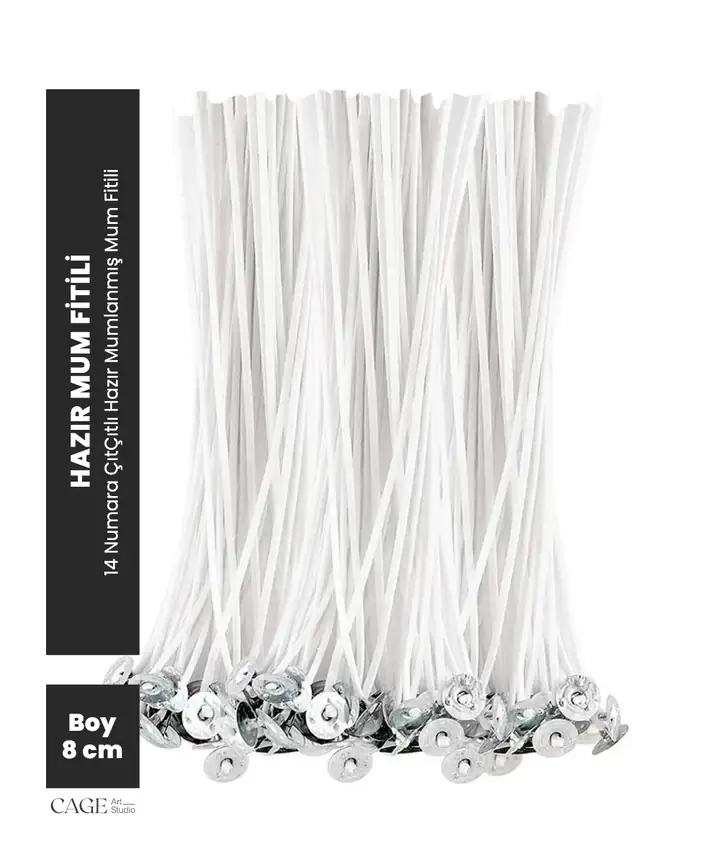
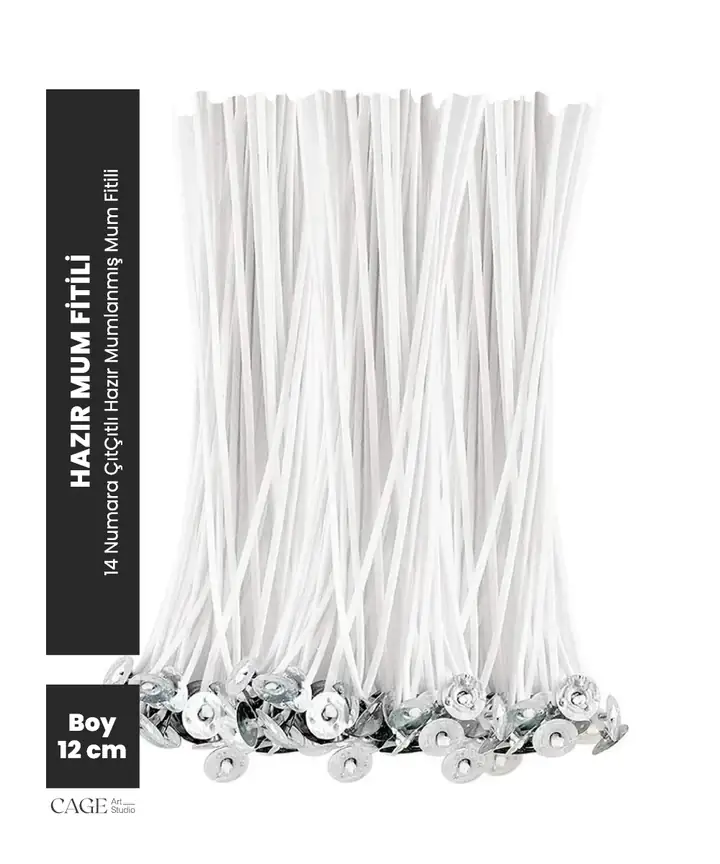
Waxed cotton wick with a metal tab pressed onto the base. For jar and glass candles.
- Length
- 8 and 12 cm
- Use
- Container candles
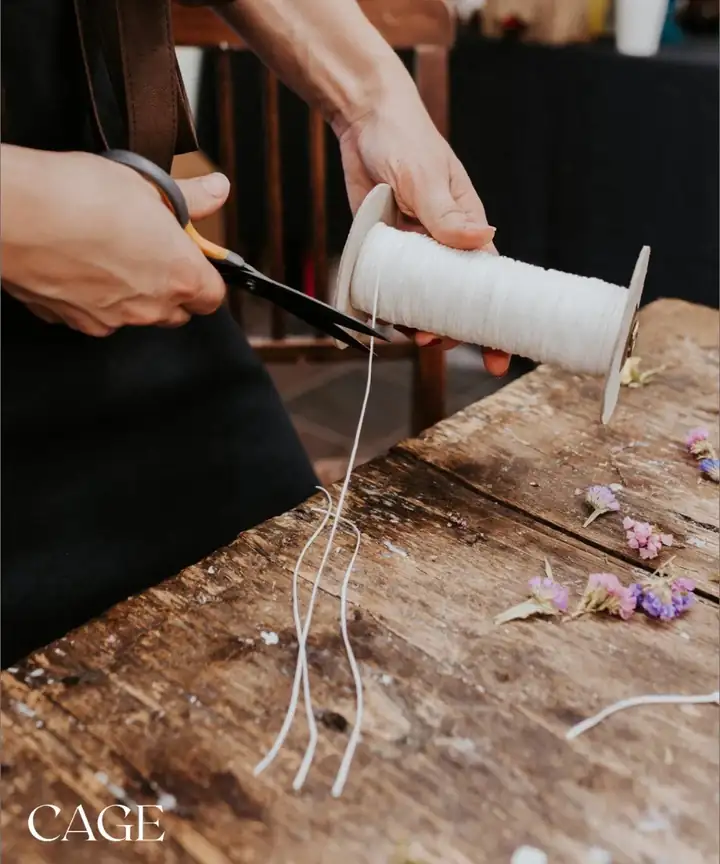
On a spool; you cut it to the length you want and thread it through the wick hole of a silicone mold.
- Length
- 10–200 m
- Use
- Silicone mold
Pre-cut, pre-waxed short wick; for batch production of small candles.
- Quantity
- 2,500 (100 m)
- Use
- Batch production
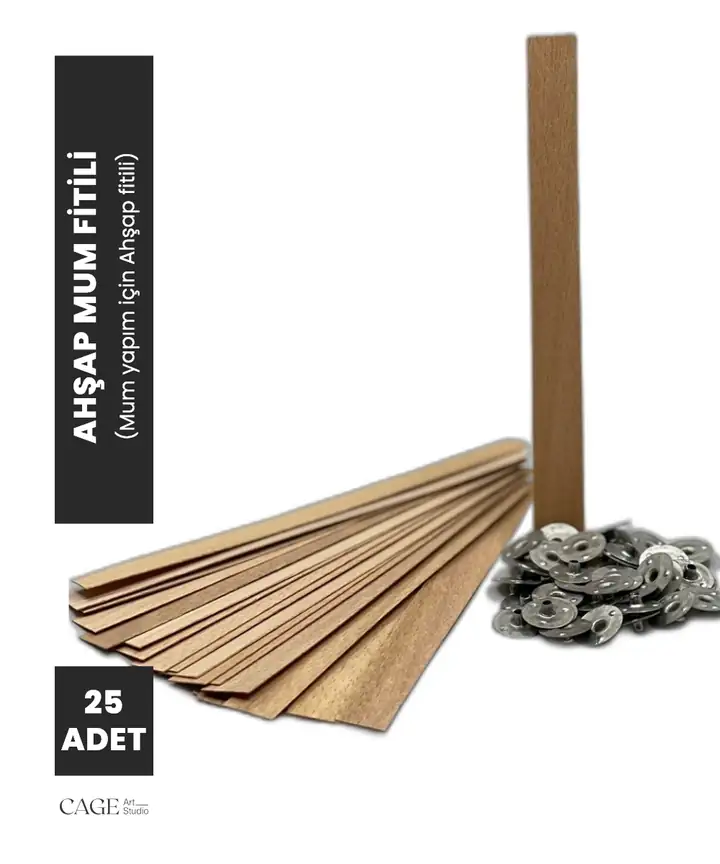
Gives a wide, low flame and a soft crackle as it burns. Used only in container candles.
- Size
- 1.5 cm × 0.5 mm
- Use
- Container candles
Imported wick series and sizes
Imported wicks are sold by series name and number. Numbers can't be compared across series: you can't put an LX 22 next to an ECO 8 and say which is thicker. Within the same series, the wick gets thicker as the number gets larger.
| Series | Construction | Best for |
|---|---|---|
| CD | Flat-braid cotton with paper thread | Soy and soft waxes, high fragrance oil load |
| ECO | Coreless flat cotton, thin paper thread | Soy and low-melt-point paraffin |
| LX | Flat cotton that curls over and trims itself | Paraffin; doesn't tunnel in pillar candles |
| HTP | Cotton with paper filament | Additive-heavy, hard-to-burn blends |
| Zinc core | Zinc wire inside the cotton, stands upright | Votives, small containers, gel; not recommended for soy |
| Square-braid cotton | Traditional braid | Pillar candles, taper candles, beeswax |
| Wooden | Two thin layers of pressed wood | Container candles only |
Wicks with lead cores are banned in the US: the metal core may contain at most 0.06% lead.
How do you choose wick thickness and size by diameter?
Measure the inner diameter of the container with a ruler; for a pillar candle, take the widest point. In the wick chart, choose the size that matches that diameter. CandleScience's estimated chart for soy (GW 464) and paraffin:
| Container inner diameter | Soy: first choice | Soy: alternative | Paraffin container candle |
|---|---|---|---|
| 4.5–5.5 cm | CD 4 | ECO 4 | LX 12 (5 cm) |
| 5.6–6.8 cm | CD 8 | ECO 8 | LX 14 (6.4 cm) |
| 7.5–8.4 cm | CD 18 | ECO 14 | LX 22 (7.6 cm) |
| 8.4–9.6 cm | CD 22 | ECO 16 | LX 24 (8.9 cm) |
| 9.7–10.7 cm | CD 26 | 2 × ECO 10 | LX 26 (10.2 cm) |
Then adjust to your candle. Go up one or two sizes: if the fragrance oil ratio is above 6.25%, the fragrance oil is strong, or you used a dark dye. In charts prepared for paraffin, soy wax may need a wick 1–3 sizes larger. Go down one size: for unscented or very lightly scented candles.
Practical wick choice with our wicks
The cotton wicks in our store are sold by length and use, not by series number. In practice, start with a single wick; if the pool doesn't reach the edge in 4 hours in the burn test, move to two wicks and place them equidistant from the center. With wooden wicks too, if one flame isn't enough, use two wicks side by side. Pick an 8 or 12 cm pre-tabbed wick according to the height of the container; the wick should stick out past the rim so you can thread it through the holder.
 Hazır Çıtçıtlı Mum Fitili 8 CmView
 Hazır Çıtçıtlı Mum Fitili 12 CmView
 Ahşap Mum Fitili 25 AdetView
 Mumlanmış İnce Mum Fitili 10 MetreView
 Fitil Altı Yapıştırıcı RuloView
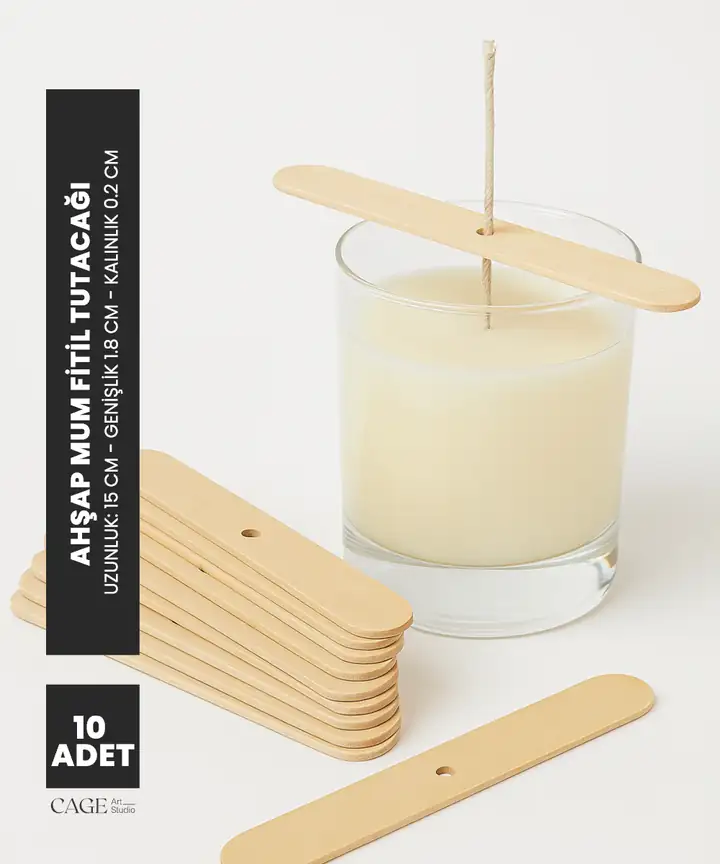 Ahşap İp Fitil TutucuView
Burn test: is the wick right?
The chart is only a starting point. Wax, fragrance oil, dye and container together change the wick; the burn test gives the final answer. Do this test with every new recipe you will sell or give as gifts:
- 1
Pour test candles and let them cure
Pour candles with the same container, wax and fragrance oil, in three sizes from the same series (your estimate, one smaller, one larger). Let soy candles cure for at least 48 hours, and candles with wooden wicks for 72 hours.
- 2
Write everything down
Write the wax, the fragrance oil and its ratio, the dye, the wick and the inner diameter of the container on a sheet of paper; don't change the wick during the test.
- 3
Trim the wicks and line up the candles
Trim the cotton wick to 5–6 mm. Line up the candles on a heat-resistant surface with no drafts, leaving at least 8 cm between them.
- 4
Burn for four hours
Burn the candles for 4 hours and put them out; no longer. Every hour, note the flame height, the diameter and depth of the pool, and any soot and mushrooming.
- 5
Check the pool at hours 3–4
The pool should come within about 6 mm of the edge of the container and be 6–13 mm deep. A thin ring left at the edge is acceptable if it melts on the 3rd or 4th burn.
- 6
Cool it and repeat
Cool for at least 5 hours, trim the wick and burn again. Continue until about 6 mm of wax is left at the bottom; don't decide before the 4th cycle.
| Check | Pass | Fail |
|---|---|---|
| Flame height | Calm, 1–2.5 cm | Over 5 cm, flickering or choked |
| Melt pool | Reaches the edge in 3–4 hours | Doesn't reach the edge, tunnels |
| Pool depth | 6–13 mm | Deeper than 13 mm |
| Wick head | Clean or slightly curled | Obvious mushrooming |
| Glass | Heats evenly | Overheats or heats on one side |
| Smoke | None | Soot or constant smoke |
First change sizes within the same series, and only then change series. Once you've settled on the wick, evaluate the scent while it burns. Because soy soot is white, check the edge of the glass closely.
Never leave test candles unattended, and burn them at least 30 cm away from flammable items; with the wrong wick, the flame can grow unexpectedly.
Wooden wicks: trimming, burning and why they go out
A wooden wick is made by pressing two thin layers of wood together and gives a wide, low flame. It is used only in container candles; some suppliers don't recommend it for beeswax and palm wax. Before burning, while the wick is cold, break off the burnt tip with your fingers or a paper towel, leaving 3–5 mm. Target: a full pool in 2–3 hours, a pool depth of about 13 mm and a flame of around 13 mm.
| Symptom | What to do |
|---|---|
| The flame is weak or going out | Break off the tip, leaving 3–5 mm; if the problem continues, a thicker wick or two wicks |
| The pool doesn't reach the edge in 2–3 hours | A wider wooden wick |
| There is smoke and the flame is too tall | First a narrower wick, then a thinner one |
How do you secure and set a candle wick?
In jars and glasses
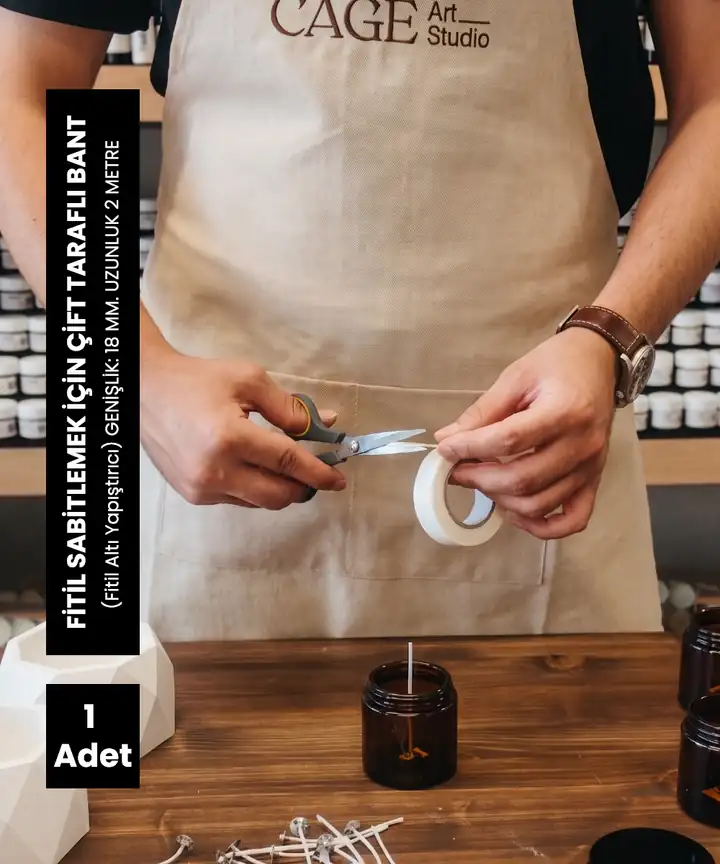
Cut a piece the size of the wick tab from the wick stickers roll; stick it under the tab and press it into the exact center of a clean, dry container. To keep the wick from shifting during the pour, set a wooden cord wick holder on the rim of the container, thread the wick through the center hole, and don't remove it until the wax has cooled completely. Clamp the end of a wick you cut from the spool with a wick centering bar (snap type).
The neck of the tab keeps the flame away from the bottom of the container: for example, Lone Star's tab necks are 10 mm, so the flame goes out before it reaches the glass. Stop burning a container candle when about 13 mm of wax is left at the bottom.
In a silicone mold
Open the wick hole slowly with a thick needle or a thin wooden skewer, thread the pre-waxed thin wick through, and leave the end outside. At the opening of the mold, center the wick with the holder; if wax seeps through the hole, seal it from the outside with a small piece of tape. When the candle comes out, leave 0.5 cm of wick on top and trim the bottom one flush with the base. The full process for pouring in a mold: Making Candles in Silicone Molds.
Why does a wick soot, and why does it go out?
Soot and black smoke
Tunneling: a pit in the middle
The wick mushrooms
The flame is small, smothered and goes out
Frequently asked questions
What wick size should a candle have?
The number varies by wick series and can't be compared across series. For example, in CandleScience's chart, CD 18 is recommended for a soy candle of 7.5–8.4 cm diameter and CD 22 for 8.4–9.6 cm; the burn test determines the exact size.
How many cm of wick should you leave?
Leave cotton wicks at 0.5 cm (5–6 mm) and wooden wicks at 3–5 mm before every burn. A long wick soots and darkens the color of the candle.
Why does a wooden wick go out?
Most of the time it is too thin for the container, or the burnt tip hasn't been broken off. Break off the tip, leaving 3–5 mm; if the problem continues, use a thicker wooden wick or two wicks.
How do you secure a candle wick?
In a jar, stick wick stickers under the wick tab and press it into the center of the container; during the pour, hold the wick centered with a wooden wick holder. In a silicone mold, thread the wick through its hole and center it at the opening with a holder.
What can you use instead of a candle wick, will string work?
Plain cotton string, a toothpick or a fabric strip is not a reliable wick; its thickness and burning are unpredictable. The practical solution is to cut pre-waxed thin wick from the spool at the length you want.
How many wicks do you use in a wide container?
If a single wick can't bring the pool to the edge in 3–4 hours, use two wicks. For a soy candle of about 10 cm diameter, CandleScience recommends two ECO 10 wicks; place the wicks equidistant from the center and confirm with a test.
Why does a candle wick soot?
The most common cause is a wick left too long: the wick burns on its own, not together with the wax. Trim the wick; if the problem continues, pick a wick one size thinner and burn the candle away from drafts.
The right wick, a clean burn
Pre-tabbed, wooden and spool wicks; with wick stickers, holders and tabs.