How to Put Out a Candle: Snuffer, Wick Dipping and Safety
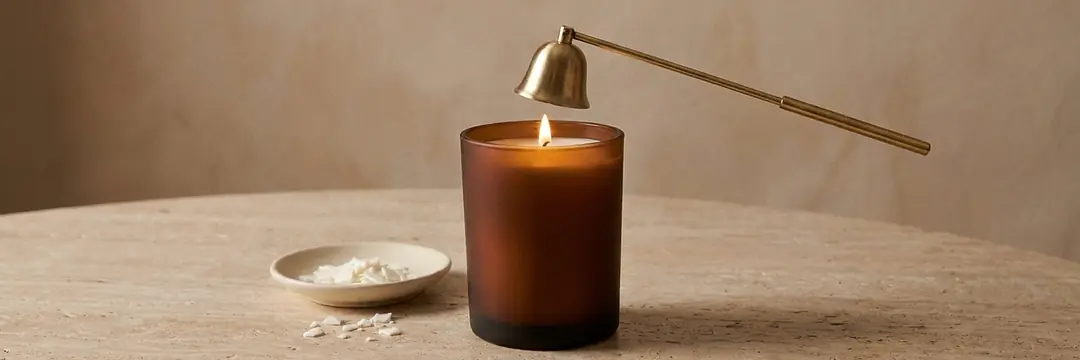
The safest way to put out a candle is with a candle snuffer; the NCA also considers a gentle puff acceptable. Dipping the wick into the pool of melted wax and lifting it back out reduces smoke. Never put a candle out with water; according to the NCA, water can make hot wax splatter. After putting it out, check that no ember is left on the wick, and don't move the candle until the wax has set.
In short
- 3 safe methods: snuffer, wick dipping and a gentle puff.
- Don't use water; hot wax can splatter.
- After putting it out, check that no ember is left on the wick.
- Don't move the candle until the wax has set completely.
- A single burn is 4 hours at most; wait at least 2 hours before relighting.
What are the 3 safe ways to put out a candle?
According to the NCA's safety recommendations, a candle is put out with a snuffer or by gently blowing on the flame. A third common method is to dip the wick into the pool of melted wax and lift it straight out. All three are safe; the difference is how much smoke they make and how ready the wick stays for the next burn.
| Method | How to do it | Upside | Watch out for |
|---|---|---|---|
| Candle snuffer | Hold the bell-shaped end over the flame for a few seconds. | No wax splatter and little smoke. | Don't let the snuffer touch the wax. |
| Wick dipping | Lay the wick into the melted wax with a metal tip, then lift it and straighten it. | Very little smoke, and the wick gets coated with wax. | Leave the wick centered and upright. |
| Gentle blowing | Blow gently on the flame, not from up close. | No tools needed. | A hard blow splatters wax; the wick gives off smoke. |
The cleanest method; it cuts the flame off from air.
The wick gets coated with wax and lights easily on the next burn.
It has to be gentle; this method makes the most smoke.
Why shouldn't you put a candle out with water?
The NCA explicitly recommends not using water to put out a candle: water can make hot wax splatter. Splattering wax can burn skin and leaves stains on nearby surfaces. Pouring cold water into a hot glass container also stresses the glass.
Don't pour water on a burning or just-extinguished candle, and don't wet the wick. A wet wick is hard to light next time and doesn't burn properly. For wax spilled by accident, see our candle wax removal guide.
If wax has splattered onto a surface, let it harden first, then scrape it off. For the steps on cleaning fabric, carpet and jars, see our post on how to remove candle wax.
Can you blow out a candle?
Blowing a candle out isn't forbidden; the NCA lists a gentle puff among the safe methods. The problem is how hard you blow. A hard blow can splatter melted wax onto the rim of the container or the table. The tip of a blown-out wick stays as an ember for a while, and a thread of smoke rises.
This smoke is separate from the soot made while burning. If you don't want a smell or smoke in the room, a snuffer or wick dipping gives a cleaner result. If you have a candle that soots while burning, we list the causes in the why is my candle smoking guide.
Hard blowing
Wax can splatter, the wick can bend sideways, and smoke lingers for a long time.
Snuffer or dipping
The wax stays put, there is little smoke, and the wick is ready for the next burn.
How does wick dipping work?
According to candle maker Antique Candle Co., wick dipping uses a thin metal rod with a curved tip. The wick is laid into the pool of melted wax with this tip, and the flame goes out in the wax. Then the wick is lifted right away and straightened so it stands upright and centered.
The upside of this method is that the wick gets coated with wax: it lights easily on the next burn and makes almost no smoke when put out. The method needs a pool that is melted enough; if a pool hasn't formed in the first minutes of burning, use a snuffer.
Don't forget to lift the wick after dipping it. A wick left lying in the wax gets buried when it sets and won't light on the next burn. After lifting it, check that the wick stands upright in the center of the container.
What steps should you follow when putting out a candle?
The sequence below brings together the NCA's recommendations for putting out and burning candles. It applies both to candles you bought and candles you poured yourself.
- 1
Decide when to put it out
A single burn shouldn't go past 4 hours. If you're leaving the room or going to sleep, put the candle out even if the time isn't up; don't leave a burning candle unattended.
- 2
Choose a method
The NCA recommends using a candle snuffer or gently blowing on the flame. Dipping the wick into the wax pool is also a commonly used method.
- 3
Put out the flame
Hold the snuffer over the flame for a few seconds or blow gently on the flame. A hard blow can splatter melted wax.
- 4
Check the wick
As the NCA recommends, check that the wick is completely out and has no ember on the tip. If an ember remains, hold the snuffer over it again.
- 5
Don't move the candle
Don't move or touch the candle until the wax has set completely. Melted wax is hot and can spill; with a gel candle, the container itself also gets hot.
- 6
Prepare it for the next burn
Once the candle has cooled, trim the wick to about 6 mm, remove the carbon ball if there is one, and clear any debris from the pool. Wait at least 2 hours before relighting.
When should you put a candle out?
A single burn should last 4 hours at most. On long burns the wick lengthens and mushrooms, the flame grows and the container gets hotter than it should. Also put the candle out right away when you leave the room, before you go to sleep, and when the flame grows or flickers and soots.
| Situation | What to do |
|---|---|
| 4 hours are up | Put it out; let it cool for at least 2 hours before relighting. |
| You're leaving the room | Put it out even for a short time; don't leave a burning candle unattended. |
| The flame has grown or is sooting | Put it out, let it cool, trim the wick to 6 mm and check for drafts. |
| 1.3 cm of wax left in the container | According to the NCA, stop burning the candle at this point; consider it finished. |
If you want to work out in advance how many hours a candle will burn, you can use the weighing method in the how long does a candle burn guide. We explain why the first burn should run long in the how to burn a candle post.
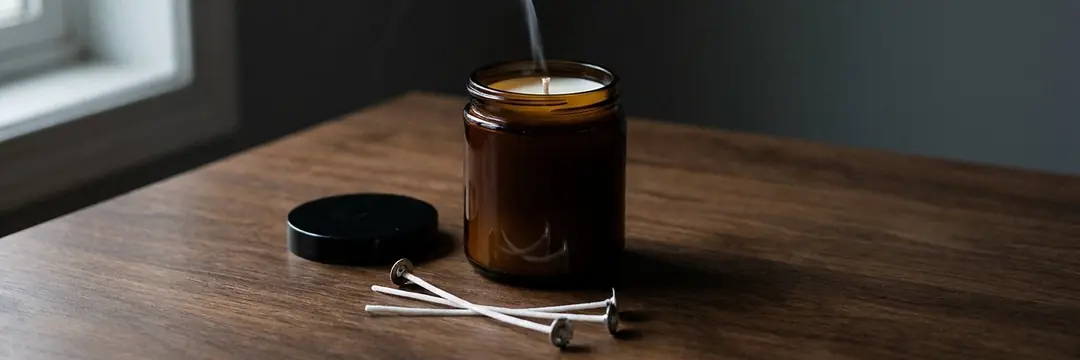
 Ready-Made Pre-Tabbed Candle Wick 8 cmView
 100cc Amber Glass Candle Jar with Black Plastic LidView
 Golden Soya Wax 1 kg (Leaf Shape)View
 Pearl Powder CandleView
Frequently asked questions
How do you put out a candle?
The safest way is a candle snuffer; the NCA also considers a gentle puff acceptable. Don't use water. After putting it out, check that no ember is left on the wick, and don't move the candle until the wax has set.
Why shouldn't you blow a candle out?
Blowing a candle out isn't forbidden; the NCA lists a gentle puff among the ways to put out a candle. However, a hard blow can splatter melted wax and the wick gives off smoke. That's why a snuffer is a cleaner method.
Can you put out a candle with water?
No. According to the NCA, water can make hot wax splatter. Pouring water into a hot glass container can also stress the container. Put the candle out with a snuffer or by gently blowing on it.
Why use a candle snuffer?
A snuffer puts the flame out by cutting off its air; the wax doesn't splatter and there is less smoke than with blowing. Because the wick stays in place, the next burn starts properly.
Can you put out a candle with your fingers?
We don't recommend it. The wick and the wax around it are very hot, so there is a burn risk. Use safe methods like a snuffer, wick dipping or a gentle puff.
When can you relight a candle after putting it out?
Wait for the candle to cool completely; at least 2 hours is recommended. Before relighting, trim the wick to about 6 mm and clear any debris from the pool.
Choose the right supplies for your project
Compare the product descriptions and instructions, then get your test pour ready.