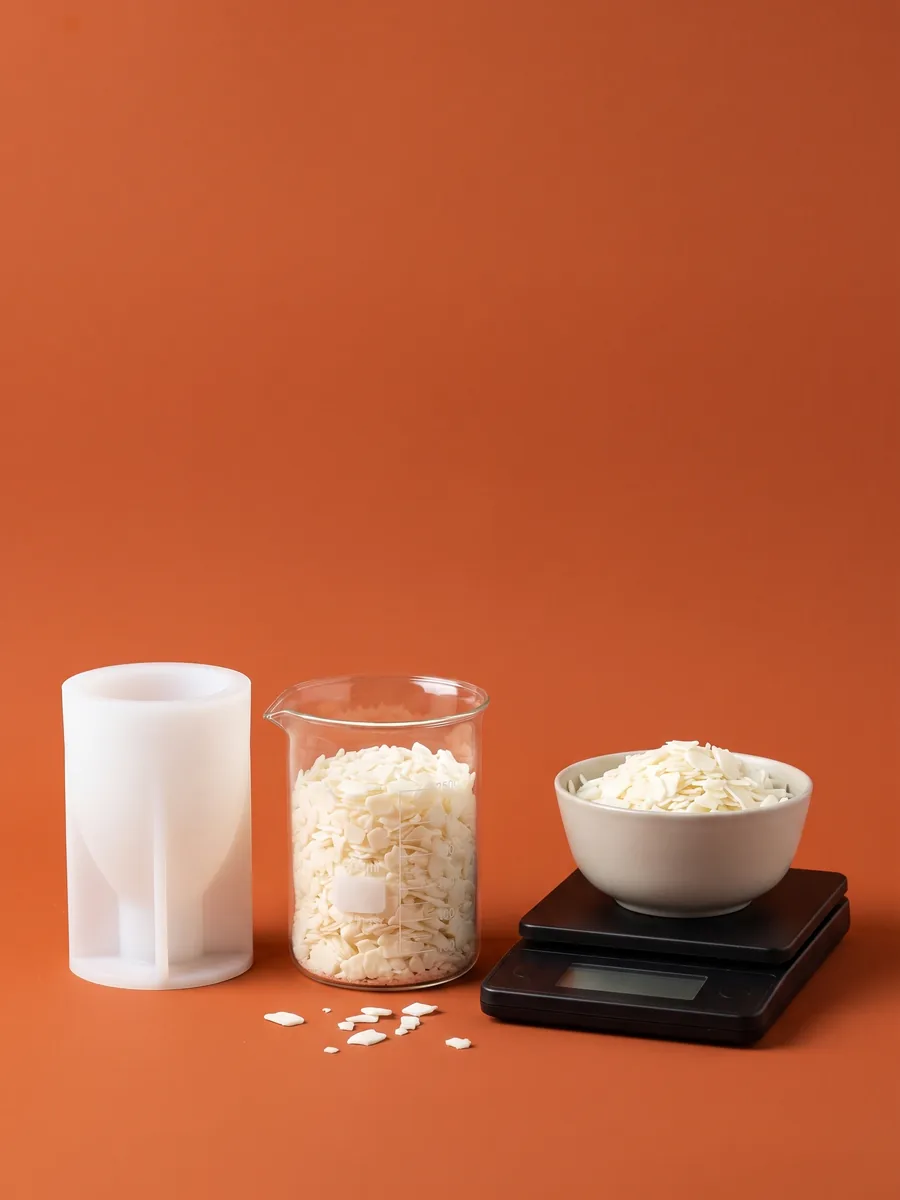
Candle Making Supplies: The Complete Beginner's List
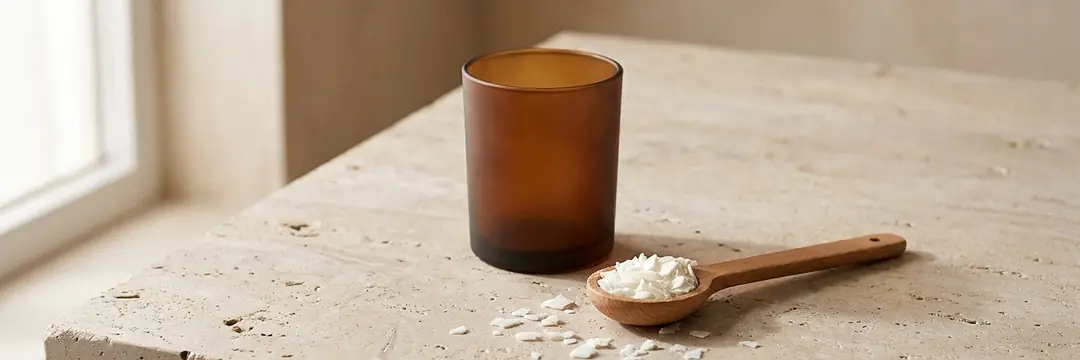
The candle making supplies list is actually short: wax, a wick, a container or mold, and two tools for measuring. What confuses people is that every product looks like a “must-have.” In this guide we explain, gram by gram, what you really need, what you can buy later, and how much to buy for your first batch.
In short
- The 7 essential supplies: wax, wick, container or mold, fragrance oil, thermometer, scale, melting pot.
- 1 kg of wax with 8% fragrance oil makes about 7 glass candles of 150 g.
- For 1 kg of wax, 60–100 g of fragrance oil (6–10%) and about 0.7–1 g of dye granules are enough.
- Because fragrance oil and dye are measured in small amounts of grams, a scale with 0.1 g precision makes your job easier.
- In a silicone mold, don't use container soy wax; use Pillar Soy Wax or paraffin with 10% stearic acid.
In this guide
The 7 essential supplies for candle making
Whatever candle you make, you can't go on without the seven items below. If you're making unscented candles, you can take fragrance oil off the list.
The body of the candle. Soft soy wax (Golden, Natural, American) for glasses and jars; hard Pillar Soy Wax or paraffin for silicone molds.
Soy WaxPre-tabbed cotton or wooden wick for glasses; pre-waxed thin spool wick for molds. The thickness is chosen by the diameter of the candle.
WicksHeat-resistant, crack-free glass or jar; a silicone mold for shaped candles.
Glasses and jarsIFRA-certified fragrance oil made for candles. Perfume and cologne are not used in candles.
Candle Fragrance OilsThe only reliable way to hit the temperatures for adding fragrance oil and pouring.
ThermometerA steel pot with a spout for a double boiler, or a melting pot with temperature control.
Wax Melting Pots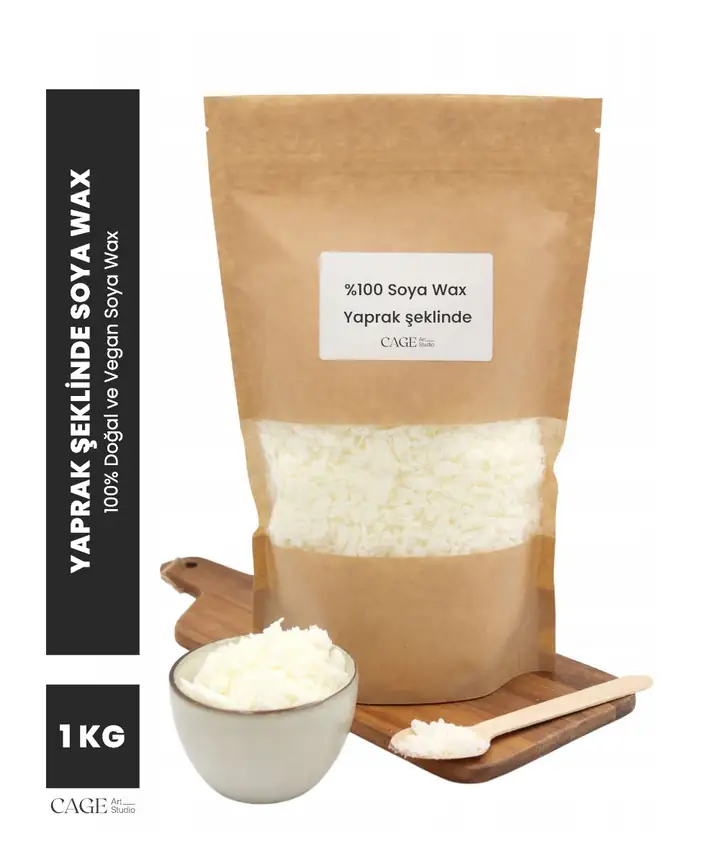 Golden Soya Wax 1 Kg (Yaprak şeklinde)View
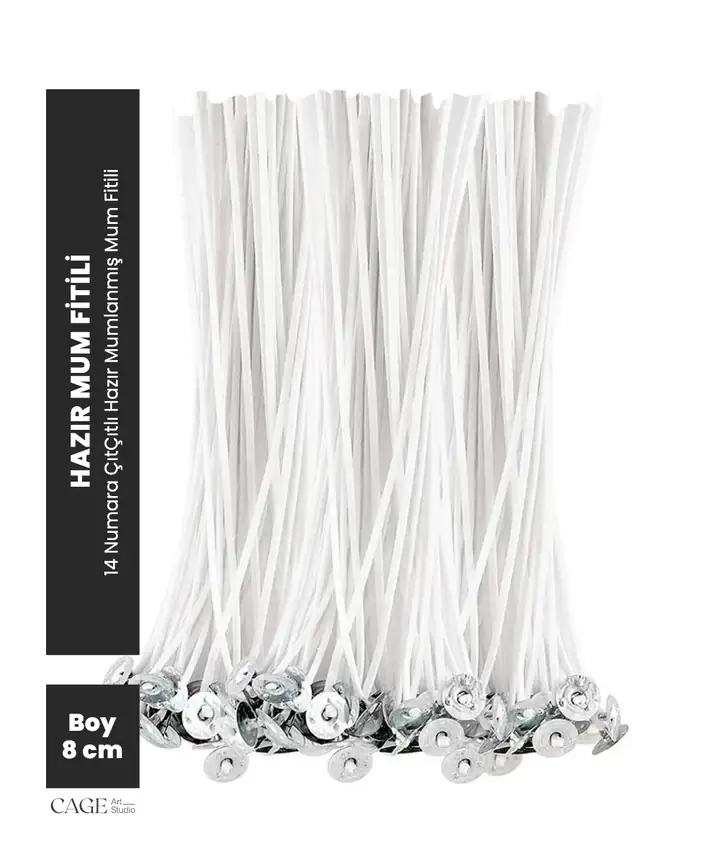 Hazır Çıtçıtlı Mum Fitili 8 CmView
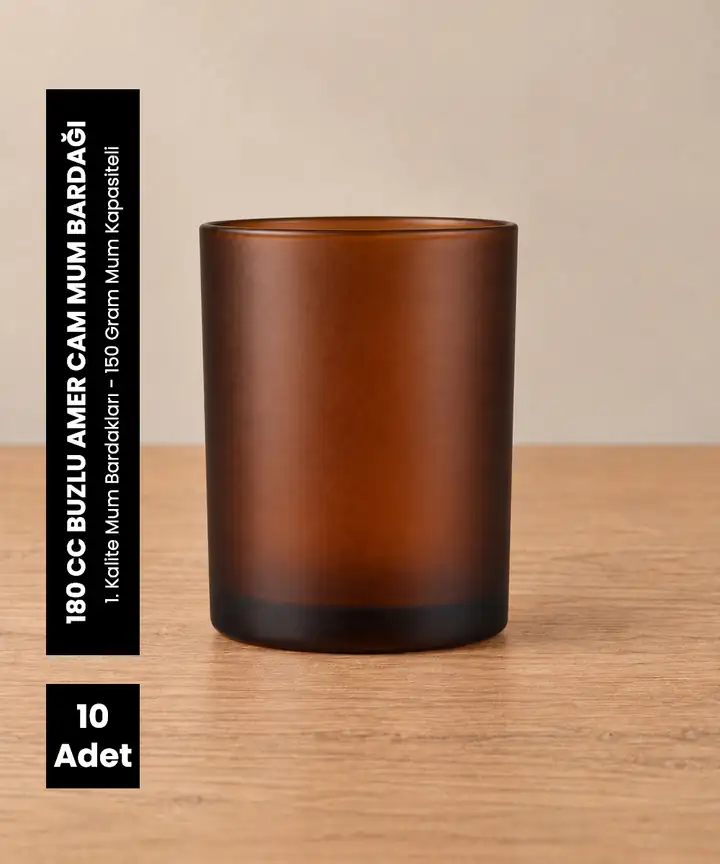 Buzlu Amber Cam Mum Bardağı – 150 Gram Mum KapasitesiView
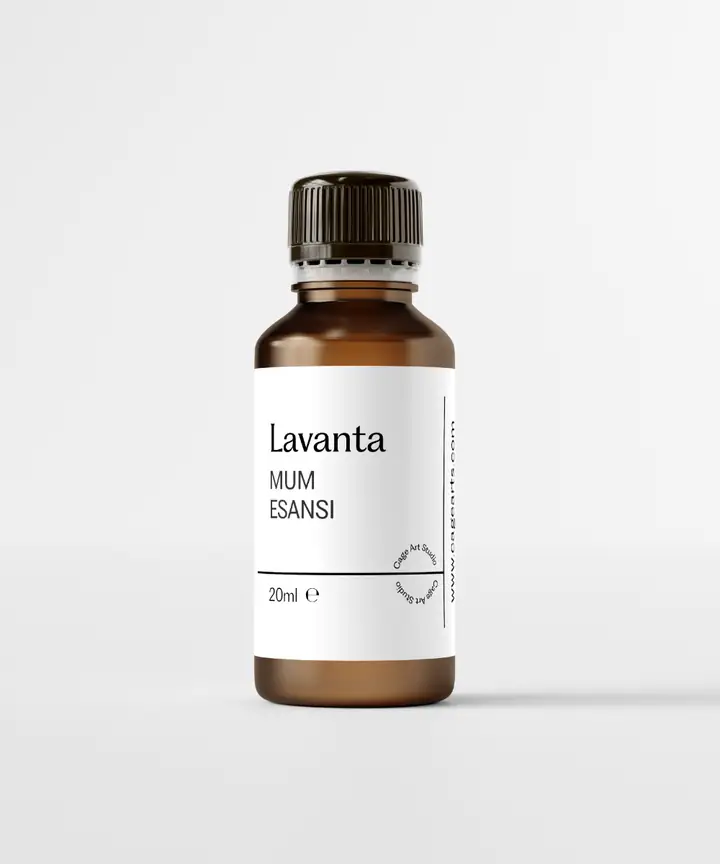 Lavanta Mum EsansıView
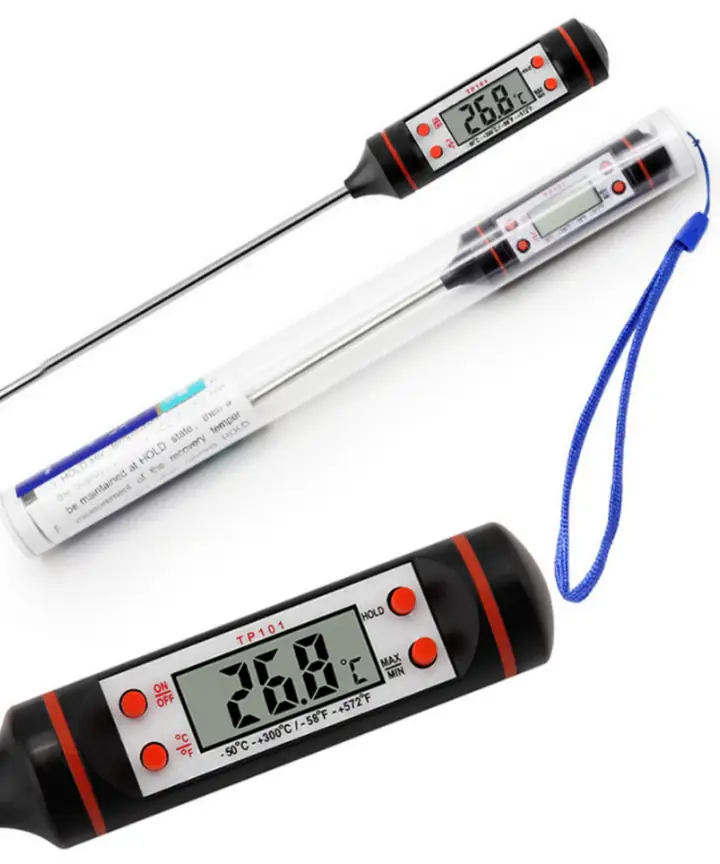 Dijital TermometreView
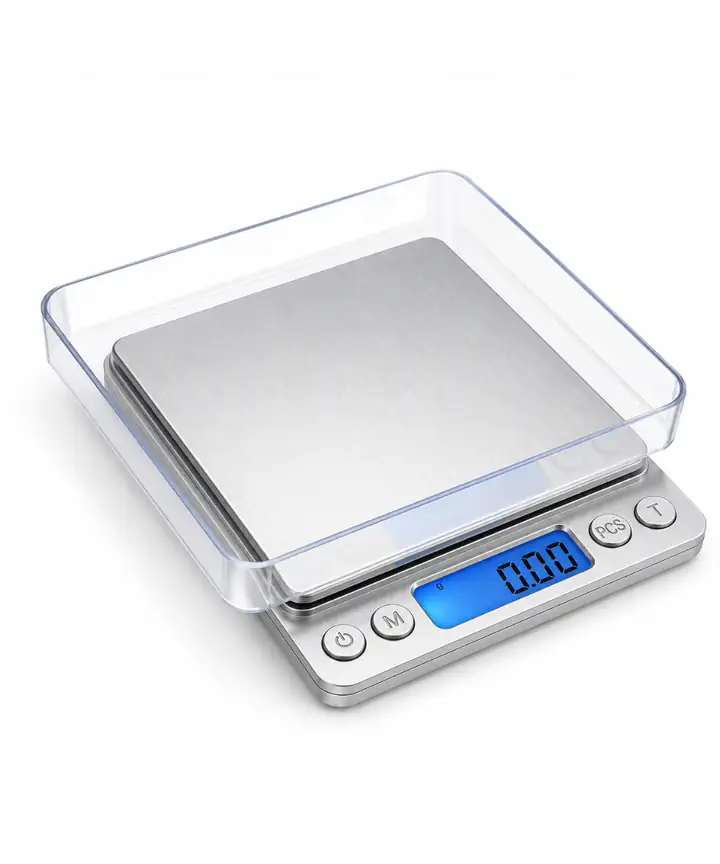 Mini Dijital Hassas Terazisi 0.1 - 2 kgView
Nice to have: what makes the job easier
You can make candles without these, but they speed up the work and reduce mistakes. If your budget allows, add the first three rows of the table to your first order.
| Material | What does it do? | When do you need it? |
|---|---|---|
| Wooden wick holder | Keeps the wick centered during the pour and cooling | With every glass candle |
| Wick stickers | Fixes the wick base to the container; cut to the length you want from the roll | With every glass candle |
| Metal stirring rod | Doesn't absorb scent or color, easy to clean | When stirring in fragrance oil and dye |
| Dye granules | 10 g colors 10–15 kg of wax | If you want colored candles |
| Stearic acid | Hardens paraffin, makes unmolding easier | In molded candles with paraffin (10%) |
| Pasteur pipette | Adds small amounts of fragrance oil drop by drop | For small batches |
| Wick centering bar (snap type) | Makes a base for the wick you cut from the spool | When cutting your own wicks |
| Hot glue gun | Another way to stick the wick base to the container | Instead of stickers |
A special pouring pitcher, a heat gun or a label printer aren't essential for first experiments. A hair dryer to fix the surface and a pot with a spout for pouring will do.
Checklist by candle type
The list changes a little depending on which candle you'll make. The thermometer, scale and pot are common to all three; the differences are below:
- Wax
- Golden, Natural or American soy
- Wick
- Pre-tabbed cotton or wooden
- Container
- Glass, jar
- Securing
- Stickers and wick holder
- Fragrance oil
- 6–10%
- Wax
- Pillar Soy Wax or paraffin
- Additive
- 10% stearic acid in paraffin
- Wick
- Pre-waxed thin spool wick
- Mold
- Silicone candle mold
- Securing
- Wick holder and tape
- Raw material
- Gel candle wax
- Container
- Thick, heat-resistant glass
- Wick
- One size thicker than usual
- Fragrance oil
- 3–5%, gel-compatible
- Decoration
- Only non-flammable objects
How much should you buy for the first batch?
Start small for the first batch: 1 kg of wax is enough for both a few trials and a few gift candles. If you know how many grams a container holds, the math is easy. With 8% fragrance oil, 1 kg of wax makes 1,080 g of candle:
A sample starter order for 7 glass candles of 150 g:
| Item | Capacity | Note |
|---|---|---|
| Golden Soya Wax | 1 kg | 972 g needed for 7 glasses; the rest is allowance for the pot |
| Candle fragrance oil | 78 g (8%) | If you try two scents, split it in half |
| Pre-tabbed wick | 8–10 pieces | Number of containers plus a few spares |
| Candle glasses | 7 pieces | 150 g capacity |
| Dye granules | A few granules per glass | A 10 g pack is enough for 10–15 kg of wax |
| Wick stickers | 1 roll | Cut as needed |
The math is the same for silicone molds: find the grams a mold holds with the silicone mold candle calculator and multiply by the number of pieces. If the container or mold page doesn't list a capacity, our Calculator page converts grams of water to grams of wax.
Golden Soya Wax is sold in 1, 5, 10 and 25 kg packs; Pillar Soy Wax in 1, 5, 10 and 20 kg packs.
Are a thermometer and scale really necessary?
Short answer: yes. Most candle making mistakes come from either temperature or measurement. Fragrance oil added to wax that's too cold doesn't mix fully, settles to the bottom and the candle sweats; a candle poured too hot dimples as it cools. Judging “warm” by hand isn't enough.
A digital thermometer that you dip into the liquid is enough. Our Digital Thermometer measures from −50 to +300 °C, and its 15 cm steel probe reaches the bottom of the pot. When measuring, don't let the tip touch the bottom of the pot; otherwise you're measuring the pot, not the wax.
A scale has two jobs: a capacity of a few kilos for wax, and precision for fragrance oil and dye. Because only 0.7–1 g of dye goes into 1 kg of wax, a mini scale with 0.1 g precision makes a difference in small batches; for big batches, a 10 kg kitchen scale will do the job. Fragrance oil's density differs from that of wax and of other fragrance oils; fragrance oil measured by milliliters or spoons gives a different ratio every time.
Kitchen pot or wax melting pot?
A kitchen pot is used for the double boiler, but the wax isn't put directly in the pot. You set a pot with a spout inside the boiling water; the wax melts in that pot, and its temperature doesn't exceed the boiling point of water. The pot and stirrer should be set aside for candles; fragrance oil and dye residue shouldn't pass to cookware.
| Double boiler | Melting pot | |
|---|---|---|
| Temperature control | You monitor it with a thermometer | Adjustable between 60–100 °C |
| Capacity | As much as the pot holds | From 1.2 to 30 liters |
| Best for | First experiments, small batches | Regular production, workshops |
| Caution | Water must not splash into the wax | Follow the melting pot's instructions |
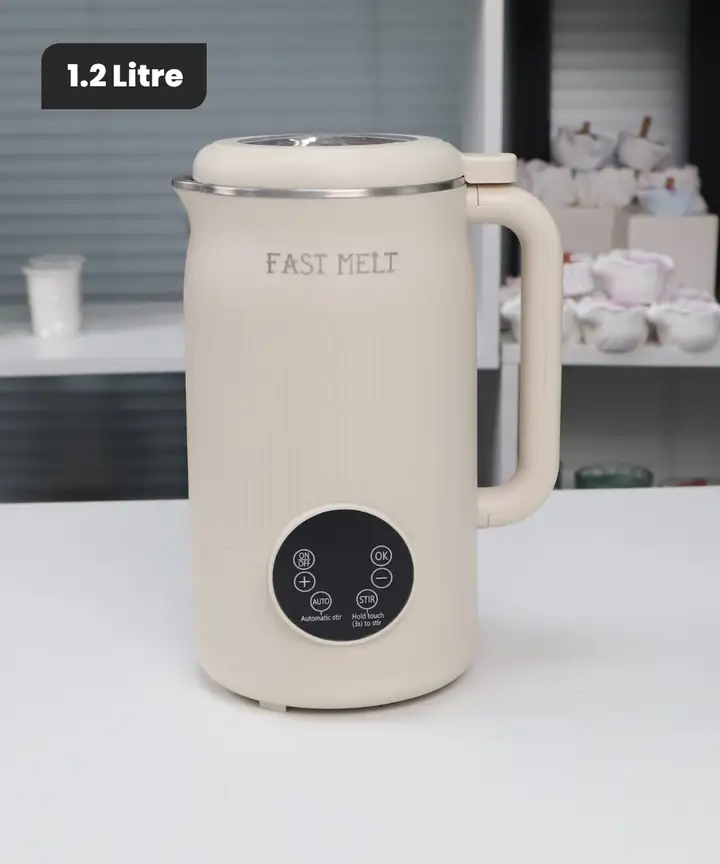 Mum Eritme Kazanı 1.2 Litre (Karıştırıcılı )View
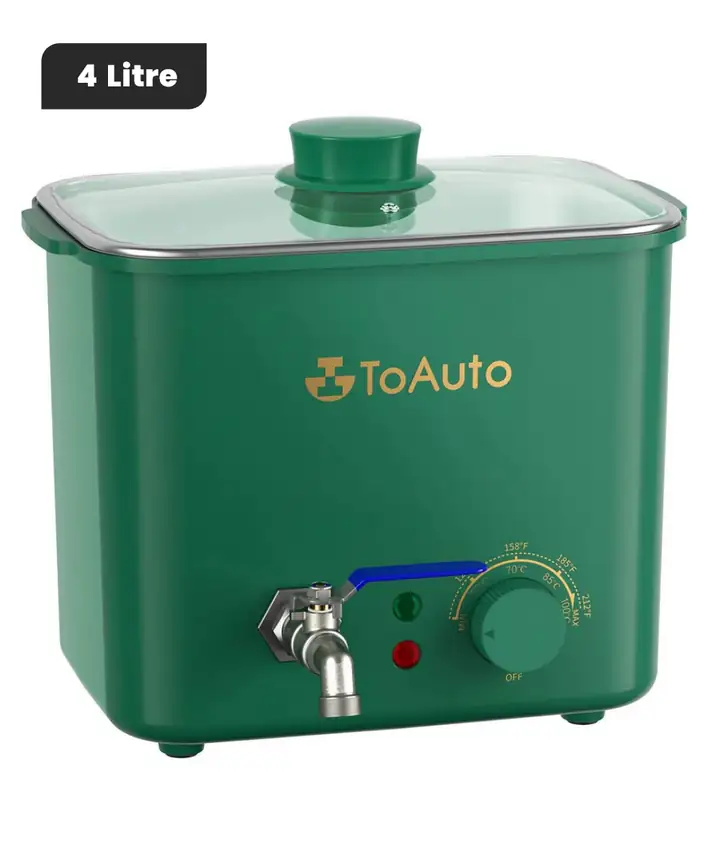 Mum Eritme Kazanı 4 LitreView
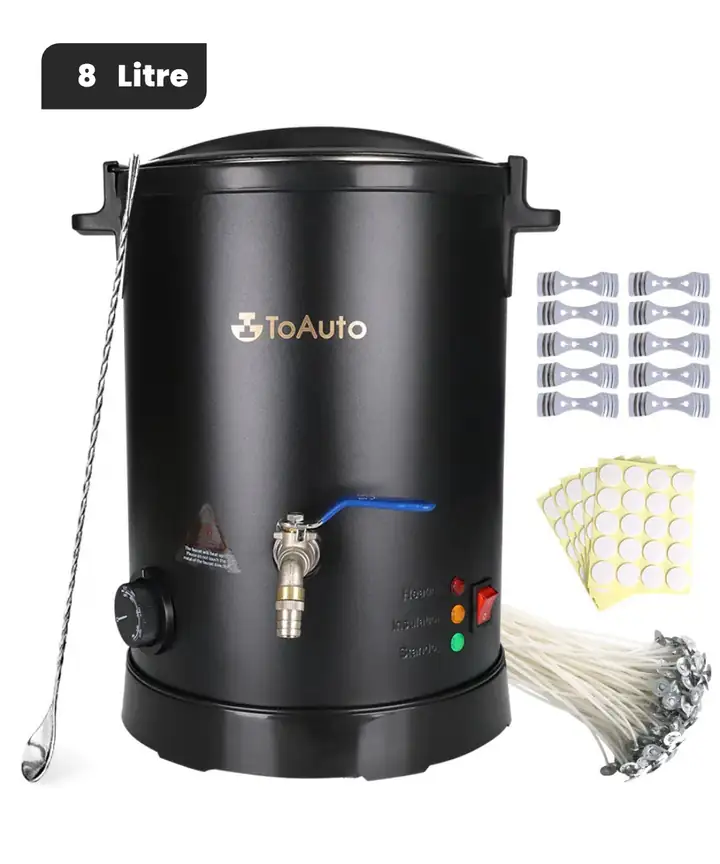 Mum Eritme Kazanı 8 LitreView
For melting pot selection and temperatures by wax type, see our How to Melt Candle Wax guide.
Candle making kit or individual items?
Most people searching for a “candle making kit” are beginners who don't yet know what to buy. A ready-made kit makes the first step easier; buying item by item teaches you what you use and why, and you won't come up short on your second project.
Ready-made kit only
Quantities are fixed and may not fit your container or mold. The wax is chosen for a certain type of candle; you can't make silicone mold candles with a glass candle kit.
Building your own set
Start with the 7 essential supplies on this page and complete the list according to the candle type. You choose the wax for the job and calculate quantities for your own containers.
For ready-made options, see our Candle Making Kits, and for buying item by item, our Candle Making Supplies pages. Technical information for each soy wax is on its MSDS page: Golden Soya Wax, Pillar Soy Wax, American Soy Wax.
If you'd like a roadmap along with the supplies, the Candle Making E-Book goes with you from your first candle to selling, with 12 recipes, a troubleshooting section and cost calculations.
Compare the contents and stated yields of Kavanoz, Kış Mumları and İlk Mumum in the candle making kit selection table.
Frequently asked questions
What supplies do you need to make candles?
Wax, a wick, a container or mold, a digital thermometer, a scale and a melting pot are essential; if you're making scented candles, you also need candle fragrance oil. Dye, stearic acid and a wick holder are helpers that make the job easier.
How many candles does 1 kg of wax make?
With 8% fragrance oil, 1 kg of wax makes 1,080 g of candle: about 7 glasses of 150 g, 14 small jars of 75 g or 5 jars of 190 g.
Do you need a thermometer for candle making?
Yes. Fragrance oil is added at 80–85 °C and container soy candles are poured at 55–60 °C; a few degrees' difference changes the scent and the surface. Guessing by hand doesn't give consistent results.
Can you use a kitchen pot for candle making?
The pot is used for the double boiler water; the wax melts in a separate pot set inside it. Don't use the pot and stirrer you use for candles for cooking.
Should I buy a candle making kit or the supplies individually?
A kit is practical for a single trial. If you're planning more than one candle or different containers, buying the supplies separately lets you choose the wax type and quantities to suit your work.
How much fragrance oil and dye do you need for 1 kg of candle?
Fragrance oil is used at 6–10%, that is 60–100 g. With dye granules, 10 g colors about 10–15 kg of wax, so 0.7–1 g is enough for 1 kg.
If your list is ready, get your cart ready
Wax, wicks, fragrance oil, glasses, thermometer and scale in one order; shipped within 1–3 business days.