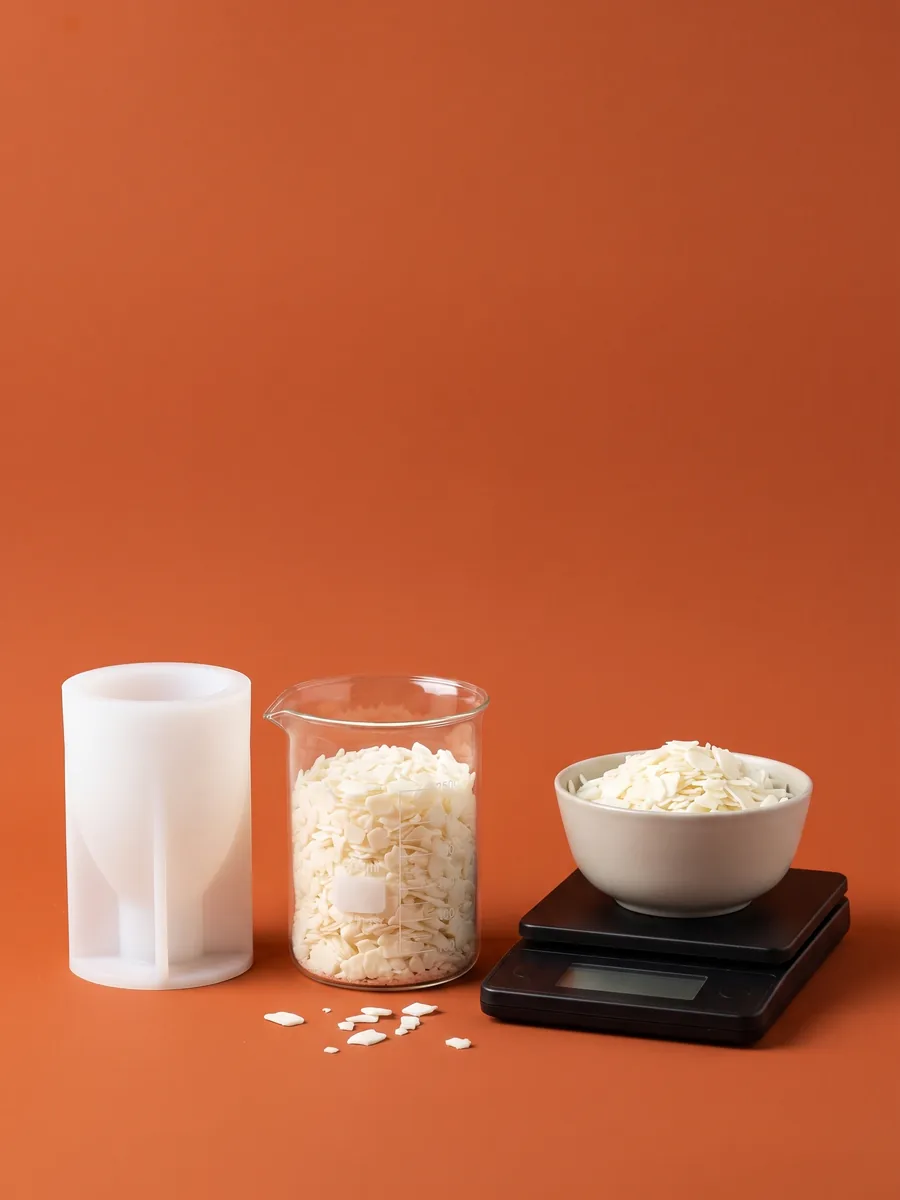
What Is Stearic Acid? Candle Ratios and Soy Wax Use
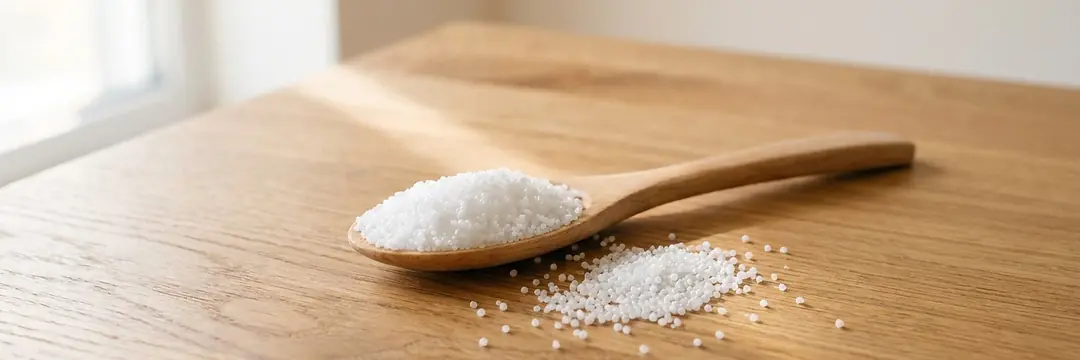
Stearic acid is a candle-making additive that increases hardness and opacity and helps candles release from molds. Our reference for paraffin is 10%, or 100 g stearic acid per 1 kg paraffin. Calculate the percentage from the paraffin weight; do not automatically apply that same ratio to ready-formulated soy waxes.
In short
- Paraffin reference: 10%, or 100 g stearic acid per 1,000 g paraffin.
- The fragrance-free total is 1,100 g; the percentage is based on the base wax.
- Sources give differing paraffin ratios; verify with a small sample.
- Pillar Soy Wax does not require an added hardener.
- Do not copy the paraffin ratio into Golden container wax.
What is stearic acid and what does it do in candles?
Stearic acid is an additive that changes paraffin’s behavior in candle making. It may affect hardness, a whiter and more opaque appearance, release from molds and shape retention in warmth. These are typical functions, not guarantees of identical results or burn times in every paraffin formula.
Searches for stearin may show the names starin, stearin and stearic acid together. Our product is listed as Stearic Acid - Starin. A trade name is not a chemical purity certificate; check product information for intended use and dosage. This guide covers use in paraffin and candle formulas.
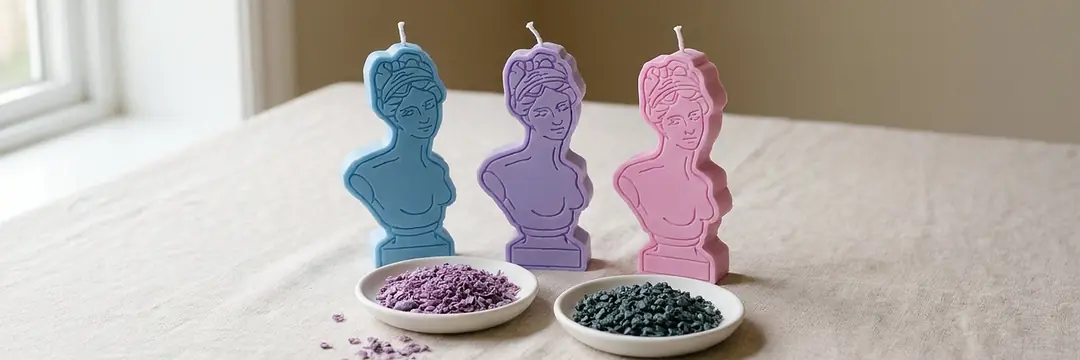
May affect shape and mold release in freestanding paraffin candles.
May make paraffin whiter and more opaque; the same dye amount can look different.
Reassess the wick when additives change; a smooth surface does not replace a burn test.
How much stearic acid should a candle contain?
Start with our shop’s reference: 10% for paraffin, or 100 g stearic acid per 1 kg paraffin. The percentage uses the initial paraffin weight. Combining 1,000 g paraffin and 100 g additive gives 1,100 g total; those amounts cannot give a 1,000 g final mixture.
| Paraffin Wax | Stearic acid: 10% of paraffin | Total without fragrance |
|---|---|---|
| 100 g | 10 g | 110 g |
| 250 g | 25 g | 275 g |
| 500 g | 50 g | 550 g |
| 1,000 g | 100 g | 1,100 g |
Foreign sources do not give one shared ratio. Candlewic suggests about 5% as a paraffin starting point and 2–3% for a mottled effect; other suppliers in the research give about 3–10%. Do not use this range to extend our 10% reference to all waxes. Paraffin type, appearance goals and existing additives determine a meaningful trial.
For exactly 1,000 g without fragrance at 10% of paraffin, use about 909.1 g paraffin and 90.9 g stearic acid. Fragrance and dye change the final weight again.
When writing “10%” in a recipe, specify the denominator. Mixing percentages of total batch weight with additives relative to wax can cause mistakes on the next pour. Connect the calculation to mold capacity in our candles per 1 kg of wax guide.
Can you add stearin to soy wax?
| Wax type | Approach to stearic acid | Why? |
|---|---|---|
| Paraffin for molds | Shop reference: 10%; assess with sources and samples | May target hardness, opacity and mold release |
| Pillar Soy Wax | Not mandatory; test the ready-made formula without additives first | The product is developed for molded candles |
| Golden container wax | We do not recommend routine addition without manufacturer instructions | Glass adhesion and balanced burning also matter in jars |
| Other soy or blended wax | Check composition and technical data | “Soy” alone does not identify one formula |
Can stearin be added to soy wax? It may be tested in some formulas, but not every soy wax needs it, and paraffin ratios should not be copied. References to additives for soy surface problems are not validated recipes for every container wax. If your wax is too soft for molds, first choose the correct product class.
Pillar Soy Wax’s product page gives 55–65 °C for pouring into silicone molds; if the room is cold, you can go up to 70 °C. Our local sources give no formula-specific instruction to treat this ready-made wax like paraffin and add 10% stearic acid. Golden is intended for jars and cups. See soy wax types for a detailed comparison.
How do you add stearic acid to paraffin?
- 1
Identify the base wax and purpose
Assess hardness or release needs for a molded paraffin candle. Do not automatically add the same additive to ready-made Pillar or container wax; read the manufacturer’s instructions.
- 2
Weigh wax and additive separately
Our paraffin reference is 10%: 100 g stearic acid per 1,000 g paraffin. This uses paraffin weight; the total is 1,100 g. Do not measure by spoon or volume.
- 3
Melt together under control
Melt paraffin and stearic acid together in a suitable vessel using a double boiler or wax melter. Monitor with a thermometer, stir gently and achieve a uniform mixture without solid pieces.
- 4
Add other materials according to their instructions
Check dye and fragrance compatibility separately. Additives do not automatically raise fragrance capacity; make a measured sample within wax and fragrance limits.
- 5
Pour and cool completely
Follow your paraffin’s pouring instructions. Our paraffin beads have a recommended application temperature of about 70 °C; this is not one temperature for all blends.
- 6
Compare release and burning
Peel the mold off the piece and check the edges. After appropriate curing, observe the wick, flame and melt pool; do not assume the old wick gives the same result after a formula change.
Do not invent a universal stearic-acid addition temperature for all waxes. Our sources support melting it together with paraffin; the selected wax’s conditions take priority. Keep the melting vessel off direct flame and do not leave hot mixtures unattended. See how to melt wax for details.
Does stearin change candle color and mold release?
Stearin may increase paraffin’s opacity, so a color sample without it is not equivalent. The same dye weight can look like another shade when transparency changes. Cool a small drop to inspect the final color before adding more dye. Changing fragrance, dye and additive together makes the cause of a result unclear.
Easier release is not only about additives. Cooling, delicate details and the removal method affect results. Pulling before full cooling can break an edge even with hardener. Follow how to unmold a candle; oiling the mold is not an alternative to an additive.
What problems can excess stearic acid cause?
The candle became brittle
The wick burns poorly
Color or pattern changed
Sinkholes persist
Which stearic acid pack and materials should you choose?
Compare 100 g, 250 g, 500 g and 1 kg packs against your needs. For example, 100 g additive corresponds to 1 kg paraffin at our 10% reference; this is arithmetic only. Separate trial quantities from total production when choosing a pack. Verify weight against the variant ordered.
Paraffin beads are easy to weigh into samples without breaking hard blocks. For a ready-made plant-based molding wax, Pillar Soy Wax is a separate option. Our paraffin guide explains beads versus blocks. The goal is to identify the need and measure a recipe, not to add hardener to every candle.
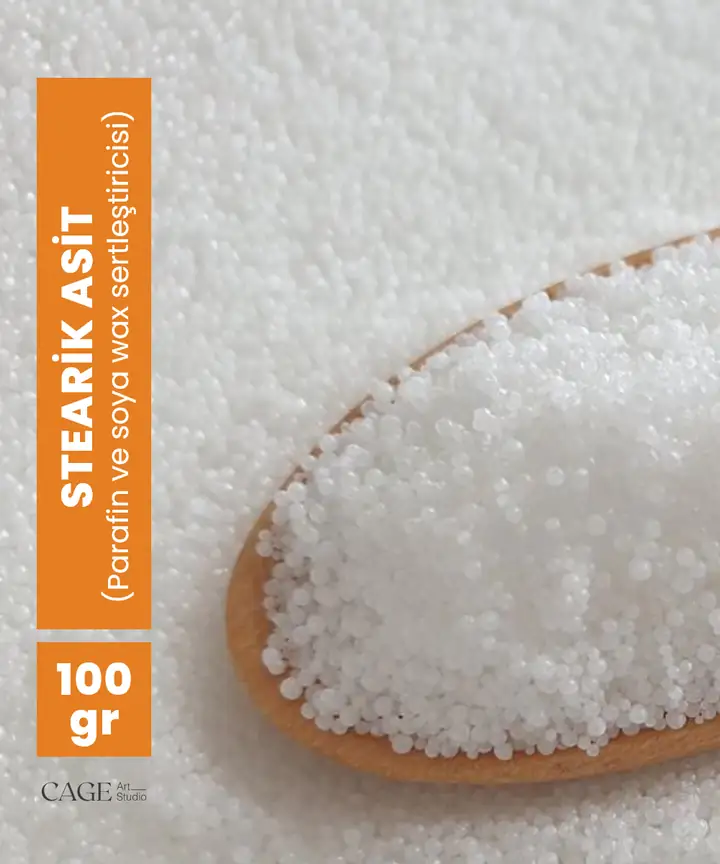 Stearic Acid (Starin) 100 gView
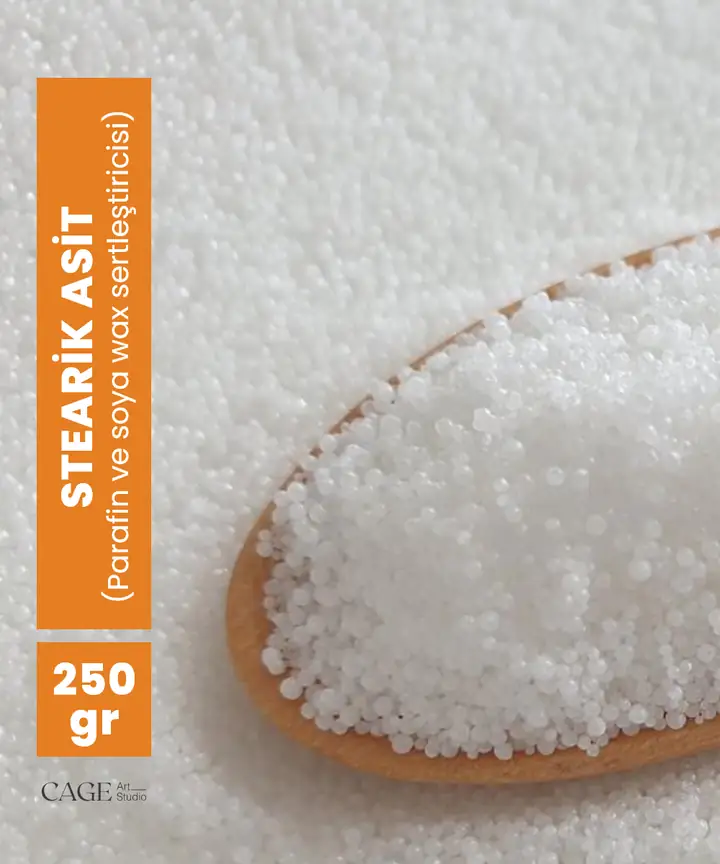 Stearic Acid 250 gView
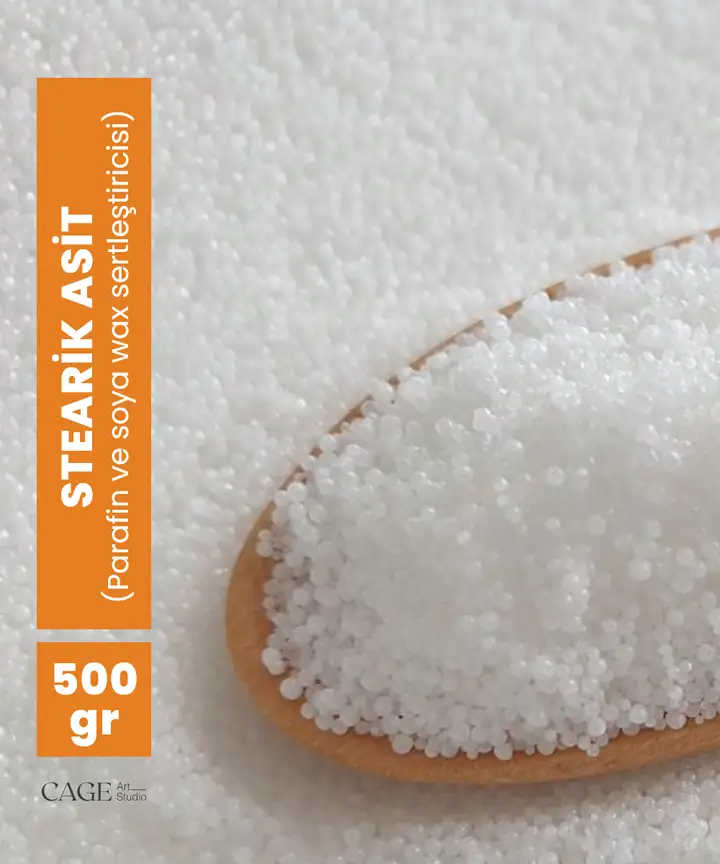 Stearic Acid (Starin) 500 gView
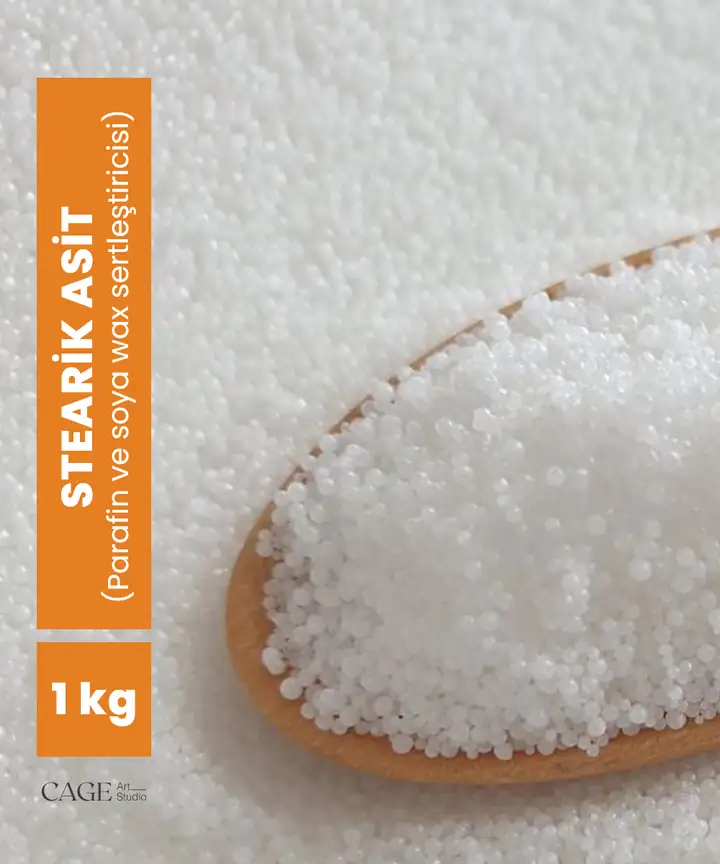 Stearic Acid 1 kgView
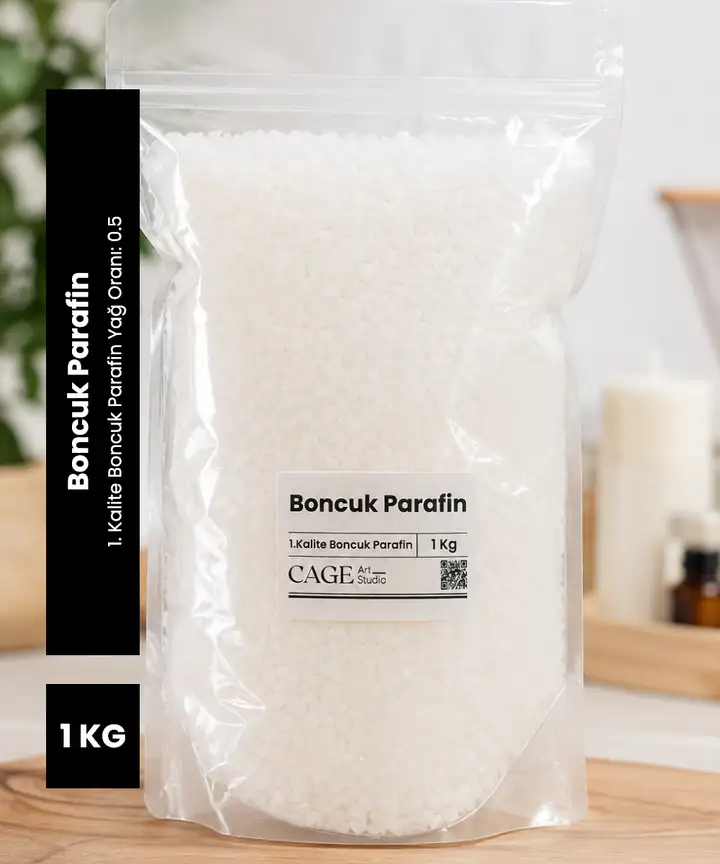 Paraffin Pellets 1 kgView
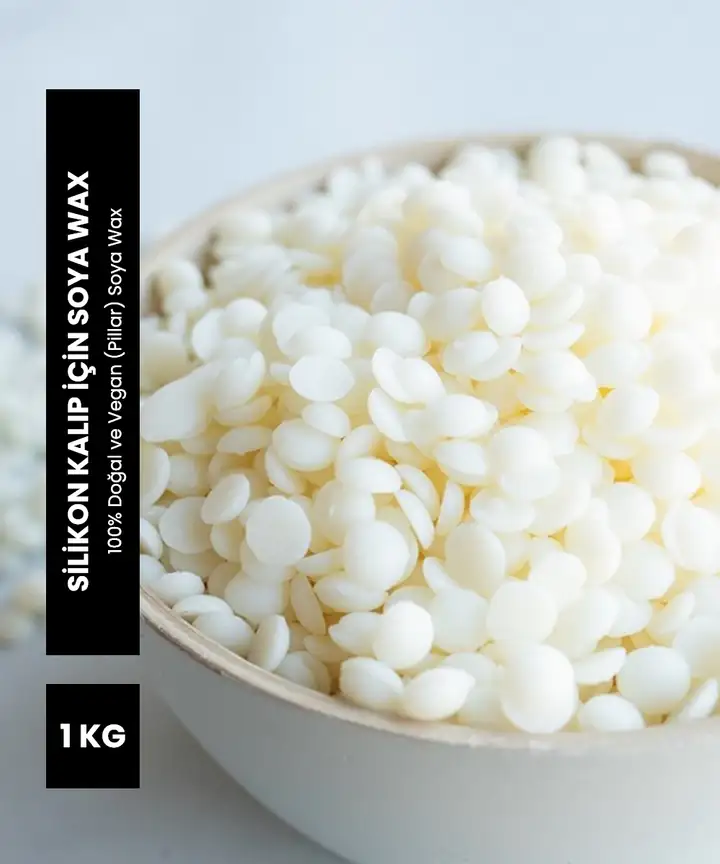 Pillar Soy Wax for Silicone Molds 1 kgView
What are common questions about stearic acid?
What is stearic acid?
An additive used especially to adjust paraffin hardness, opacity and release from molds. It is not essential in every wax; assess it for the base wax and intended candle type.
How many grams of stearic acid per 1 kg of paraffin?
Our reference is 10%, or 100 g per 1 kg paraffin. Sources also give lower ratios; verify the result in a small sample with your paraffin, wick and mold.
Are stearin and stearic acid the same?
Candle suppliers may use “stearin” or “starin” for stearic acid products. The trade name alone does not establish composition; rely on the label and technical information.
Can you add stearin to soy wax?
An additive may be tested in some soy formulas, but there is no required or suitable ratio for all soy waxes. Pillar Soy Wax is ready for molds; do not apply paraffin’s 10% directly to container wax such as Golden.
Can stearic acid be added to container candles?
Hardness is not the only goal for container wax; glass adhesion and wick balance matter. We do not recommend routine stearic acid use without manufacturer approval and formula-specific testing.
Can excess stearin make candles brittle?
Sources note that excess additive may cause brittleness and wick clogging. Do not fix this by adding more; check measurements and reassess with a small sample.
Choose materials that suit your project
Choose molds, wax and accessories for your intended use, and record the first sample’s results as you go.