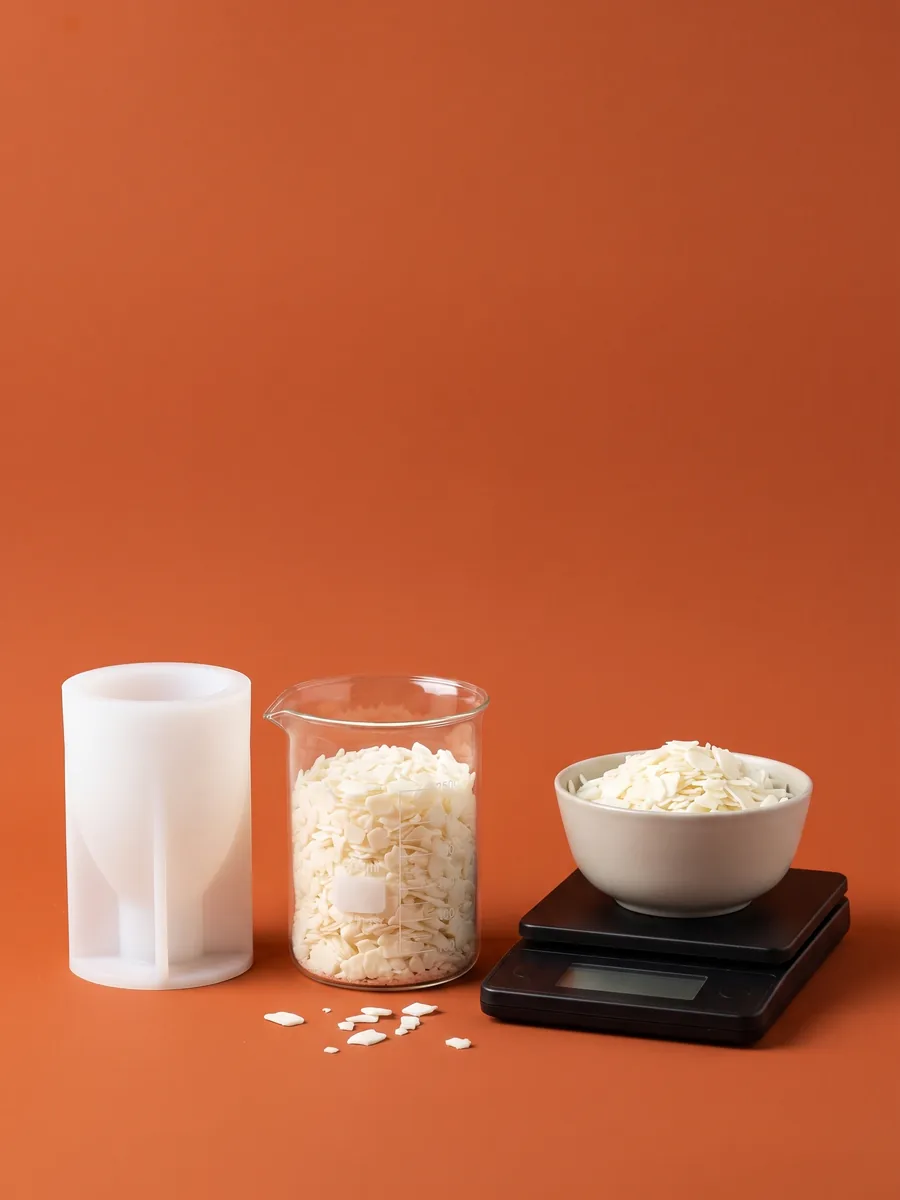
New Year Candle Making: 2026 Gift Plan and Safe Burning
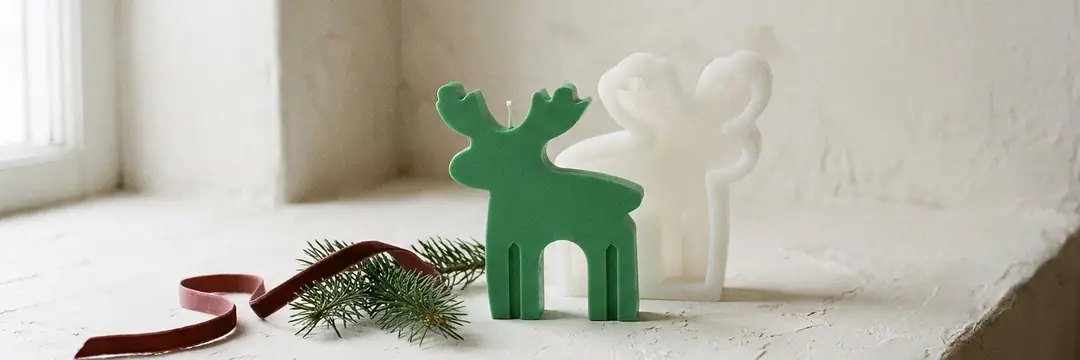
Make New Year candles by pouring firm wax around a centered wick in a seasonal silicone mold, then demolding after complete cooling. Pour Pillar Soy Wax at 55–65 °C; if the room is cold, you can go up to 70 °C. Allow 1–2 weeks for scented soy candles to cure before evaluating fragrance; remove flammable packaging decorations before lighting and test a sample figure’s burn.
In short
- For figure New Year candles, use Pillar Soy Wax; the pouring temperature is 55–65 °C.
- The New Year Tree M1 mold holds ~157 g: 145 g wax + 12 g fragrance oil (8%).
- Winter scents: Apple Cinnamon, Pumpkin Cinnamon, Mandarin, Ginger; ratio 6–10%.
- For color, use 0.7–1 g of dye granules per 1 kg of wax; test the color on a white plate.
- Pour 1–2 weeks before you give it as a gift: the scent settles in that time.
In this guide
- Which molds suit New Year candles?
- Which wax for New Year candles?
- Which winter fragrances suit New Year candles?
- How do you get red, green and gold shades?
- How do you make a New Year tree candle?
- When should you make New Year gift candles?
- How do you package New Year candles?
- How do you solve New Year candle pouring problems?
- How do you burn figurative New Year candles safely?
- What are common questions about New Year candles?
Which molds suit New Year candles?
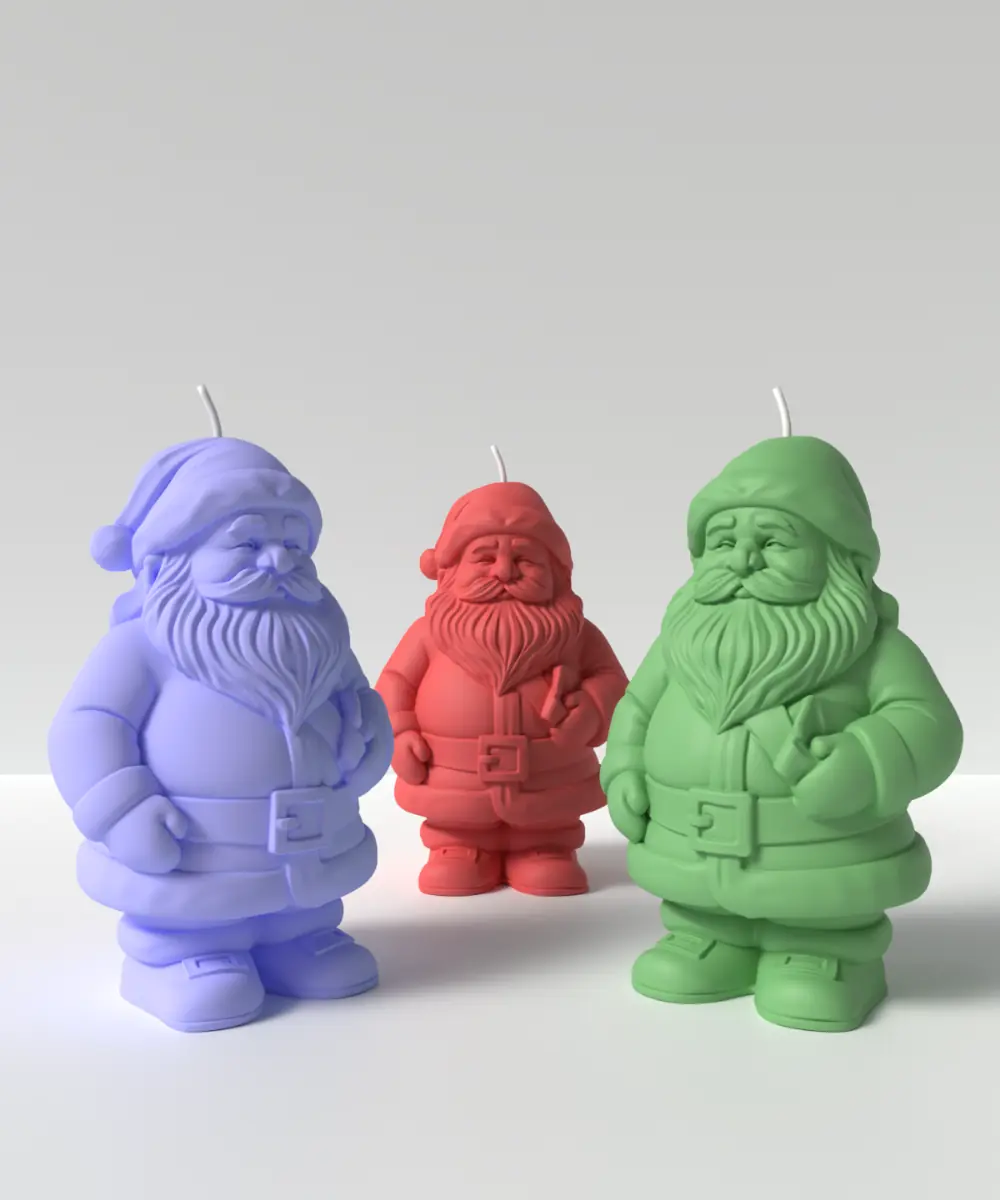
Our New Year Candle Molds collection has figures from pine trees to Santa Claus, pinecones to gift boxes. When choosing, look at two things: the height of the candle (will it stand on a table or sit in a gift box?) and how much wax the mold holds. Capacities are the estimated values on the product pages.
| New Year mold | Estimated candle capacity |
|---|---|
| Large Christmas Tree Silicone Mold | ~182 g |
| Patterned Tree Candle Mold | ~69 g |
| Deer Candle Mold | ~105 g |
| Gift Box Candle Mold | ~138 g |
| Snowman Candle Mold M1 | ~100 g |
| Snowman Candle Mold M2 | ~75 g |
| Pinecone Candle Mold | ~112 g |
| Pine Cone Candle Mold M2 | ~106 g |
| Small Christmas Tree Silicone Mold | ~59 g |
| Mr Santa Candle Mold | ~123 g |
| Mrs. Santa Candle Mold | ~115 g |
| Santa Claus Candle Mold | ~113 g |
| Santa Claus Candle Mold M1 | ~197 g |
| Santa Claus Candle Mold M2 | ~104 g |
| Santa Claus Candle Mold M3 | ~90 g |
| Santa's Sleigh Candle Mold | ~33 g |
| Christmas Tree Candle Mold M1 | ~157 g |
| Christmas Tree Candle Mold M2 | ~143 g |
| Christmas Tree Candle Mold M3 | ~172 g |
| Christmas Tree Candle Mold | ~229 g |
| Christmas Pattern Candle Mold | ~187 g |
| Christmas Patterned Candle Mold M1 | ~387 g |
| Christmas Pattern Candle Mold M2 | ~379 g |
| Christmas Patterned Candle Mold M3 | ~436 g |
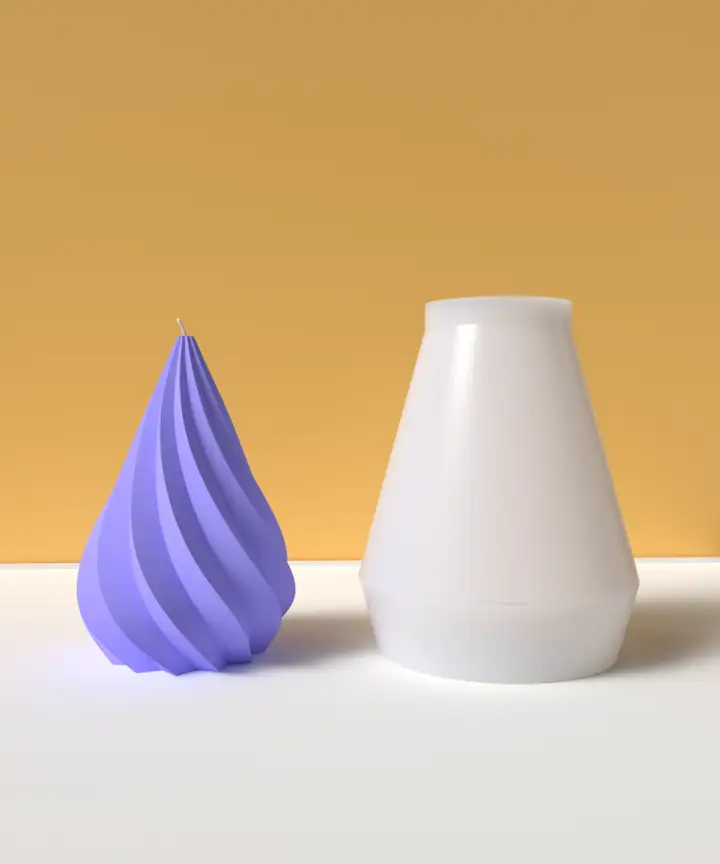 Christmas Tree Candle Mold M1View
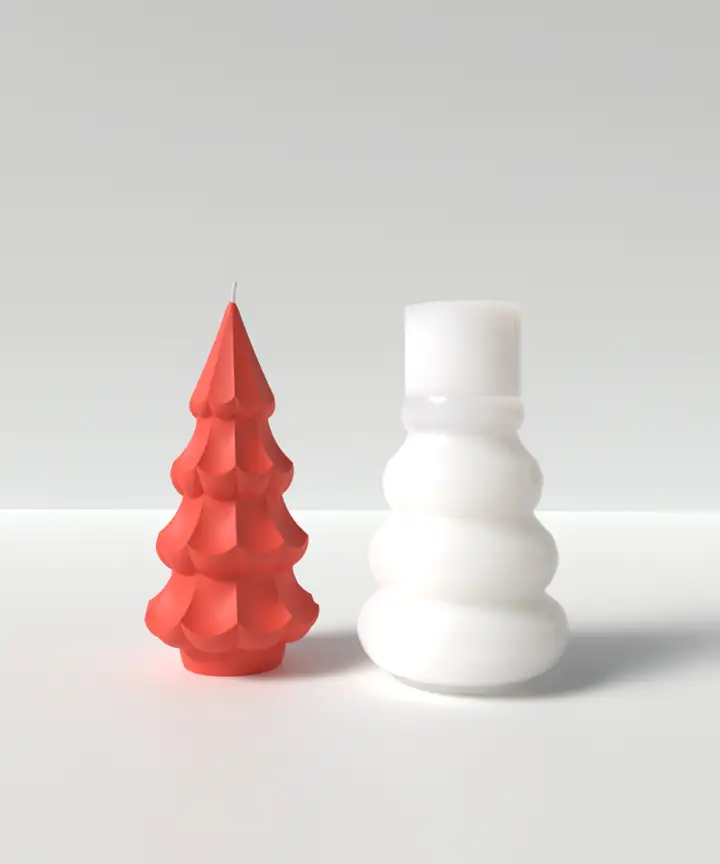 Small Christmas Tree Silicone MoldView
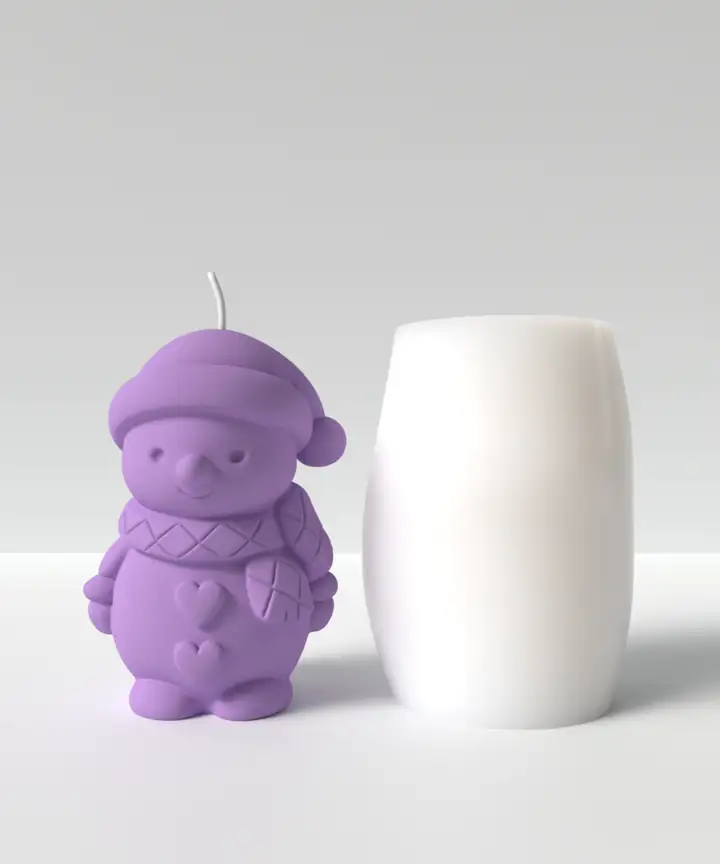 Snowman Candle Mold M1View
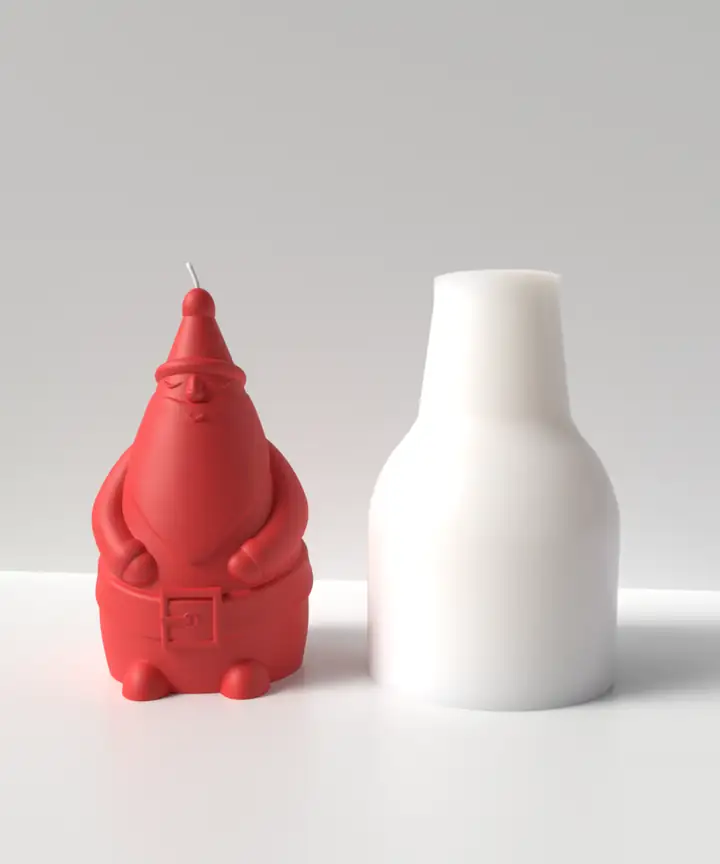 Santa Claus Candle MoldView
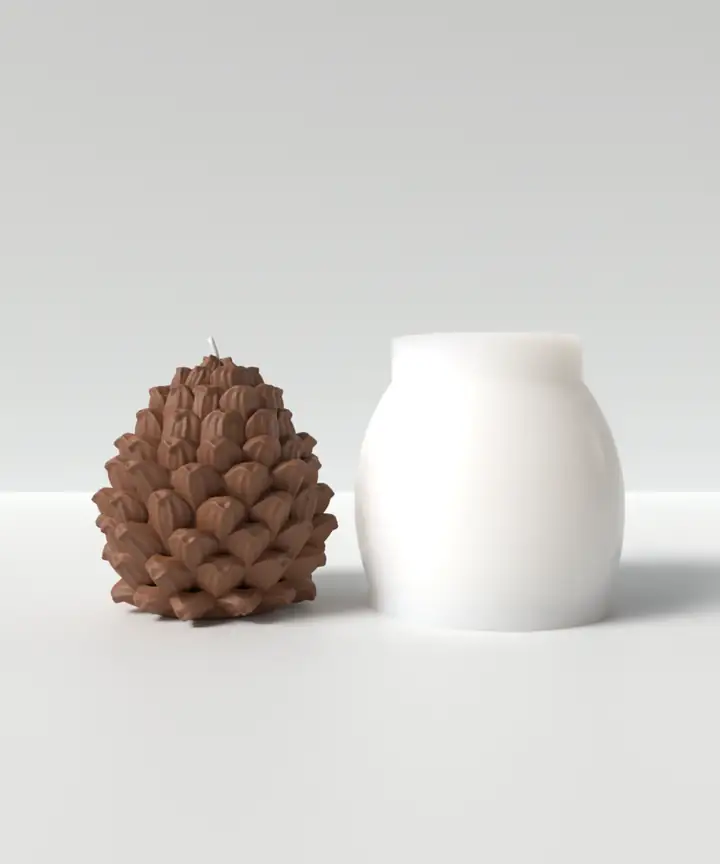 Pinecone Candle MoldView
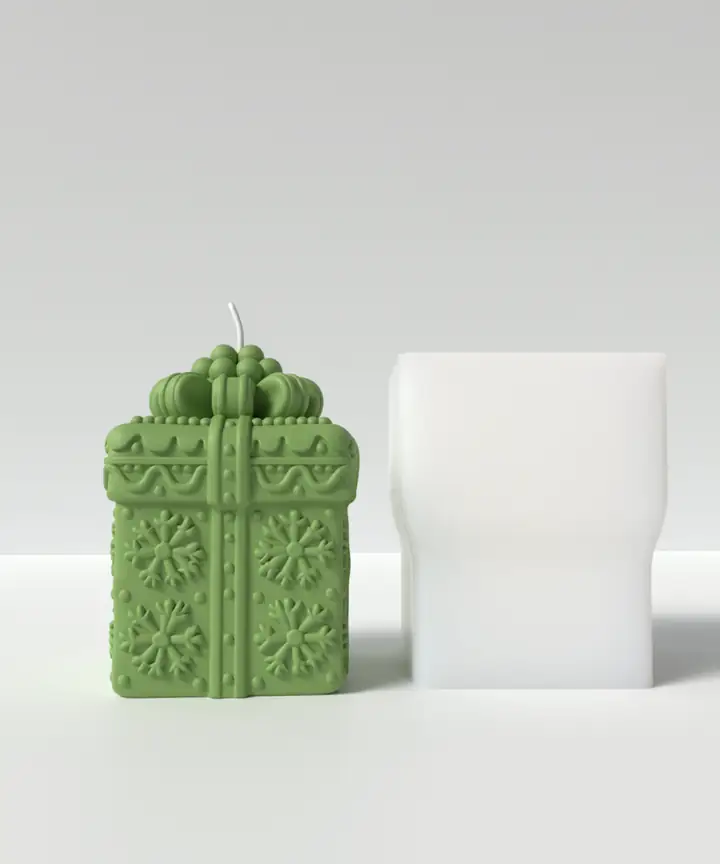 Gift Box Candle MoldView
Add another shape to the set with our bubble candle guide. For removing delicate branches intact, see how to remove candles from molds.
Which wax for New Year candles?
Figure candles that must come out of the mold and stand on their own need a hard wax. Pillar Soy Wax was developed for silicone molds: it comes as pellets, releases from the mold with a smooth surface, and resists cracking and warping. If you want to work with paraffin, add 10% stearic acid to 1 kg of paraffin, that is, 100 g: the candle hardens and releases from the mold more easily.
- Wax
- Pillar Soy Wax
- Use
- Molded candles
- Pour
- 55–65 °C
- Alternative
- Paraffin + 10% stearic acid
- Wax
- Golden Soya Wax
- Melting
- ~51–55 °C
- Fragrance oil saturation
- average 8%
- Guide
- Soy candles
For a New Year candle in a glass, soft Golden Soya Wax is an option designed for containers. For transparent winter decor, you can also try gel wax in glass suitable for candles.
Which winter fragrances suit New Year candles?
New Year scent brings to mind cinnamon, citrus, ginger and coffee. The fragrance oils in our store that suit winter best, and the ones they pair well with:
| Fragrance oil | Character | Pairing suggestion |
|---|---|---|
| Apple Cinnamon | Warm, spicy, sweet | Coffee, Ginger |
| Pumpkin Cinnamon | Spicy, soft | Mandarin |
| Mandarin | Citrus, fresh | Ginger, Sandalwood |
| Ginger | Sharp, spicy | Mandarin, Apple Cinnamon |
| Coffee | Dark, warm | Apple Cinnamon |
| Sandalwood | Woody | Bergamot, Mandarin |
| Patchouli | Earthy, woody | Sandalwood |
When you blend two fragrance oils, keep the total ratio within 6–10%. For example, if 145 g of wax needs 12 g of fragrance oil at 8%, you can split it as 7 g Mandarin and 5 g Ginger.
Scents containing vanillin and some citrus oils can turn wax yellow or brown as they contact air and light; this is more noticeable in soy wax. If you will pour a white snowman, make a single test pour first and wait a few days.
How do you get red, green and gold shades?
Dye granules melt in the wax and color the candle all the way through. 10 g of dye is enough for about 10–15 kg of wax, that is, 0.7–1 g per 1 kg of wax. For a single 145 g candle like New Year Tree M1, that is only 0.1–0.15 g: a few granules.
Red granules alone give a vivid shade. To get closer to burgundy, try adding a very small amount of brown.
Green granules are the color of a pine tree. To darken it, try a very small amount of brown or black.
White granules for the snowman. The natural off-white of undyed soy wax also gives a snow effect.
Mustard and gold shades come from adding a very small amount of brown to yellow. Metallic shine cannot be achieved with dye.
Melted wax always looks darker than it does once set. Before pouring into the mold, drip a few drops onto a white plate; once they set, you see the real color. Soy wax gives somewhat pastel colors, while paraffin gives more vivid results. Details on ratios are in our candle fragrance oil and dye ratio post.
Painting details afterward, like Santa's face, makes the candle prettier, but paints contain pigment. According to the NCA, pigments do not dissolve in wax; if they get into the melt pool, they can clog the wick. Think of painted figures more as decoration. Very dark, heavily dyed candles may also need a thicker wick.
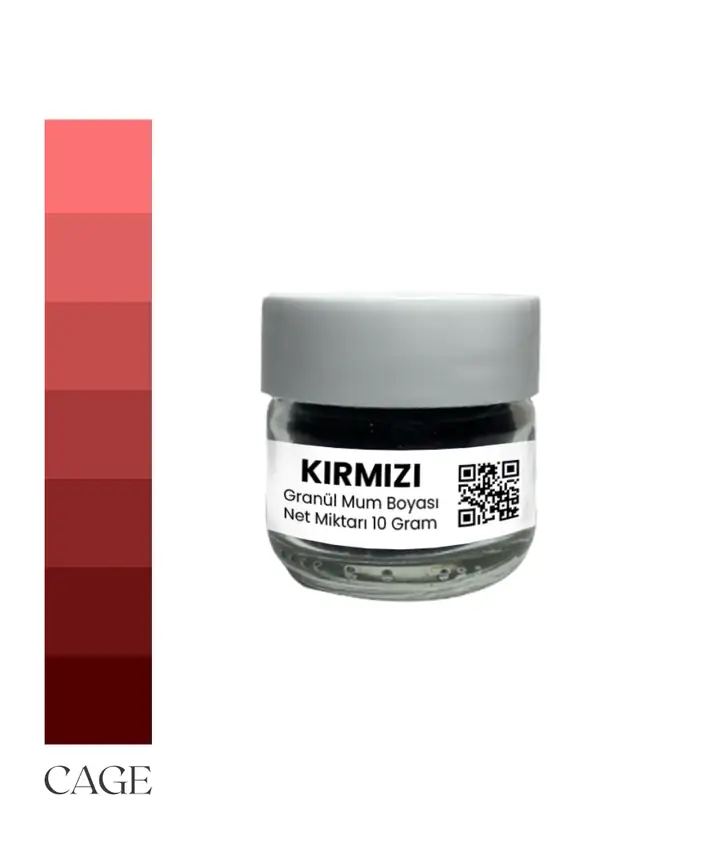 Red Candle Dye GranulesView
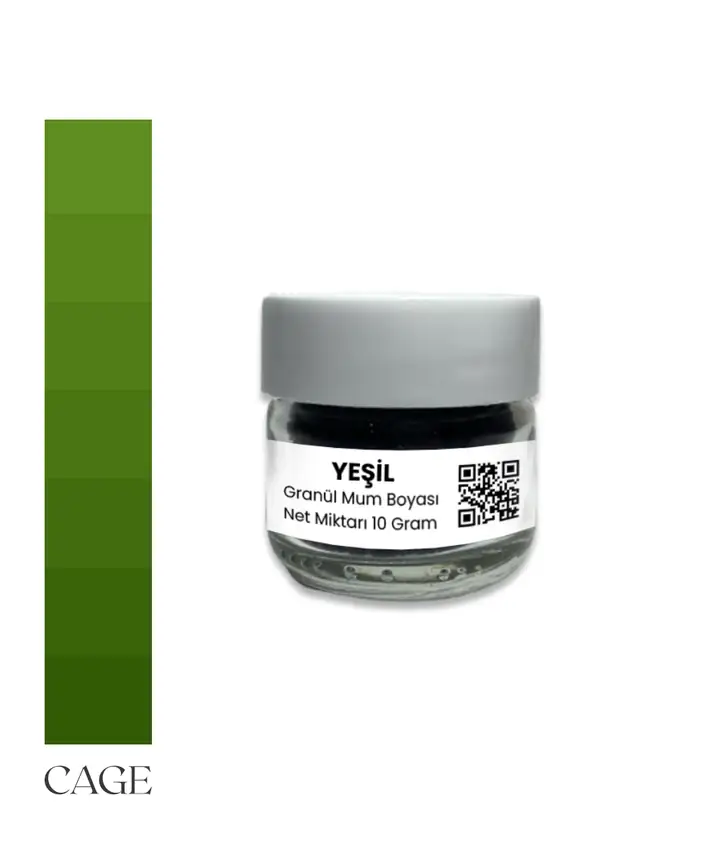 Green Candle Dye GranulesView
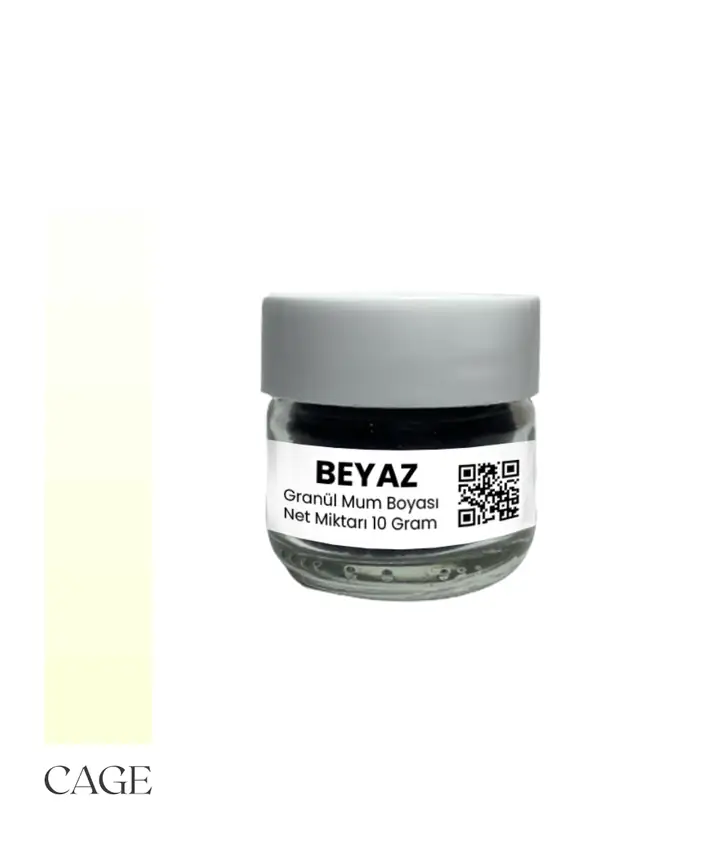 White Candle Dye GranulesView
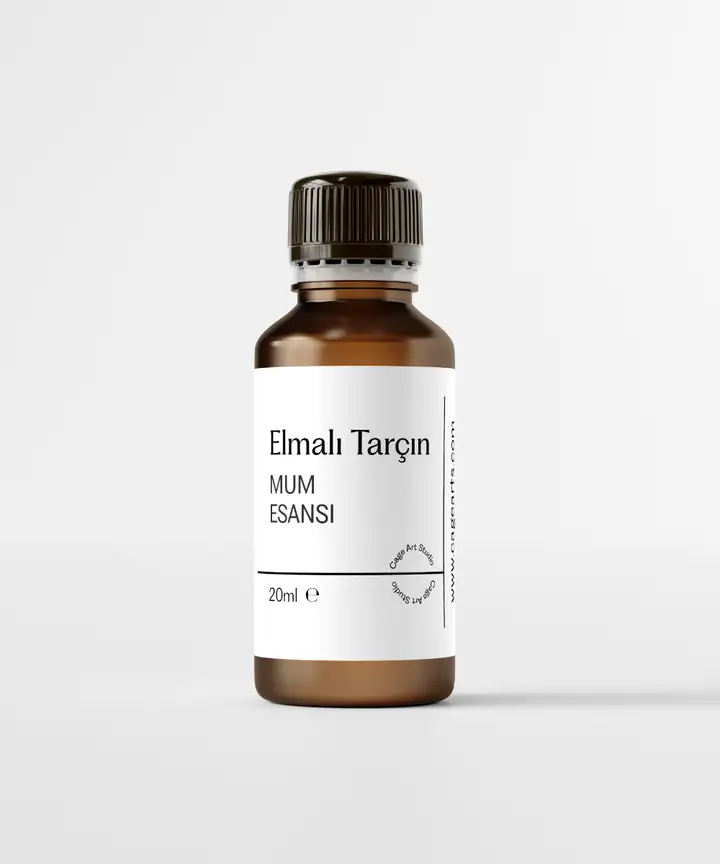 Apple Cinnamon Candle Fragrance OilView
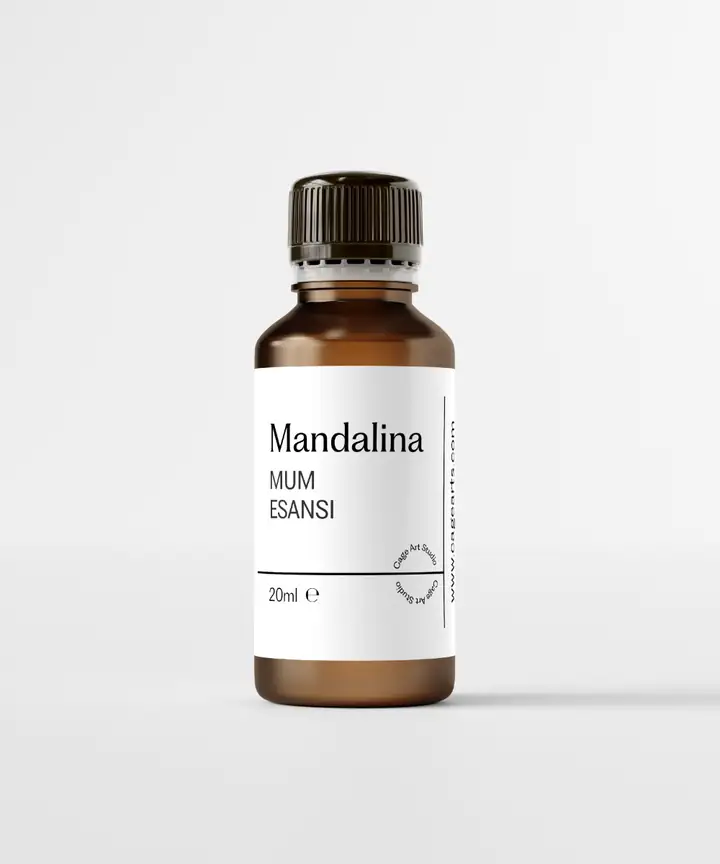 Mandarin Candle Fragrance OilView
How do you make a New Year tree candle?
Our example project is a green, apple cinnamon scented candle made with the New Year Tree M1 mold. The mold holds about 157 g: with 8% fragrance oil, that is 145 g Pillar Soy Wax and 12 g fragrance oil. To allow for what stays in the pot, weigh out 160 g of wax; the fragrance oil then becomes 13 g.
- 1
Prepare the mold
Wash the mold in warm soapy water and dry it completely. Open the wick hole at the top with a thick needle or a thin skewer, without forcing the mold.
- 2
Insert the wick
Thread the thin pre-waxed wick through the hole and leave the end outside the mold. Center the wick at the mouth of the mold with a wooden wick holder; if it leaks from the hole, seal it from the outside with a small piece of tape.
- 3
Melt the wax
Heat 160 g of Pillar Soy Wax to 80–85 °C in a double boiler or wax melting pot, watching it with a thermometer.
- 4
Add the color
Add a few green dye granules and stir until fully melted. Freeze a few drops on a white plate to check the real color.
- 5
Add the fragrance oil
Take the pot off the heat, add 13 g of Apple Cinnamon fragrance oil, and stir slowly for 1–2 minutes without making foam.
- 6
Pour at 55–65 °C
When the wax drops to pouring temperature, pour it slowly into the mold. Tap the side of the mold lightly to bring air bubbles to the surface.
- 7
Cool, top up if needed
Cool the candle at room temperature in a draft-free spot. If it sinks around the wick, remelt the leftover wax and add a thin layer up to the level of the first pour.
- 8
Demold
Once fully cool, peel the mold outward, supporting fine details. Do not pull the wick; follow the mold’s instructions.
- 9
Trim the wick and let it cure
Leave 0.5 cm of wick above the candle and trim the bottom flush with the base. Wait at least 24 hours before burning and 1–2 weeks before evaluating fragrance.
Wax poured too cold starts to set before it fills the fine details of the mold and leaves bubble marks on the surface; wax poured too hot shrinks too much as it cools. Pour at 55–65 °C (up to 70 °C in a cold room) and tap the mold lightly after pouring. For more, see our silicone mold candle making guide.
When should you make New Year gift candles?
For scented soy candles, sources give 1–2 weeks of curing as a starting range for fragrance evaluation, not a guarantee for every recipe. This example schedule for gifts on 31 December 2026 allows time for testing and packing too. Start earlier if your product requires longer curing.
| December 2026 plan | What to do |
|---|---|
| 1–7 December | Check materials and samples; test the wick and recipe. |
| 8–14 December | Main pours; record wax, dye and fragrance weights for each batch. |
| 15–28 December | Allow 1–2 weeks to cure; check appearance, fragrance and sample burning. |
| 29–30 December | Label and pack cooled, checked candles. |
| 31 December | Give with usage notes; move the schedule earlier if time is short. |
How do you package New Year candles?
The fine details of figure New Year candles scratch easily, and the candles soften in heat. Make sure the candle has fully cured before packaging, then:
Small New Year Tree, Pinecone and Sleigh: different heights look good together in one box. About 204 g of wax in total.
Wrap each candle separately and support the inside of the box with paper filler so the figures do not rub against each other.
Scent name, net weight and a note saying "Never leave a burning candle unattended"; a short New Year message on the card.
Dried orange slices, cinnamon sticks, pine branches and ribbon are flammable. Use them only in the gift box and remove them before lighting; NCA recommends keeping all flammables at least 30 cm from a burning candle.
Store candles at 18–25 °C, away from sun and radiators; temperature swings can cause fragrance oil to rise to the surface. For more ideas, see our gift candle ideas post, and for a stand to carry the candle, see our making concrete candle holders guide.
How do you solve New Year candle pouring problems?
The middle sank
The pattern is not sharp and the surface has holes
The candle won't come out of the mold
The white candle turned yellow
For other pouring problems, see our candle making tips post.
How do you burn figurative New Year candles safely?
An attractive figure is not automatically suitable for burning. Burn a stable candle with a tested wick and recipe on a sturdy, heat-resistant candle plate that catches drips. Do not burn figures carrying decorative surface paint, ribbon, dried plants or flammable ornaments; keep them as flameless decor.
Trim the wick to 5–6 mm before lighting. Keep at least 30 cm from flammables and about 7.6 cm from other burning candles. Never leave unattended; use a stable surface away from children, pets and drafts.
Unless the product requires less, limit each burn to 4 hours and allow at least 2 hours to cool before relighting. Do not extinguish with water or move the container or figure while wax is molten. NCA’s general pillar rule is to stop with 5 cm remaining at the base; if you cannot apply this safely to a small or irregular figure, keep it decorative.
Include safe-burning notes with the gift box. Curing does not replace burn testing; reassess whenever wax, fragrance, dye or wick changes in the same mold. Stop using a candle that starts dripping prematurely or loses stability.
What are common questions about New Year candles?
Which molds are used for New Year candles?
New Year tree, pinecone, snowman, Santa Claus, sleigh and gift box molds are the most popular. Our molds come in different sizes, from the Sleigh, which holds about 33 g, to New Year Patterned M1, which holds about 387 g.
Which scents suit New Year?
Apple Cinnamon, Pumpkin Cinnamon, Mandarin, Ginger, Coffee and Sandalwood. Even if you blend two scents, keep the total fragrance oil ratio between 6–10%.
How do you get red and green?
Use 0.7–1 g of dye granules per 1 kg of wax; add the dye to wax at 80–85 °C and melt it completely. Test the color on a white plate before pouring.
How many grams of wax does a New Year tree candle take?
The New Year Tree M1 mold holds about 157 g of candle: with 8% fragrance oil, 145 g of wax and 12 g of fragrance oil. The Small New Year Tree holds about 59 g: 55 g of wax and 4 g of fragrance oil.
When should you make New Year gift candles?
Example plan for 31 December 2026 gifts: trials on 1–7 December, main pours on 8–14 December, curing and checks on 15–28 December, packing on 29–30 December. Allow scented soy candles 1–2 weeks to cure.
How do you package New Year candles?
Once the candle has fully cured, wrap each figure separately and support the box with paper filler. Add the scent name and the safety note to the label; put flammable decorations like dried orange in the box, not on top of the candle.
Can you burn figure New Year candles?
Use stable figures intended for burning, with tested recipes, on a suitable candle plate. Keep at least 30 cm from flammables and trim the wick to 5–6 mm; do not burn decoratively painted or embellished figures.
Everything for your New Year candles is here
New Year molds, Pillar Soy Wax, winter fragrance oils and dye granules in a single order, shipped within 1–3 business days.