What Can You Pour Into Silicone Molds? Wax, Concrete, Plaster, Resin
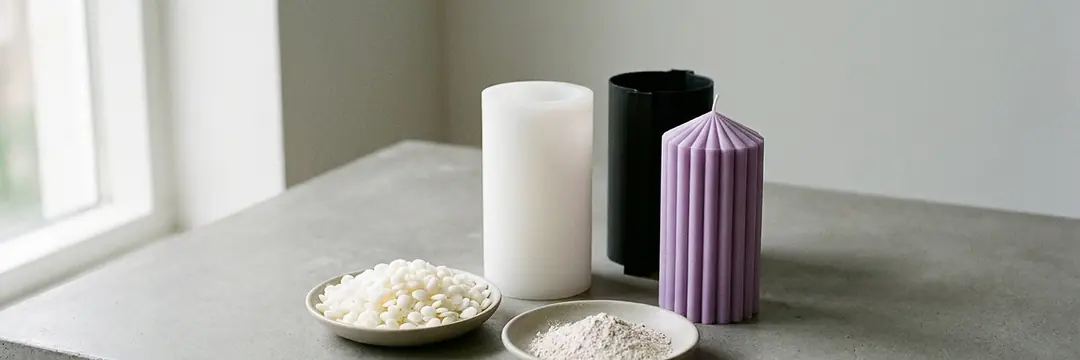
What can you pour into silicone molds? The short answer: wax, soap, concrete, plaster, stone powder and epoxy. But each material has its own temperature, time in the mold and release agent needs. In this guide we put them all in one chart: first the information from our own mold use & care guide, then technical values from sources.
In short
- Our molds are suitable for wax, soap, concrete, plaster, stone powder, scented stones and epoxy.
- Wax, plaster and stone powder need no release agent; oil and petroleum jelly can make silicone swell.
- For concrete, use only a water-based release agent, very thin. Don't leave concrete in the mold longer than needed.
- Pillar Soy Wax’s 55–65 °C range is its pouring temperature, not the mold’s heat resistance. Do not pour molten metal.
- Our molds were not designed for food, and they don't go in the dishwasher.
In this guide
- What can you pour into silicone molds? Compatibility chart
- What wax can you use in silicone molds?
- Can you pour concrete, plaster and stone powder into silicone molds?
- Can you pour epoxy resin into silicone molds?
- Soap, polymer clay, metal: what works and what doesn't?
- Do you need to grease silicone molds? Is a release agent needed?
- What temperature can silicone molds withstand?
- Are silicone molds food safe?
- Which mold for which project? Choosing and caring for molds
- Frequently asked questions
What can you pour into silicone molds? Compatibility chart
Our molds are made from premium soft translucent silicone. The compatible materials listed on our product pages and in our mold use & care guide are: concrete, soy wax and paraffin, epoxy resin and soap; the product pages also list plaster, stone powder and scented stones. The chart below shows what to watch for with each of them.
| Material | Suitable? | Temperature / time | Release agent | Effect on the mold |
|---|---|---|---|---|
| Pillar Soy Wax | Yes | Pour at 55–65 °C | Not needed | Doesn't wear down detail |
| Paraffin + 10% stearic acid | Yes | Pour at about 70 °C | Not needed | Doesn't wear down detail |
| Container soy wax (Golden) | Not recommended | Melts at about 51–55 °C | - | Soft: sticks and gets crushed |
| Gel candles | No | Melts at 90–95 °C | - | Doesn't hold its shape; burns in a container |
| Melt-and-pour soap | Yes | Pour at 49–60 °C | Not needed | No problems |
| Concrete | Yes | Per the package; at least 18 hours for regular mortar | Water-based, very thin | Abrasive: detail wears faster |
| Plaster, scented stones | Yes | Sets in minutes, dries in days | Not needed | Mild |
| Stone powder | Yes | Ratio and time on the package | Usually not needed | Mild |
| Epoxy resin | Yes | Per the label; coating resin 3–6 mm per layer | Thin, as the mold wears | Heat dulls the surface over time |
| Molten metal | No | Far above the silicone's limit | - | Ruins the mold, dangerous |
| Food | No | - | - | Our molds were not designed for food |
One of the most important warnings in our use & care guide: unbranded concrete mixes or paraffins can damage the mold. Try a new mix, resin or wax in a single mold first, and scale up once you're happy with the result.
What wax can you use in silicone molds?
A candle that comes out of a mold has no container; it has to hold its shape on its own. That's why silicone molds take a hard wax. Soft waxes made for container candles stick to the mold, get crushed as you demold them and leave an oily surface.
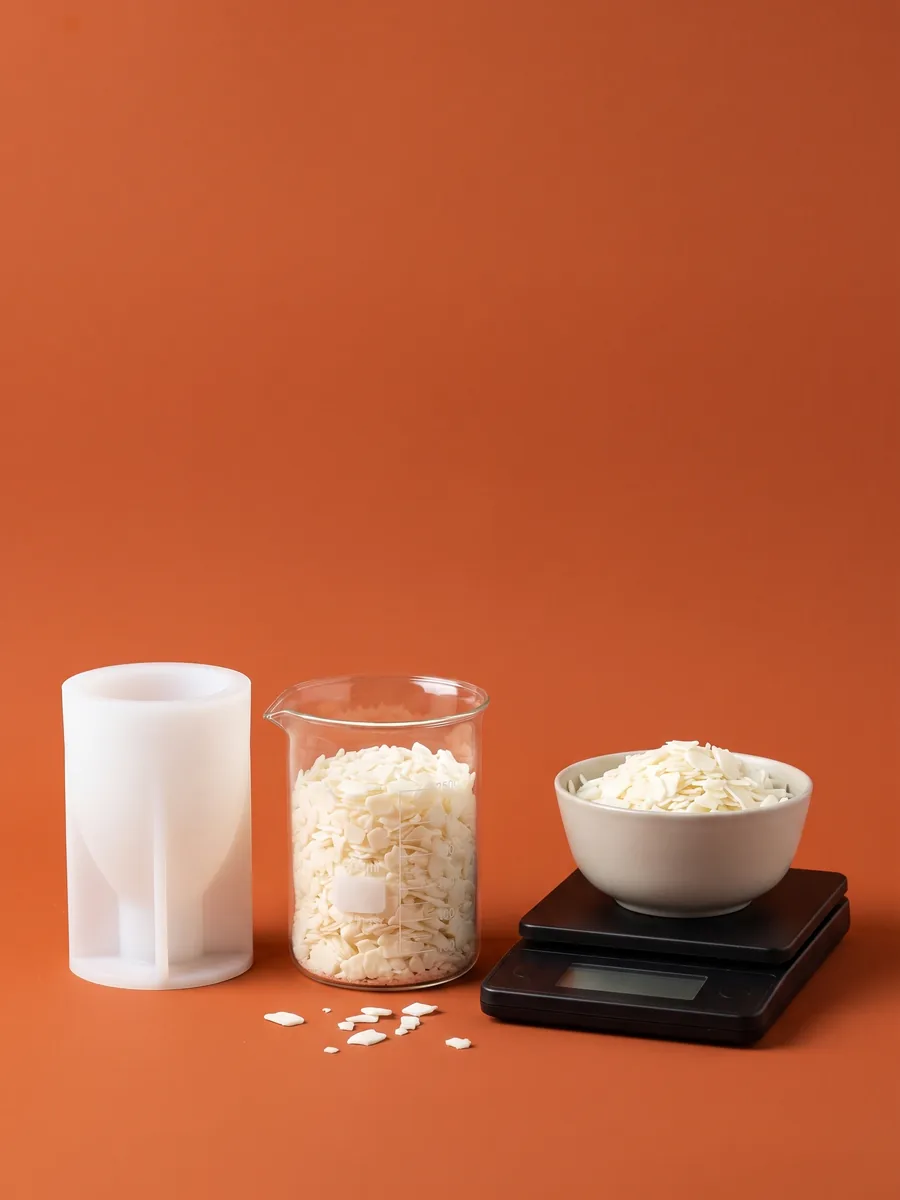
A plant-based soy wax made for silicone molds. The pouring temperature on the product page is 55–65 °C; if the room is cold, you can go up to 70 °C. It needs no additives and releases from the mold smoothly.
Pillar Soy Wax for Silicone MoldsAdd 10% stearic acid to paraffin pellets or block paraffin, that is, 100 g per 1 kg. Stearic acid hardens the candle and makes demolding easier. Pour at about 70 °C.
Paraffin guideContainer soy waxes such as Golden, and gel wax. Gel wax melts at 90–95 °C; it does not hold its shape after demolding and is used in containers.
We explain step by step how to pour wax into a mold, how to insert the wick and how to do the second pour in our making candles in silicone molds guide. To get the candle out without breaking it, see our how to get a candle out of a mold post. All the temperatures are in one chart in the candle wax pouring temperature post.
Can you pour concrete, plaster and stone powder into silicone molds?
Yes, all three can be poured. These materials don't harden by melting but by reacting with water. So what matters isn't temperature but the water ratio and the time in the mold. For both, measure in grams on a scale, not by eye.
Rapid-set casting concretes can be demolded in a few hours. For a regular mortar, the manufacturer recommends at least 18 hours. Applying a water-based release agent very thinly extends the mold's life; a buildup of release agent leaves small voids of up to 3 mm on the surface.
Making concrete potsThe manufacturer's ratio for ceramic plaster is 70 parts water to 100 parts plaster by weight. Sift the plaster into the water, not the other way around. It sets within minutes, and full drying takes days.
Making scented stonesAs our care instructions emphasize, leaving concrete or wax in the mold unnecessarily long shortens its life. Once the time on the packaging has elapsed, remove the piece and wash the mold promptly. See our plaster casting in silicone molds guide for the steps and stone powder cracking guide for cracking and failure to set.
Unlike wax, concrete is abrasive: it wears down fine detail over time. Sources don't give mold life as a number of pours; it depends on what you pour and how often. As we note on our product pages, a mold used correctly can make hundreds of pieces.
Can you pour epoxy resin into silicone molds?
Yes. You can pour epoxy resin into our molds whose product page says they are suitable for epoxy. Silicone usually releases resin on its own. There are three things to watch: moisture, layer thickness and the heat of the reaction.
Dry the mold thoroughly after washing. Water left in the mold can cause foam and bubbles in resin pours.
Coating resins are poured at about 3–6 mm per layer. Deep pour resins allow 25 mm and more. If the label doesn't state a thickness, treat it like a coating resin.
Epoxy heats up as it cures. Silicone holds that heat in; narrow, deep cavities get the hottest. Pouring the same volume wide and shallow cures cooler.
Repeated heating, overstretching the mold when demolding and flame dull the silicone surface over time. Shallow shapes are easiest to start with, like our coaster molds at 10 × 10 cm and 1.6 cm deep. We don't sell epoxy resin; for the mixing ratio and curing, see our epoxy resin guide and your resin's technical data sheet.
Soap, polymer clay, metal: what works and what doesn't?
Don't pour
Our molds are not intended for molten metal; it can damage the mold, and splashing metal is dangerous. Do not pour foods such as chocolate, sugar or ice into our molds either.
You can pour
A pouring range of 49–60 °C is given for melt-and-pour soap; follow the soap base and mold instructions. Do not heat the base more than approximately 17 °C above its melting point, as it can dry out and become brittle.
Polymer clay isn't poured; it takes its shape by being pressed into the mold. Our product pages don't list polymer clay; if you want to try it, press the clay into the mold, take it out, and bake it without the mold. Don't put the mold in the oven.
The plastic support pieces (cores) that come with some of our molds aren't resistant to high heat. Don't wash them in hot water or leave them in the sun.
Do you need to grease silicone molds? Is a release agent needed?
Silicone's biggest advantage is that it releases materials on its own. Wax, plaster and stone powder need no release agent. Oil-based release agents and petroleum jelly, however, can make silicone swell and soften; they ruin the mold quickly.
| Material you pour | Release agent | Note |
|---|---|---|
| Wax | Not needed | If it starts sticking, change the wax: Pillar Soy Wax or paraffin with stearic acid |
| Plaster, stone powder, scented stones | Not needed | Keep the mold clean and dry |
| Concrete | Water-based, very thin | Wipe off the excess; a buildup of release agent leaves voids on the surface |
| Epoxy | Usually not needed | As the mold wears, apply a thin coat of a resin-compatible release agent |
| In every case | No oil or petroleum jelly | Can make silicone swell and soften |
A mold's natural release decreases with use. If pieces start to stick in a mold you have used for years, first clean and dry it thoroughly; if the problem continues, it's time to replace it.
What temperature can silicone molds withstand?
General temperature ranges quoted for silicone molds do not mean every product has the same heat resistance. Follow both your mold’s care instructions and the casting material’s technical data sheet; the temperatures below describe material processing conditions.
Keep the mold away from heat sources. Direct flame and overheating deform the mold. Don't put the mold on or near a stove, oven or open flame, and don't put it in the dishwasher. In storage, keep it away from extreme cold and heat and from long periods of sunlight; sun turns silicone yellow and reduces its flexibility.
Are silicone molds food safe?
As our use & care guide states clearly, our molds were not designed for food use. Don't use a mold we made for wax, concrete, resin or soap for chocolate, jelly, candy or ice. For food, buy a separate mold certified as food safe, and don't mix the two up.
Don't use a mold you have poured wax, concrete or resin in for food, and store your casting molds on a separate shelf from your kitchenware.
For care after checking material compatibility, assess wax, concrete and epoxy residues separately in our silicone mold cleaning guide.
Which mold for which project? Choosing and caring for molds
Pillar, bubble and figure molds. Our Taper Candle M1–M11 and Ghost Taper Candle molds are shipped with a side cut; wrap them tightly with a rubber band before pouring.
Candle moldsPlanter, candle holder and soap dish molds. Thick-walled, simple shapes break less in concrete.
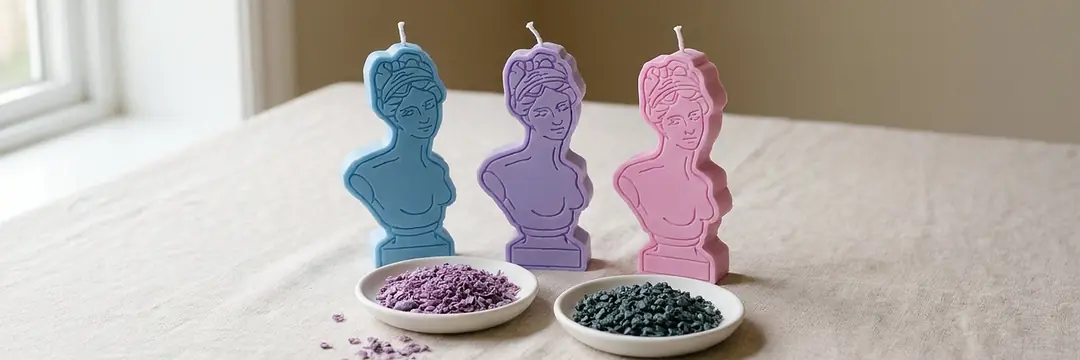
Concrete planter moldsBust and sculpture molds take both wax and plaster. For finely detailed molds, choose plaster rather than abrasive concrete.
Sculpture MoldsWipe off residue with a paper towel, wash with lukewarm water, a little dish soap and a soft sponge, then rinse well and dry. Store flat, without stacking.
Use & care guide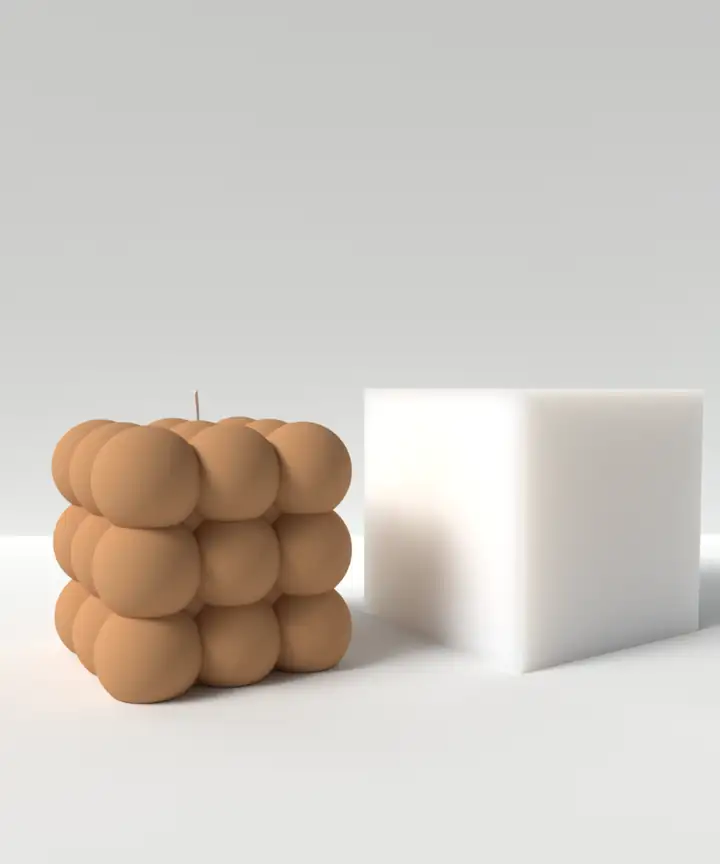 Büyük Bubble Mum silikon KalıbıView
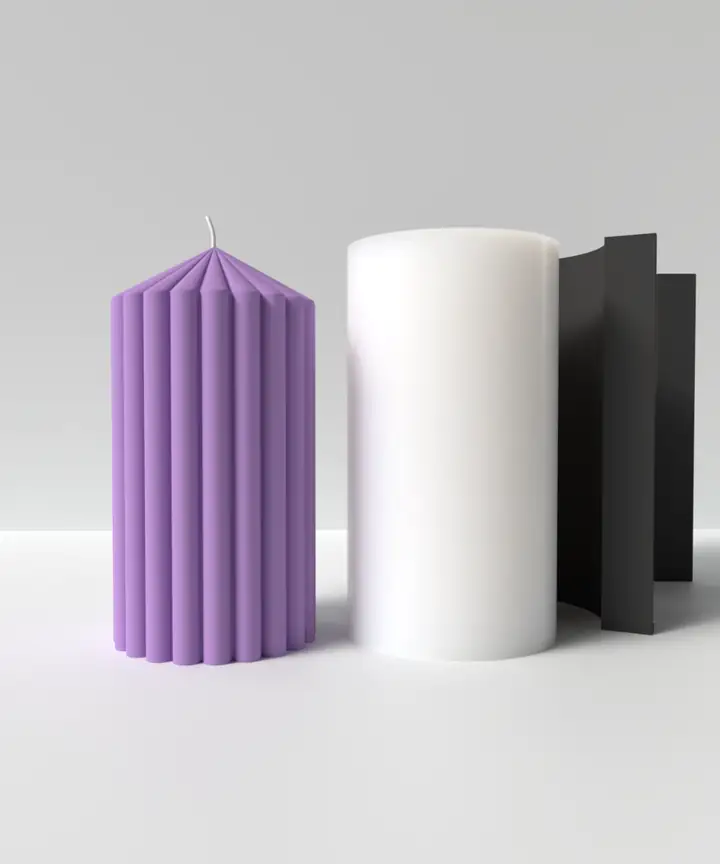 Orta Boy Sütün Mum Silikon KalıbıView
 Beton Saksı / Mumluk Silikon Kalıbı - K7View
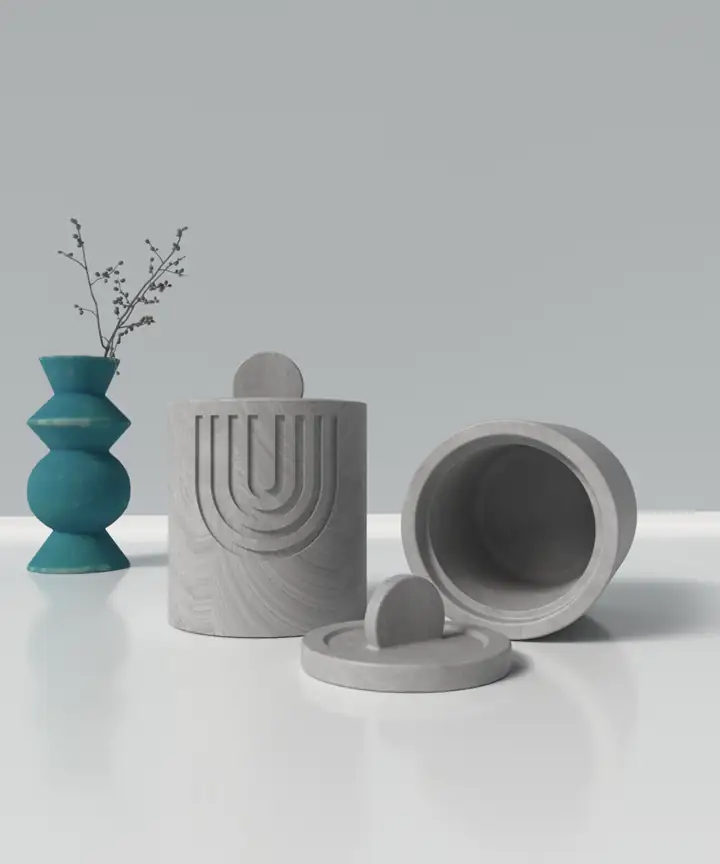 Desenli Beton Saksı Silikon Kalıbı M1View
 ERIC GILL Heykeli Silikon KalıbıView
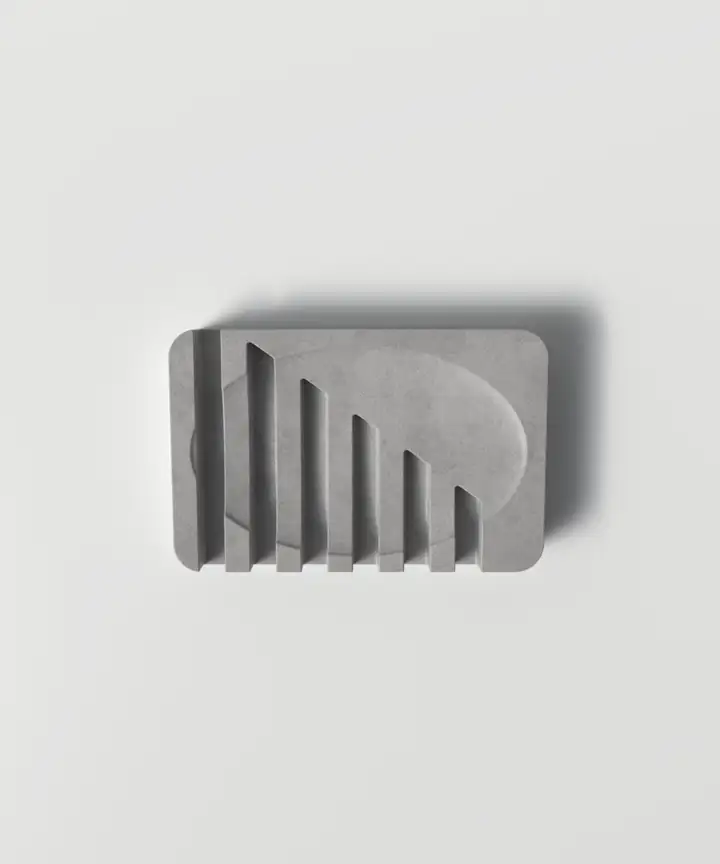 Beton Sabunluk silikon Kalıbı M1View
If the shape you're looking for isn't in the catalog, you can have a mold of your own design made in our workshop with our custom silicone mold service.
After choosing material, follow preparation, fastening and the first pour in how to use silicone molds.
Frequently asked questions
What can you cast in silicone molds?
Our molds take wax (Pillar Soy Wax or paraffin with stearic acid), melt-and-pour soap, concrete, plaster, stone powder, scented stones and epoxy resin. Don't pour molten metal or food; our molds were not designed for food use.
Can you pour plaster into silicone molds?
Yes. Silicone releases plaster on its own, so no release agent is needed. Make sure the mold is dry and the powder is weighed and mixed at the water ratio on the package; plaster sets within minutes but takes days to dry completely.
Can you pour epoxy resin into silicone molds?
Yes, into molds whose product page says they are suitable for epoxy. The mold must be completely dry, and the layer thickness on the resin label must not be exceeded; for coating resins this is usually 3–6 mm.
Can you pour concrete into silicone molds?
Yes. Applying a water-based release agent very thinly extends the mold's life. Leave the concrete for the time on the package, but not in the mold longer than needed; concrete is abrasive and wears down fine detail over time.
Do you need to grease silicone molds?
No. Wax, plaster and stone powder need no release agent. Oil-based release agents and petroleum jelly can make silicone swell and soften; if concrete needs one, apply a water-based release agent very thinly.
What temperature can silicone molds withstand?
A silicone mold’s temperature limit depends on its formulation and manufacturer’s instructions. Do not use general silicone temperatures as a heat-resistance rating for our molds; keep the mold away from stoves, ovens and flames, and do not put it in a dishwasher.
Are silicone molds food safe?
Our molds were not designed for food use. For chocolate, candy or ice, use a separate mold sold as food safe; never take a mold you have poured wax, concrete or resin in back to the kitchen.
Can silicone molds go in the dishwasher?
No. High heat and strong detergent permanently damage silicone. Wash by hand with lukewarm water, a little dish soap and a soft sponge.
The right mold for every pour
Silicone molds for wax, concrete, plaster and epoxy; Pillar Soy Wax and stearic acid for mold candles. All in one order, shipped in 1–3 business days.