What Is Paraffin? Origin, Oil Content and Candle Use
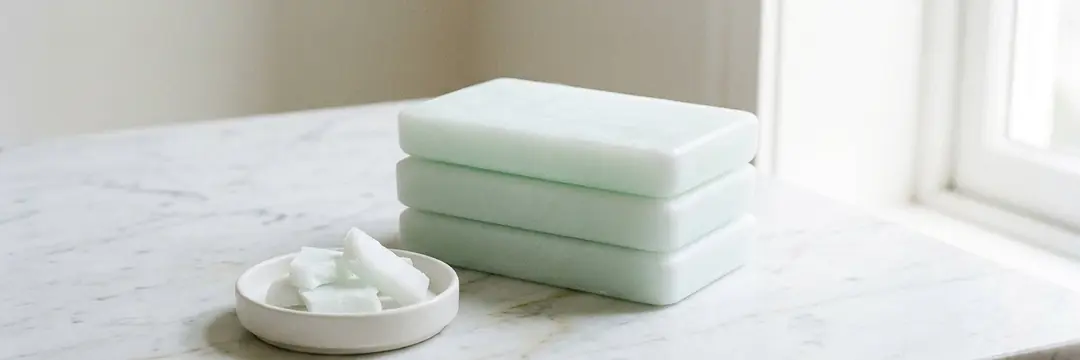
Paraffin is a wax raw material obtained during petroleum refining, consisting mainly of long-chain hydrocarbons. Candle grades are selected by melting range, oil content and intended use. Our bead paraffin melts at 54–70 °C; do not equate raw paraffin with finished candle-grade wax. Check pouring and additive instructions for each product.
In short
- Paraffin pellets are weighed without cutting and melt fast; melting range 54–70 °C, application about 70 °C.
- Domestic Paraffin Wax Grade A is a block: dropping point 56–58 °C, freezing point 55–57 °C.
- Do not heat paraffin above 93 °C; pour into a pillar mold at 77–82 °C.
- Stearic acid: we recommend 10% (100 g per 1 kg); foreign sources give 3–10% and suggest starting at 5%.
- Sinking in the center of a pillar candle is normal: when it cools, make a second pour.
In this guide
- What is paraffin and what is it made from?
- Pellets or block? Our two paraffins
- At what temperature does paraffin melt and get poured?
- What does stearic acid do, and how much should you add?
- Paraffin candles in the mold and the second pour
- Why does the center of a paraffin candle sink?
- How many candles from 1 kg of paraffin?
- Is paraffin harmful? Safe use
- Paraffin or soy wax?
- Frequently asked questions
What is paraffin and what is it made from?
ExxonMobil describes paraffin production from wax fractions separated during petroleum processing. Distillation and separation may be followed by deoiling and purification. These processes change the raw material's properties; do not choose candle wax solely because it looks white.
Raw paraffin may refer to slack wax, an intermediate refinery product with more residual oil. IGI describes refining degree alongside remaining oil. However, 'raw' or 'refined' alone does not certify candle suitability; the intended grade and technical sheet are needed.
Where is paraffin used? ExxonMobil lists candles, hot-melt adhesives, packaging, corrugated boxes and some building boards. Each application needs different properties. Do not treat every industrial wax as candle material; choose one explicitly suitable for candle production.
Paraffins differ by melting point and application. The classes below are general guidance; your product's technical data take priority:
| Melting point | Class | Use |
|---|---|---|
| Below 54 °C | Low melting | Container candles, tealights; soft, sticks to glass |
| 54–66 °C | Medium melting | Votive and pillar candles |
| Above 66 °C | High melting | Lantern candle shells |
Our paraffin pellets have a melting range of 54–70 °C and our block paraffin has a dropping point of 56–58 °C: both are hard enough for silicone molds and pillar candles, and can also be used in container candles.
Pellets or block? Our two paraffins
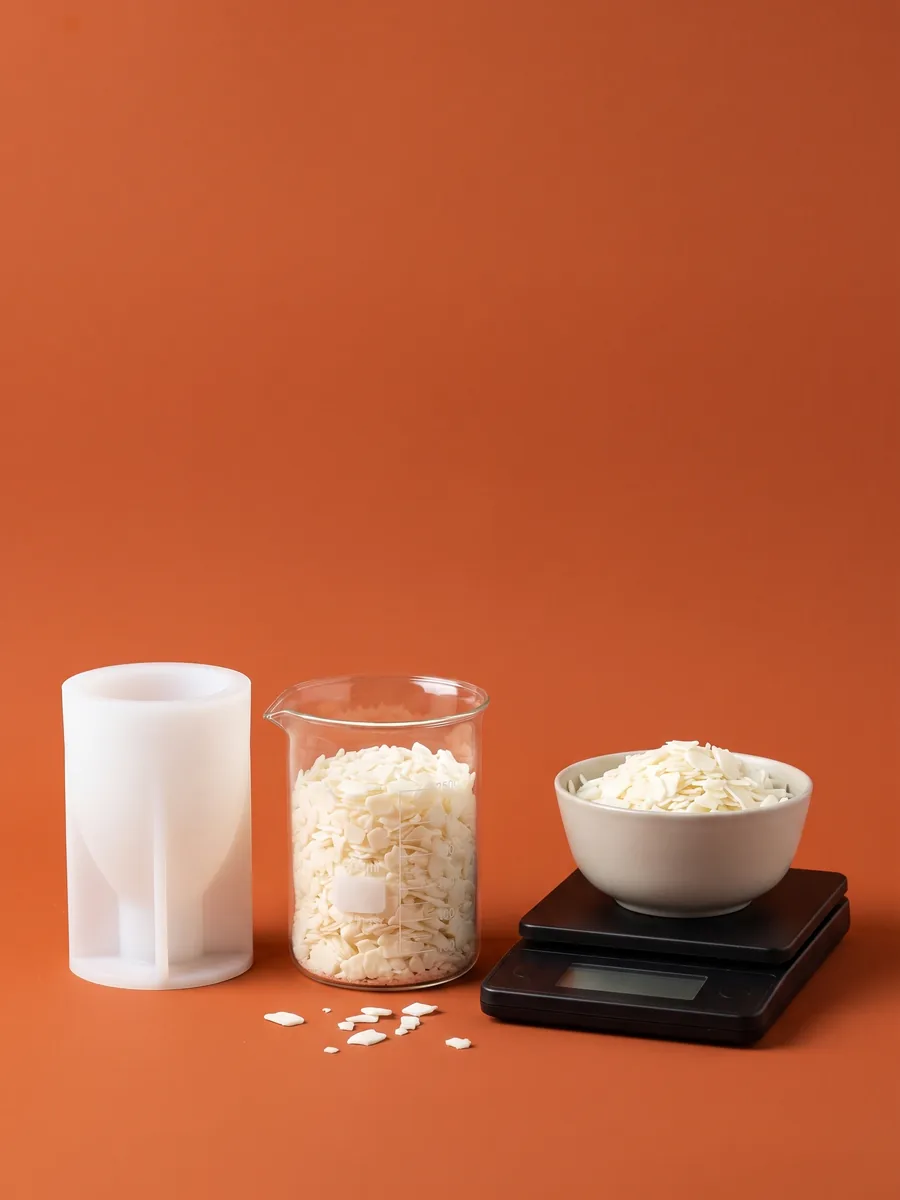
In pellet form; there is no need to cut or break it like a block. The pellets do not stick together, are easy to weigh, melt fast and evenly, and give off no noticeable odor while melting.
- Melting
- 54–70 °C
- Application
- About 70 °C
- Oil content
- Max. 0.5%
- Package
- 1, 5, 10, 20 kg
Comes as a block; cut or break it to weigh.
- Dropping point
- 56–58 °C
- Freezing point
- 55–57 °C
- Oil content
- 0.5–1%
- Penetration
- 16–19
- Package
- 1, 2, 5, 10 kg
IGI defines oil content as oil remaining in wax after refining. It is not the fragrance percentage added later. As oil content relates to hardness, surface and odor, compare more than bead or block shape.
Our bead paraffin states at most 0.5% oil; Yerli Parafin A Kalite states 0.5–1%. These figures belong to those products, not every bead or block paraffin. Drop, congealing and melting points are also different measurements; retain the technical sheet's exact heading when reading them.
Is paraffin sold in herbal or spice shops? We cannot know every shop's stock. Wherever you buy, candle suitability, melting or use information, oil content and manufacturer documentation should be clear. Do not add an unidentified product labelled only 'paraffin' to your formula.
At what temperature does paraffin melt and get poured?
Melt paraffin not over an open flame but in a double boiler or a melting pot. Add the dye and fragrance oil at about 85–88 °C, and do not go above 93 °C. The pouring temperature depends on what you are pouring:
| What are you pouring? | Pouring temperature | Note |
|---|---|---|
| Paraffin pellets, general use | About 70 °C | Application temperature on the product page |
| Pillar mold | 77–82 °C | Below this: layer lines and dull patches |
| Votive mold | 71–82 °C | Small candles burned in a glass |
| Second pour | About 3 °C hotter than the first pour | Max. 88 °C |
Pillar paraffin holds less fragrance oil than a container candle: foreign manufacturers recommend 4–6% in pillar candles, and any more sweats out onto the surface. 10 g of our dye granules colors about 10–15 kg of paraffin. Details on the ratios: Candle Fragrance Oil and Dye Ratio.
What does stearic acid do, and how much should you add?
Stearic acid is an additive used to adjust paraffin hardness, opacity and mold release. For weight calculations based on paraffin, differing source recommendations and limits of use in soy wax, read our guide to stearic acid; assess the ratio with your own wax and wick.
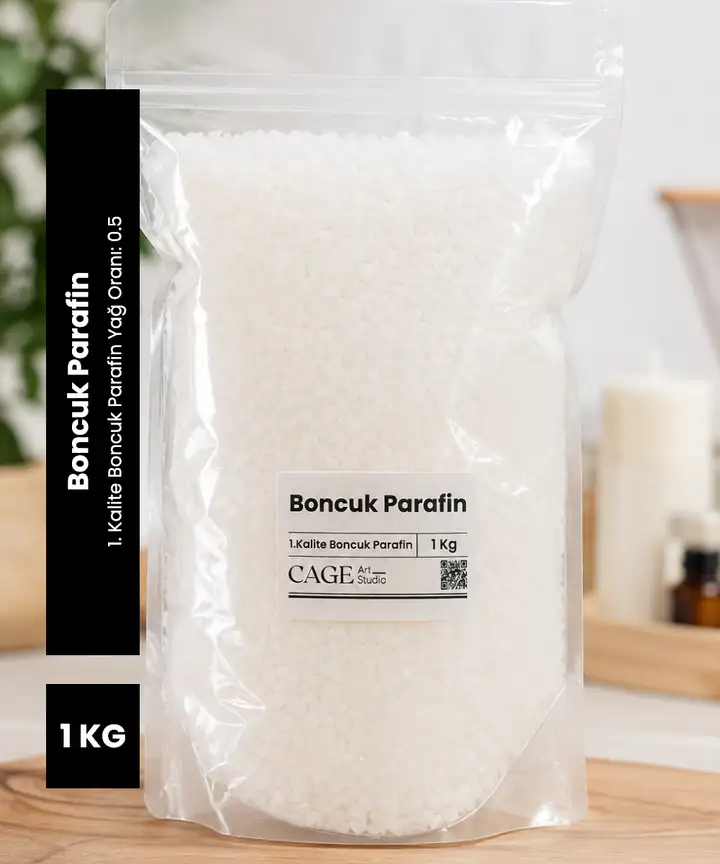 Boncuk Parafin 1 kgView
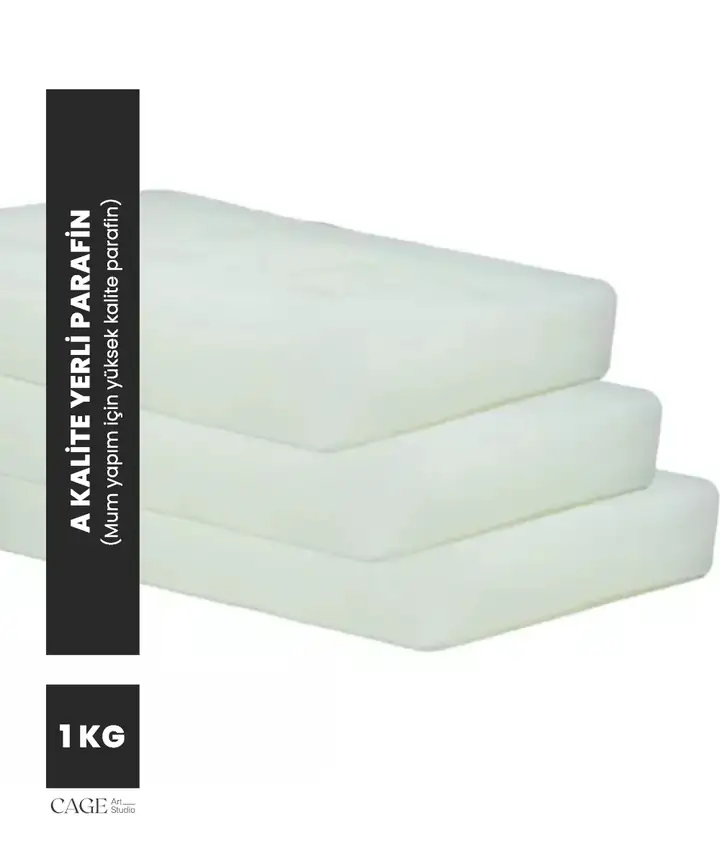 Yerli Parafin A Kalite 1 KgView
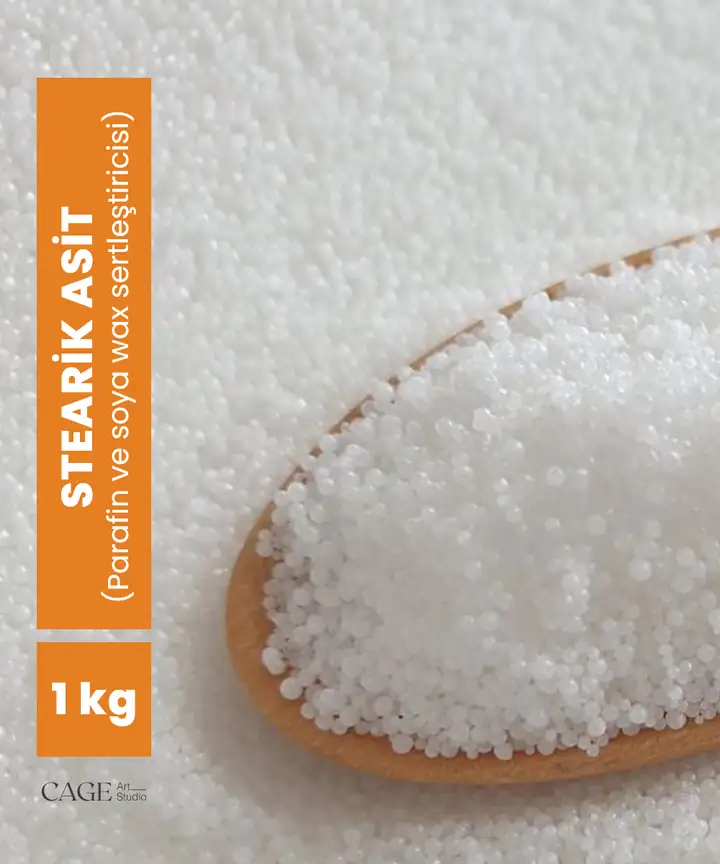 Stearik Asit - Starin 1 KgView
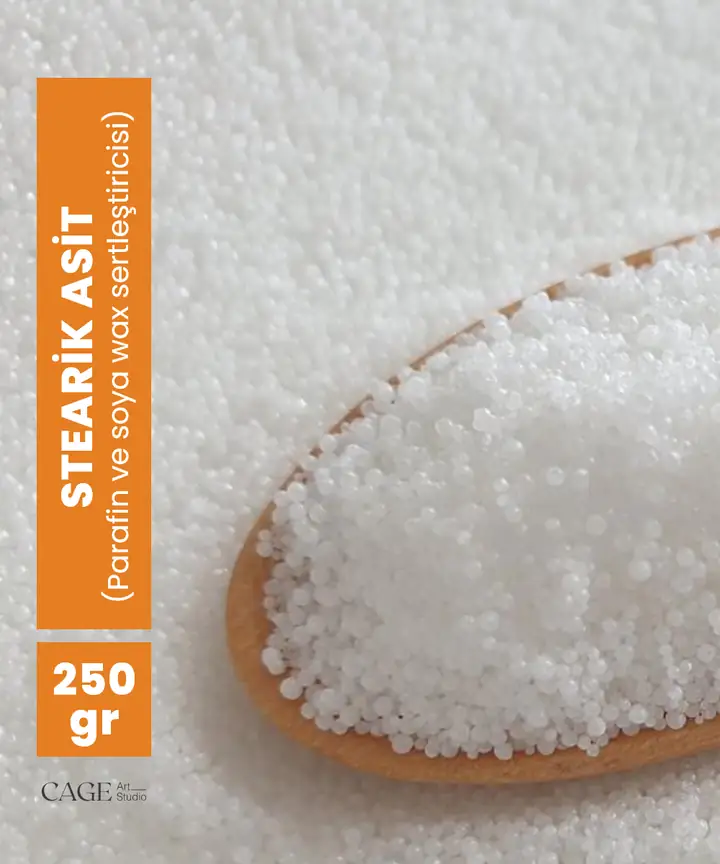 Stearik Asit - Starin 250 grView
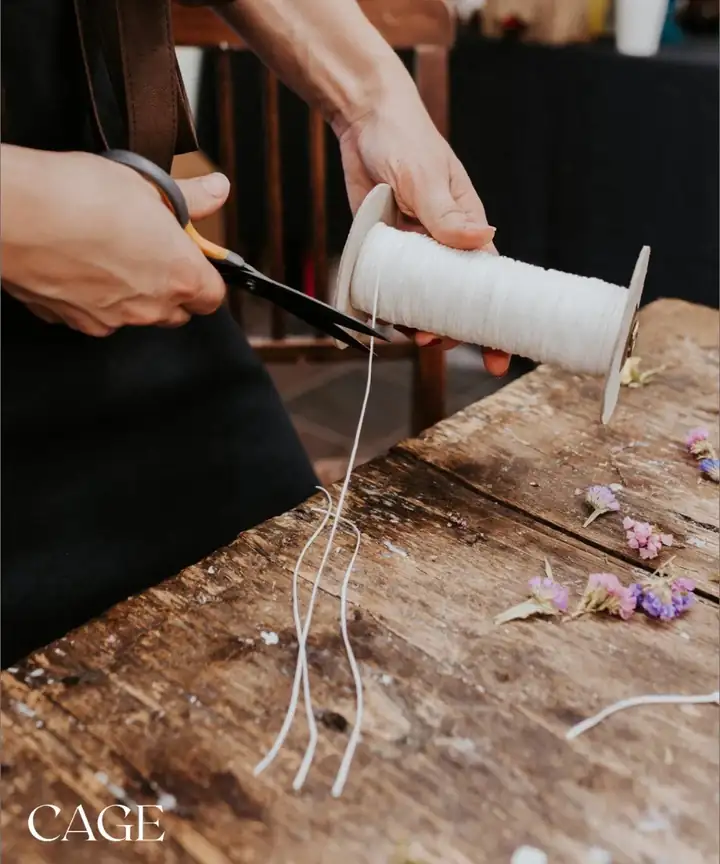 Mumlanmış İnce Mum Fitili 10 MetreView
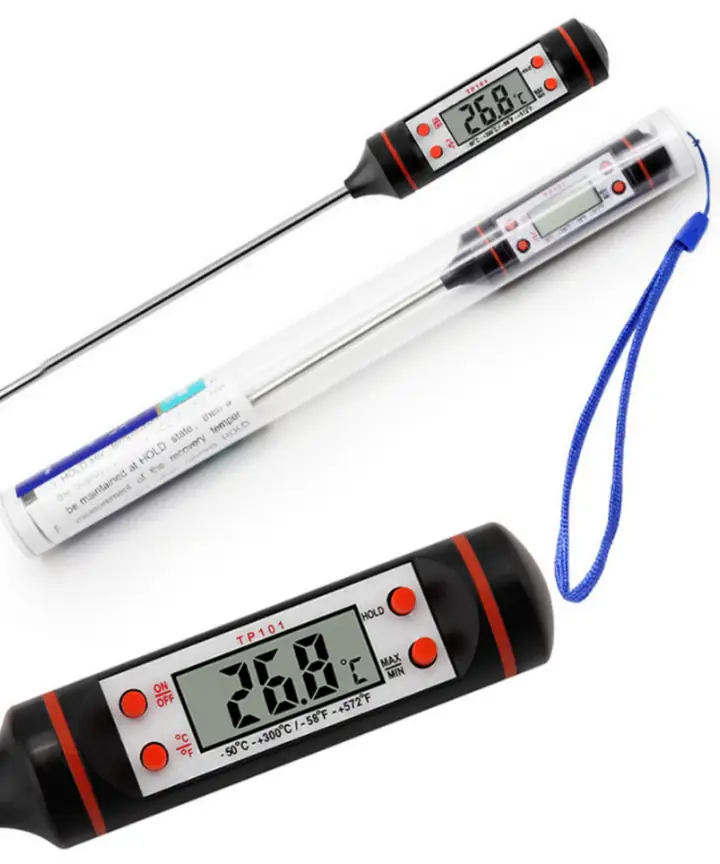 Dijital TermometreView
Paraffin candles in the mold and the second pour
Paraffin shrinks as it cools. The edges of the mold set first; as the hot wax in the middle is pulled in, it leaves a dip around the wick or a hollow inside. This is not a mistake, it is the nature of paraffin; the fix is the second pour.
- 1
Prepare the mold
Keep the mold clean and dry, thread the wick through the hole and center it at the top with a holder. When using a new mold for the first time, test it for leaks by first pouring in about 2.5 cm of wax.
- 2
Melt the paraffin and stearic acid
Weigh the two together and melt them in a double boiler or melting pot; do not exceed 93 °C.
- 3
Add the dye and fragrance oil
At about 85–88 °C, melt in the dye, add the fragrance oil and stir for 1–2 minutes. Set aside part of the wax for the second pour; that way the color stays the same.
- 4
Pour at 77–82 °C
Place the mold on a flat surface and pour slowly. If you pour colder, layer lines and dull patches form on the surface.
- 5
Make vent holes
Once a skin forms on the surface, use a skewer to make a few holes around the wick, away from the edges, down to about 3/4 of the mold's depth. Repeat as the candle cools.
- 6
Make the second pour
Heat the wax you set aside to about 3 °C hotter than the first pour and fill the dip only up to the level of the first pour; do not let it overflow.
- 7
Demold
Unmold the candle once it has cooled completely. If it sticks, put the mold in the fridge for about 5 minutes, not the freezer. Trim the bottom wick flush with the base and leave 0.5 cm on the top one.
Sources differ here: CandleScience and Lone Star wait for the candle to cool completely. Candlewic pours after 1–2 hours and says that waiting longer lets the wax pull away from the mold and leave a line. Try both in your own mold. Some pillar waxes that shrink evenly may not need vent holes at all.
For fitting the wick in a silicone mold, preparing the mold and caring for it, see the Making Candles with Silicone Molds guide.
Why does the center of a paraffin candle sink?
Dip in the center or hollow inside
Layer lines on the surface
Cracks
Fragrance oil droplets on the surface
Black soot
How many candles from 1 kg of paraffin?
All you need to know is how many grams of wax your mold holds: divide the total mix by the mold capacity. If you add 10% stearic acid to 1 kg of paraffin, the mix comes to 1,100 g:
| Mold capacity | From 1,100 g of mix |
|---|---|
| 50 g | 22 candles |
| 100 g | 11 candles |
| 150 g | 7 candles |
| 250 g | 4 candles |
| 500 g | 2 candles |
Add a 10% margin to the calculation for the wax that stays in the pot and goes into the second pour. Our silicone mold candle calculator and Calculator pages work out the mold's capacity.
Is paraffin harmful? Safe use
As our product page also says, do not breathe in paraffin fumes directly while melting: ventilate the room and use a mask. When burning, a long or thick wick can make black soot. Soot is a sign of incomplete combustion; it is prevented with the right wick, a trimmed wick and a draft-free room.
No open flame, only a double boiler or melting pot. Never leave hot wax alone; if it catches fire, do not pour water on it, turn off the stove and cover the pot. Do not exceed the 93 °C limit.
Trim the wick to 0.5 cm each time, burn for 4 hours at most, and keep it at least 30 cm away from flammable items. Put out a pillar candle when 5 cm is left.
For the question of how candles affect health, see our Are Scented Candles Harmful? article.
Paraffin or soy wax?
| Paraffin Wax | Soy wax | |
|---|---|---|
| Source | Crude oil | Soybean oil (plant-based) |
| Look | Hard, glossy; vivid colors | Creamy, opaque; pastel colors |
| Curing | 3–5 days | 1–2 weeks |
| Mold candles | With stearic acid | With Pillar Soy Wax |
| Caution | Ventilate while melting | Frosting is a normal visual effect |
For a plant-derived material with a creamy look, explore our soy wax range; for an economical, firm candle with vivid color, consider paraffin. Verify your formula with a small sample.
Frequently asked questions
What is a paraffin candle?
It is a candle made from paraffin wax, which is obtained by refining crude oil. It has a hard, glossy surface, shows colors vividly and cures in 3–5 days.
What temperature does paraffin wax melt?
Our paraffin pellets have a melting range of 54–70 °C, and Domestic Paraffin Wax Grade A has a dropping point of 56–58 °C. Heat to about 85–88 °C for dye and fragrance oil, and do not exceed 93 °C.
At what temperature is a paraffin candle poured?
77–82 °C in a pillar mold, 71–82 °C in votive molds. The general application temperature on the product page of our paraffin pellets is about 70 °C.
What does stearic acid do?
It hardens paraffin, helps the candle release from the mold easily and keep its shape in hot weather, and makes the wax whiter and more opaque. It also helps the candle burn evenly.
What should the stearic acid ratio be?
Our product page recommends 10% (100 g per 1 kg of paraffin). Foreign sources give values between 3–10% and suggest starting at 5%; 2–3% for a mottled look. Decide with a small test pour.
Why does the center of a paraffin candle sink?
Paraffin shrinks as it cools, and the wax in the middle sinks because it sets last. Once a skin forms on the surface, make vent holes; when the candle has cooled, make a second pour with wax 3 °C hotter than the first pour.
How many candles from 1 kg of paraffin?
It depends on the mold capacity: with 1 kg of paraffin and 100 g of stearic acid, you get 7 candles from a 150 g mold and 11 from a 100 g mold. Leave a 10% margin for the wax left in the pot.
Can you buy paraffin in a herbal shop?
It depends on the shop's stock. Choose a product with clear candle suitability, manufacturer details, technical sheet, melting or application temperature and oil content. Do not use paraffin with an unclear label.
Paraffin, stearic acid and wicks in a single order
Choose bead or block paraffin, stearic acid, granular dyes and wicks for your application.