Candle Wax Pouring Temperature Chart: Soy, Paraffin and Gel
There is no single answer for candle wax pouring temperature: soy wax, paraffin and gel wax each melt at a different temperature, take fragrance oil at a different temperature and are poured at a different temperature. In this guide we first list the values for our own products, then the ranges from international sources, all in one chart.
In short
- Pillar Soy Wax: pour into molds at 55–65 °C (131–149 °F).
- Golden Soya Wax: melts at ~51–55 °C, pour into jars at 55–60 °C (131–140 °F) (source range 52–63 °C).
- Heat soy wax to 80–85 °C (176–185 °F); add fragrance oil at this temperature, off the heat.
- Paraffin Pellets: melt at 54–70 °C, work at ~70 °C; never heat paraffin above 93 °C (199 °F).
- Gel wax: melts at 90–95 °C; sources give a pour of 85–95 °C (185–203 °F).
- Melting point is not pouring temperature; mixing the two up is the most common mistake.
In this guide
- Candle wax temperature chart by wax type
- Is melting point the same as pouring temperature?
- What temperature do you pour soy wax?
- Paraffin wax melting and pouring temperature
- Gel wax and wax melt pouring temperature
- What temperature to add fragrance oil and dye
- What happens if you pour at the wrong temperature?
- How to measure wax temperature with a thermometer
- How long does a candle take to set, and when can you burn it?
- Frequently asked questions
Candle wax temperature chart by wax type
The first values in the chart come from our product pages. Where a product page gives no value, or sources give a different range, we note it separately. If a value differs between a product page and this chart, go by the page of the product you have.
| Wax | Melting point | Max heating temp | Fragrance oil and dye | Container pour | Mold pour |
|---|---|---|---|---|---|
| Pillar Soy Wax | – | ~85 °C | 80–85 °C | Mold wax | 55–65 °C |
| Golden Soya Wax | ~51–55 °C | ~85 °C (88 °C for heavy fragrance loads) | 80–85 °C | 55–60 °C (sources: 52–63 °C) | Not recommended, soft |
| American Soy Wax | Not on product page | ~85 °C | 80–85 °C | Start at 55–60 °C | Test pour first |
| Paraffin Pellets | 54–70 °C | 93 °C (sources) | ~88 °C (sources) | – | ~70 °C (sources: 77–82 °C) |
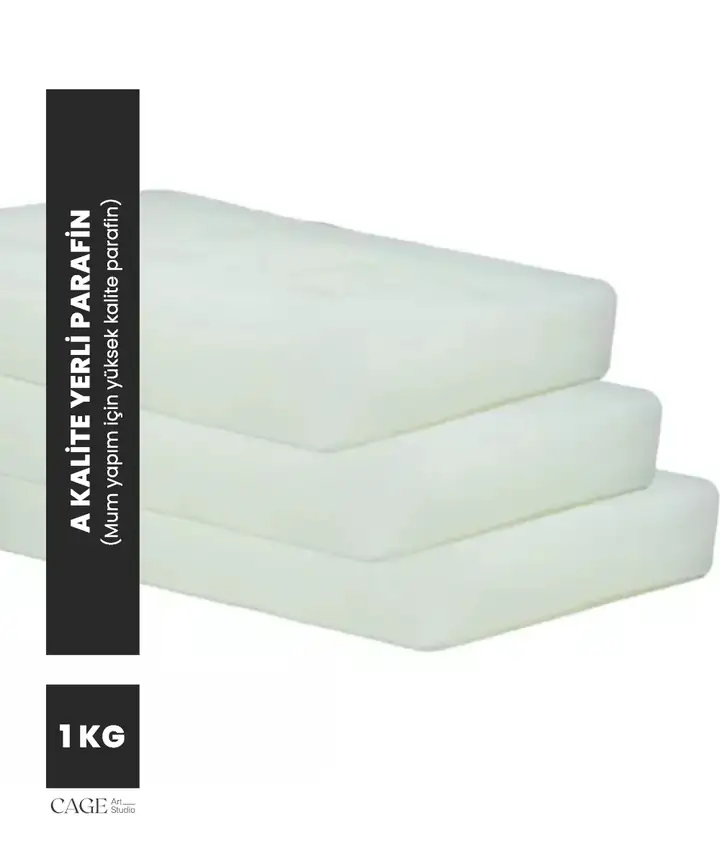
| Domestic Paraffin Wax Grade A | Drop point 56–58 °C | 93 °C (sources) | ~88 °C (sources) | – | Sources: 77–82 °C |
| Gel Candle Wax | 90–95 °C | Below 125 °C (sources) | 95–105 °C (sources) | 85–95 °C (sources) | – |
Our product page for this wax gives no melting or pouring temperature; it says the wax is used for container and pillar candles and that the fragrance load is 6–10%. In containers, start at 55–60 °C, the common range for soy waxes, and confirm it with a single test candle.
Is melting point the same as pouring temperature?
No, and this is the most confused topic online. On some sales pages you may find an answer like "soy wax melts at 42 °C and is poured at 47 °C." That answer is wrong: wax isn't poured a few degrees above its melting point. It is first heated to 80–85 °C so the fragrance oil and dye fully dissolve, then cooled to pouring temperature, 55–65 °C for Pillar.
The temperature at which the wax starts to turn liquid. It tells you how hard the wax is and how it will behave in hot weather.
The temperature at which fragrance oil and dye blend fully into the wax. For soy wax, 80–85 °C. You don't need more, and it can turn the color yellow.
The temperature at which the wax is poured into the container or mold. It decides how the surface turns out, how well the wax holds to the glass and whether it sinks.
Common mistake
Pouring the wax as soon as it melts, around 45–50 °C. The fragrance oil doesn't fully dissolve, settles to the bottom or sweats onto the surface, and the top comes out rough.
The right way
Bring the wax up to 80–85 °C, add fragrance oil off the heat, stir for 1–2 minutes and wait, thermometer in hand, for it to drop to the pouring temperature on the product page.
What temperature do you pour soy wax?
Soy wax has two different jobs: container candles and mold candles. Both the wax you use and the temperature change accordingly. We compared which soy wax is for what in our soy wax types post.
Container and glass candles: 55–60 °C (131–140 °F)
Golden Soya Wax melts at about 51–55 °C and is a soft wax for container candles. International makers give a pouring range of 52–63 °C for their container soy waxes, with 57 °C as a common starting point. Our recommendation is 55–60 °C. If the room is cold, pour near the top of the range; you can also warm the glass, keeping it below 38 °C.
Silicone mold candles: 55–65 °C (131–149 °F)
The pouring temperature on the Pillar Soy Wax product page is 55–65 °C. Higher pouring values, such as 77 °C, are given for some international pillar soy waxes; but every wax has its own formula, and for this wax the value on the product page applies. Pillar Soy Wax is usually poured at 55–65 °C; if the room is cold, you can go up to 70 °C. Every step of mold candles is in our making candles in silicone molds guide.
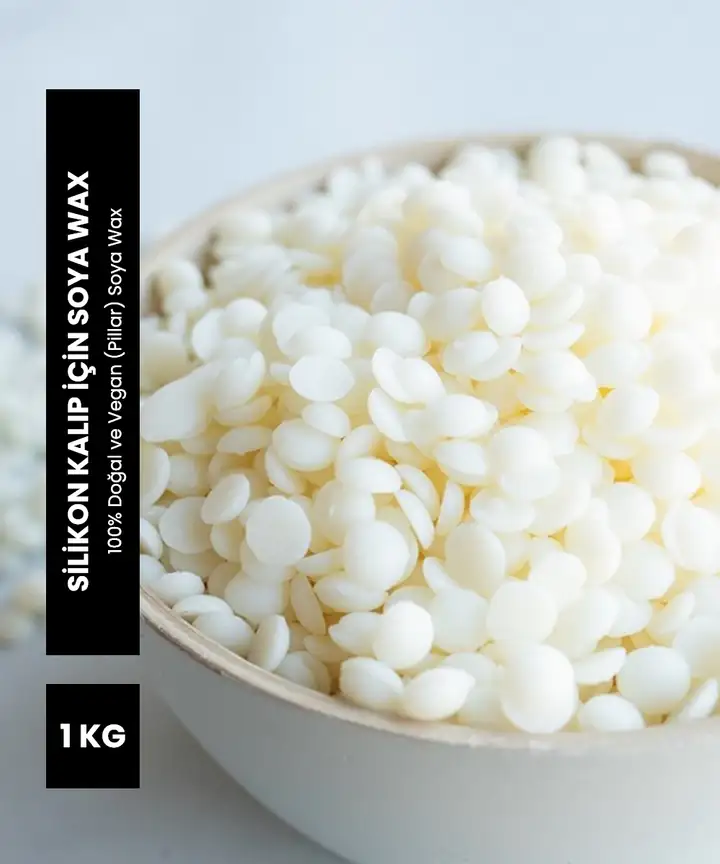 Pillar Soy Wax for Silicone Molds 1 kgView
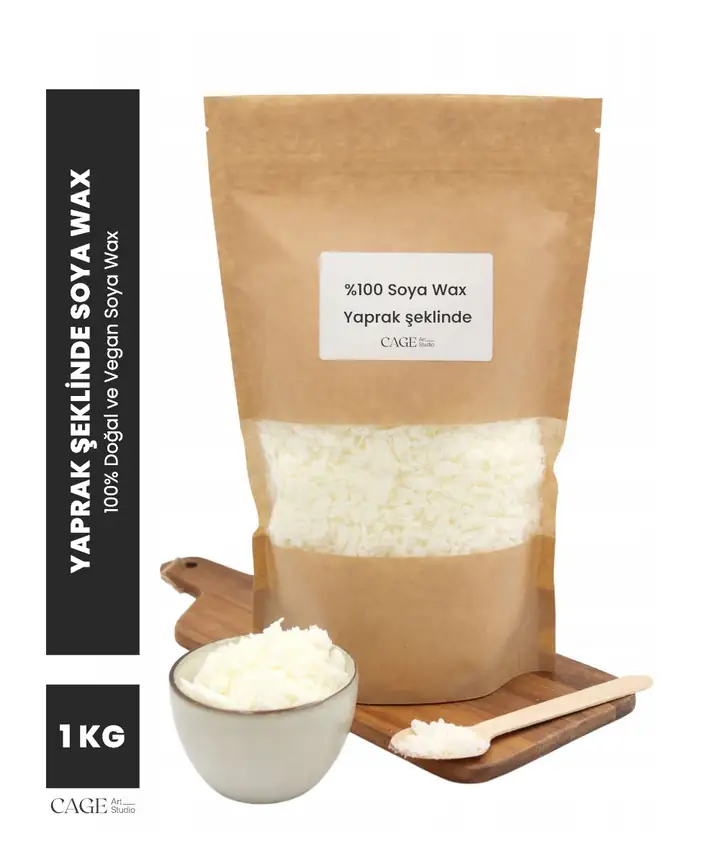 Golden Soya Wax 1 kg (Leaf Shape)View
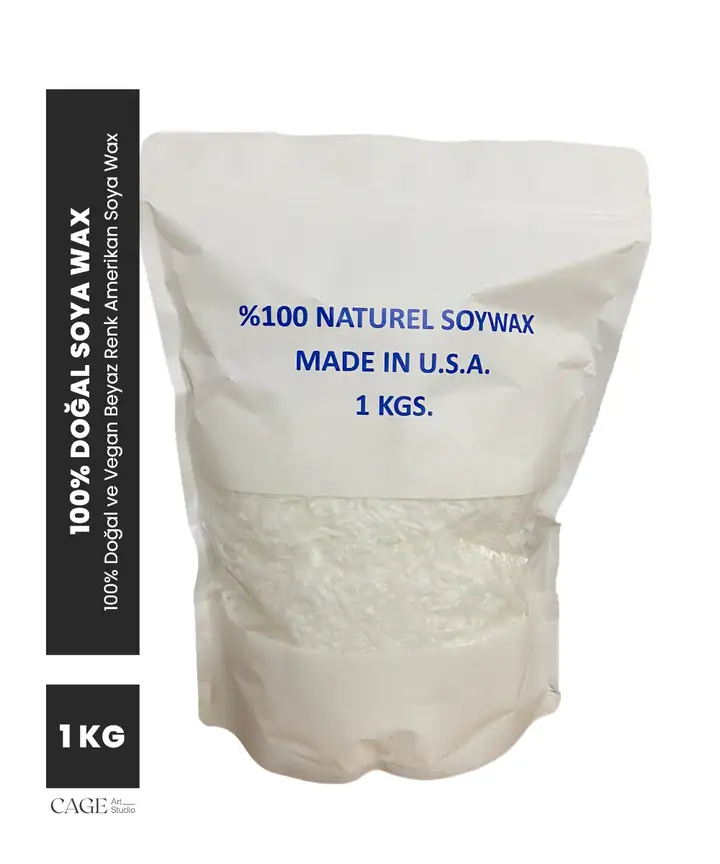 American Soy Wax 100% Natural 1 kgView
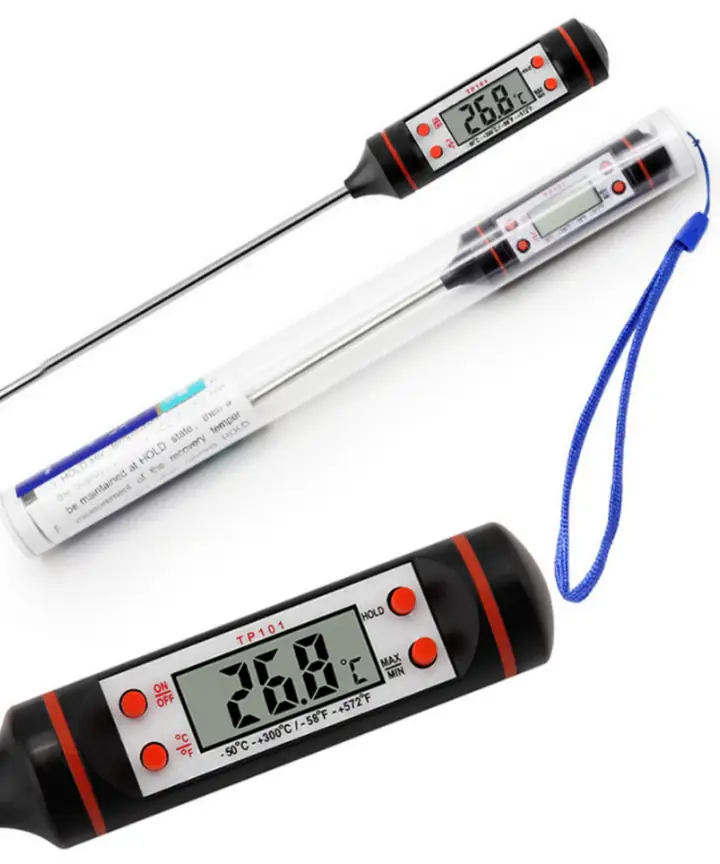 Digital ThermometerView
Paraffin wax melting and pouring temperature
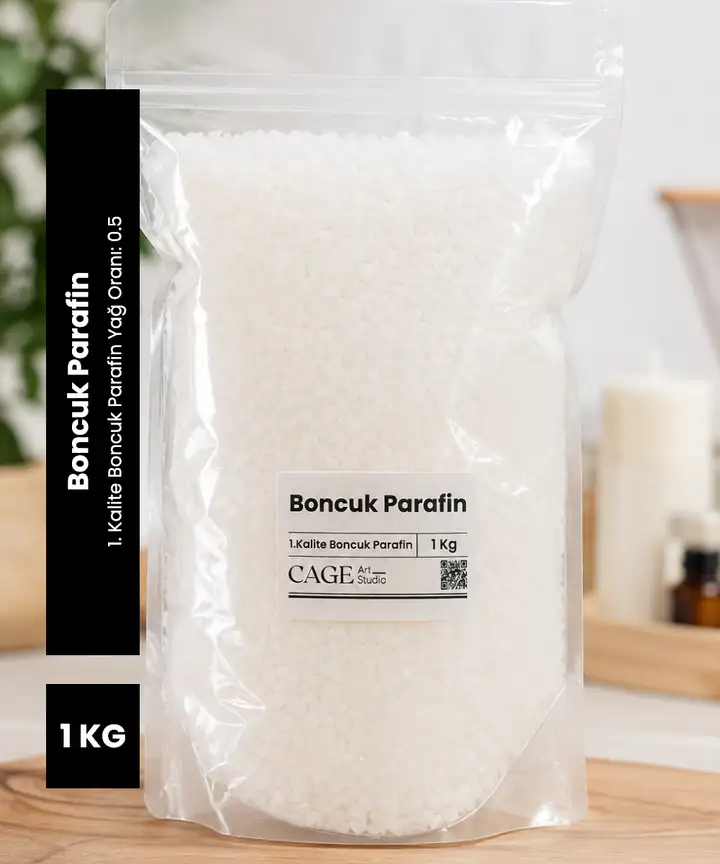
With paraffin, the melting point tells you what the wax is for. Sources classify paraffin below 54 °C as soft "container" paraffin, 54–66 °C as votive and pillar paraffin, and anything higher as very hard paraffin. Our Paraffin Pellets have a melting range of 54–70 °C and a recommended working temperature of about 70 °C. Domestic Paraffin Wax Grade A has a drop point of 56–58 °C and a congealing point of 55–57 °C.
International sources pour pillar paraffin hotter: 77–82 °C. They report that below this range you can get dull, mottled spots and layer lines instead of a glossy surface. For our product, start with the roughly 70 °C on the product page; if you see lines on the surface, raise it a few degrees on the next pour. Fragrance oil and dye are usually added to paraffin around 88 °C; never heat paraffin above 93 °C.
Stearic acid hardens paraffin and makes demolding easier. Our product page recommends 10%, that is, 100 g per 1 kg of paraffin. International sources start at 5% and experiment in the 2–10% range. Details are in our paraffin guide.
Gel wax and wax melt pouring temperature
Gel wax: melts at 90–95 °C (194–203 °F)
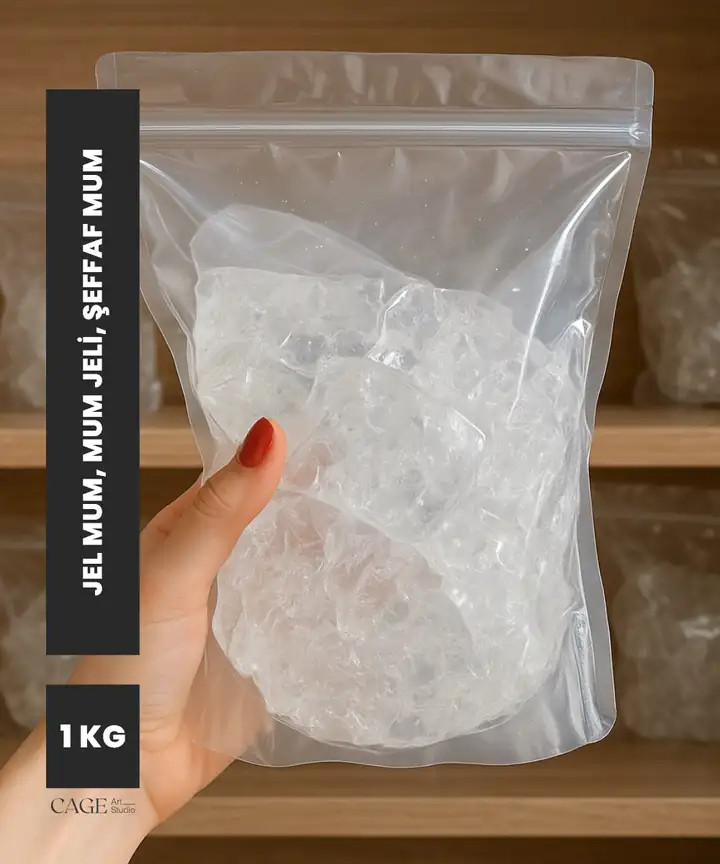
Gel wax works at much higher temperatures than soy or paraffin. According to our product page, gel melts at 90–95 °C and gels between 50 and 60 °C. Sources recommend mixing in additives at 95–105 °C and pouring at 85–95 °C; another source gives a pour of 77–93 °C and says to go up to 110 °C to deal with bubbles, but never above 125 °C. The manufacturer notes that these values can vary by ±10 °C.
Only use gel-compatible fragrance oil with a flash point of at least 77 °C in gel wax; in medium-density gel, 3–5% is enough. Warming the glass and pouring the gel low, along the side, reduces bubbles. All the details are in our gel candle guide.
Wax melt
Wax melts are made with mold wax, and according to sources, fragrance oil is added at 65–85 °C and the wax poured at 60–77 °C. About 60 °C is recommended for plastic molds to keep them from softening. We answered wax melt questions in our what is a wax melt post.
What temperature to add fragrance oil and dye
For fragrance oil, most sources agree on 85 °C; one recommends adding it at 82 °C and stirring for a full 2 minutes, going up to 88 °C for heavy fragrance oils. The practical rule for soy wax: 80–85 °C, with the pot off the heat. Fragrance oil added when the wax is too cool doesn't fully dissolve, can settle to the bottom and causes sweating.
The flash point of fragrance oil is often misunderstood. The flash point is the temperature at which fragrance oil vapor can ignite if it meets a flame. According to CandleScience, adding fragrance oil to wax hotter than its flash point won't ignite it, and if you pour right away it won't burn off the scent. What really weakens the scent is cooling and reheating scented wax again and again. Flash point matters most with gel wax.
| What you add | Soy wax | Paraffin | Gel wax |
|---|---|---|---|
| Dye granules | 80–85 °C | ~88 °C (sources) | Gel-compatible liquid dye |
| Fragrance oil | 80–85 °C, off the heat | ~88 °C or right before pouring | 95–105 °C (sources), flash point ≥ 77 °C |
| Ratio | %6–10 | %6–10 | %3–5 |
A gram chart for the ratios is in our candle fragrance oil and dye ratios post. The IFRA certificates of our fragrance oils are published on the site; candles fall under IFRA Category 12.
What happens if you pour at the wrong temperature?
Temperature isn't just a number; it decides the candle's surface, how it holds to the glass and its scent. How the most common problems relate to temperature:
Sinkhole or crack in the middle
Pulling away from the glass, wet spots
Rough surface, frosting
Weak scent or oil on the surface
Layer lines (paraffin)
The full list of problems is in our candle making tips post.
How to measure wax temperature with a thermometer
Working without a thermometer is the most common reason for weak scent and rough surfaces. Our digital thermometer measures from -50 to +300 °C, and its 15 cm stainless steel probe easily reaches the middle of the pot. The HOLD button freezes the reading, and MAX/MIN shows the highest and lowest values. We covered the melting methods themselves in our how to melt wax post.
- 1
Weigh the wax and put it in the pot
Weigh the wax you need in grams and put it in a double boiler pot or a melting pot. Don't put it over direct heat.
- 2
Bring it to heating temperature
Heat soy wax to 80–85 °C. For paraffin, sources give an upper limit of 93 °C; gel wax melts at 90–95 °C.
- 3
Hold the thermometer correctly
Dip the thermometer tip into the middle of the wax, not touching the bottom or sides of the pot. Read it once the value settles.
- 4
Add the dye
Add the dye granules at heating temperature and stir until they have fully dissolved.
- 5
Add fragrance oil off the heat
Take the pot off the heat, add the fragrance oil and stir slowly for 1–2 minutes.
- 6
Wait for pouring temperature
Watch the thermometer: Pillar Soy Wax at 55–65 °C, Golden Soya Wax in jars at 55–60 °C. When it reaches the value, pour slowly.
- 7
Cool at room temperature
Leave the candle on a flat surface in a draft-free room at 20–24 °C. Don't put it in the fridge.
Never leave heating wax unattended, don't melt it over direct heat and don't splash water into wax. If wax catches fire, don't pour water on it; turn off the heat and cover the container with a lid. Our wax melting pots can be set between 60 and 100 °C.
How long does a candle take to set, and when can you burn it?
Setting time depends on the size of the candle, the wax and the room temperature, so giving a single number of hours would be misleading. But a few benchmarks make it easier:
Don't demold a mold candle before it has fully cooled and hardened; if you rush, the pattern gets ruined. If the candle is stuck in the mold, you can put the mold in the fridge for about 5 minutes; the freezer can cause cracks from sudden cooling. With pillar candles, sinking around the wick shows up within the first 24 hours. Every detail of demolding is in our how to get a candle out of a mold post.
Frequently asked questions
What temperature do you pour candle wax?
It depends on the wax. Pillar Soy Wax is usually poured into molds at 55–65 °C (131–149 °F), or up to 70 °C (158 °F) if the room is cold, and Golden Soya Wax into jars at 55–60 °C (131–140 °F). Paraffin Pellets have a working temperature of about 70 °C, and gel wax is poured at 85–95 °C according to sources.
What temperature does candle wax melt?
According to our product pages, Golden Soya Wax melts at about 51–55 °C, Paraffin Pellets at 54–70 °C and gel wax at 90–95 °C. Melting point is not pouring temperature; the wax is heated above it and then cooled to pouring temperature.
What temperature do you pour soy wax?
Container soy candles are usually poured at 55–60 °C; sources give a range of 52–63 °C. For silicone molds, the pouring temperature on the Pillar Soy Wax product page is 55–65 °C; if the room is cold, you can go up to 70 °C.
What temperature do you add fragrance oil to wax?
For soy wax, at 80–85 °C, after taking the pot off the heat; for heavy fragrance oils you can go up to 88 °C. Add the fragrance oil and stir slowly for 1–2 minutes.
What temperature do you pour gel wax?
According to our product page, gel wax melts at 90–95 °C. Sources give a pour of 85–95 °C; lower than that, you get more bubbles. The fragrance oil's flash point should be at least 77 °C.
What temperature does paraffin wax melt?
Paraffin Pellets melt at 54–70 °C, and Domestic Paraffin Wax Grade A has a drop point of 56–58 °C. Never heat paraffin above 93 °C.
How long does it take for a candle to set?
The surface should start to set within half an hour of pouring; if it takes much longer, you poured too hot. Leave a container candle uncovered for at least 24 hours, and demold a mold candle once it has fully cooled.
The right supplies for the right temperature
Soy wax, paraffin, gel wax, a digital thermometer and wax melting pots in one order; ships in 1–3 business days.