How Much Wax Does a Silicone Mold Hold? Capacity Table
8 min readUpdated: November 5, 2026Cage Art Studio Workshop
A silicone candle mold holds approximately 11 g to 1,313 g of wax, depending on its size and shape. The table lists estimated capacities from product descriptions for 224 in-stock molds. To measure your mold with water, multiply the water weight by 0.82, then weigh a test pour to check your wax and fill level.
At a glance
224 molds: estimated capacities of 11–1,313 g, taken from product descriptions.
Water weight × 0.82: the mold guide's approximate wax calculation.
The table is sorted by capacity, from smallest to largest. Select a model name to see its product details. You can also browse every model in our silicone molds category. Dimensions refer to the finished object, not the outside of the silicone mold. If the description lists only a length or diameter, only that measurement is shown; missing dimensions have not been added. On a phone, scroll the table sideways.
For candle holder and planter molds, the gram value is the estimated wax weight of the object cast in the mold, not the wax needed to fill the finished vessel. Cavities and recesses mean multiplying external dimensions will not give the correct fill amount. Similar dimensions can also yield different capacities; product values are reproduced without recalculation.
Check the estimate with a test pour
The list includes models shown as in stock in the saved product data used for the November 5, 2026 update. Wax type, fragrance oil and fill level can change the result. Do not add the mold's own weight to its wax capacity.
Place the mold on a level surface. Secure any cut sides according to the instructions and check that water does not leak through the wick hole.
2
Tare the empty mold
Place the dry, empty mold on the scale and tare it. This keeps the weight of the silicone and support pieces out of the water measurement.
3
Add water to the fill level
Fill with water to your intended wax level. Record the water weight in grams; do not estimate volume from external dimensions.
4
Calculate the wax amount
Multiply the water weight by 0.82. For example, a mold holding 500 g of water gives 500 × 0.82 = approximately 410 g of wax.
5
Dry the mold and make a test pour
Empty the water and dry the mold completely. Pour your own wax blend, then weigh the cooled candle and record its actual fill weight for future batches.
The mold guide's calculation: 500 g water × 0.82 = approximately 410 g wax.
Use the same fill level each time you measure. Squeezing the mold in your hand can change its shape, so measure on a level surface. If water leaks, do not treat the resulting weight as the capacity. Check how the mold is secured, then measure again. After measuring with water, the mold must be completely dry before you pour hot wax.
Why multiply the water weight by 0.82?
Equal volumes of water and wax do not weigh the same. The 0.82 factor is an approximate conversion from the mold use guide, not a measured, fixed density for every wax. If the product page estimate and your water measurement differ, use the weight of a test pour made with your intended blend.
Pour the wax at the right temperature in a thin, steady stream.
For example, if the scale shows 500 g of water, 410 g of wax is a starting estimate. This excludes the mold's weight. For a scented recipe, record the total fill weight separately from the wax alone. Repeat the test whenever you change wax or fill level to plan the next batch more accurately.
How do you calculate stone powder and scented stone quantities?
Our calculator works out the powder and water you need for your mold.
A silicone mold flexes: once the candle has fully cooled, ease the mold open and lift it out.
For a mold holding 500 g of water
Calculation
Approximate amount
Wax
500 × 0,82
410 g
Powder
500 × 1,6
800 g
Mixing water
500 × 1,6 × 0,28
224 g
Keep measuring water separate from mixing water
Do not add the 500 g of water used to measure the mold to your mixture; the example calls for 224 g of mixing water. If the ratio on the powder packaging differs from this estimate, follow the packaging instructions and make a small test batch.
For preparing stone powder, see the stone powder use guide; for scented objects, see scented stone making for the method. This table helps plan material quantities; mixing, setting and surface finishing must be assessed separately for the product you use.
How many candles will 1 kg of wax make in these molds?
Without fragrance oil or waste, divide 1,000 g of wax by the mold's capacity in grams and round down to a whole number. The article How many candles does 1 kg of wax make? gives examples of 21 complete Mini Bubble candles at approximately 47 g each, or 7 Large Bubble candles at approximately 135 g each.
If the center sinks, finish the surface with a small second pour.
In the Large Bubble example, 7 × 135 = 945 g is used and 55 g remains. That remainder does not count as another complete candle. The linked article explains fragrance oil, total mixture and production loss calculations. First find your mold and starting weight here, then calculate your target quantity using your own test weight.
How do you account for waste and wick space?
The mold guide recommends setting aside 10% extra wax for a second pour. For a 410 g fill, an extra 41 g brings the amount prepared to 451 g. A second-pour allowance is different from waste: material used to top up the surface becomes part of the candle, while spills and material left in the pot are recorded separately.
Do not subtract the same number of grams from every mold for the wick and unused fill space. Weigh a test candle poured to the intended level with the wick installed; if you need to deduct the wick's weight, measure it yourself. Product descriptions do not specify a universal wick volume, so no fixed gram deduction is applied here.
Record the cooled candle's weight, leftover mixture and losses separately. Do not automatically count reusable leftovers as waste or add the second-pour allowance twice. To reduce breakage during removal, read the demolding guide; to prepare for your next measurement, read about mold cleaning for guidance.
What are the common questions about mold capacity?
How much wax does a silicone candle mold hold?
The 224 in-stock molds in this table have estimated wax capacities of 11–1,313 g. Start with the product page's weight and confirm the actual weight of your own wax blend with a test pour.
Do you use the same weight of wax as water?
No. The mold guide's approximate calculation is water weight × 0.82. A mold holding 500 g of water gives an estimate of approximately 410 g of wax.
How much wax do Mini Bubble and Large Bubble molds hold?
According to their product descriptions, Mini Bubble holds approximately 47 g and Large Bubble approximately 135 g of wax. These are estimated wax fill weights, not the weight of the silicone molds.
How do you calculate stone powder for the same mold?
The guide's starting calculation is water weight × 1.6 for powder, then powder weight × 0.28 for mixing water. A 500 g water measurement gives 800 g of powder and 224 g of mixing water; the ratio on your powder packaging takes priority.
How many Mini Bubble candles does 1 kg of wax make?
Without fragrance oil or waste, 1,000 ÷ 47 gives 21 complete candles. Added fragrance oil and production losses change the actual quantity; the remainder does not count as another complete candle.
How much wax should I reserve for a second pour?
The mold guide recommends 10% extra wax for a second pour. For a 410 g first fill, a 41 g allowance brings the prepared amount to 451 g; this is not a measured waste rate.
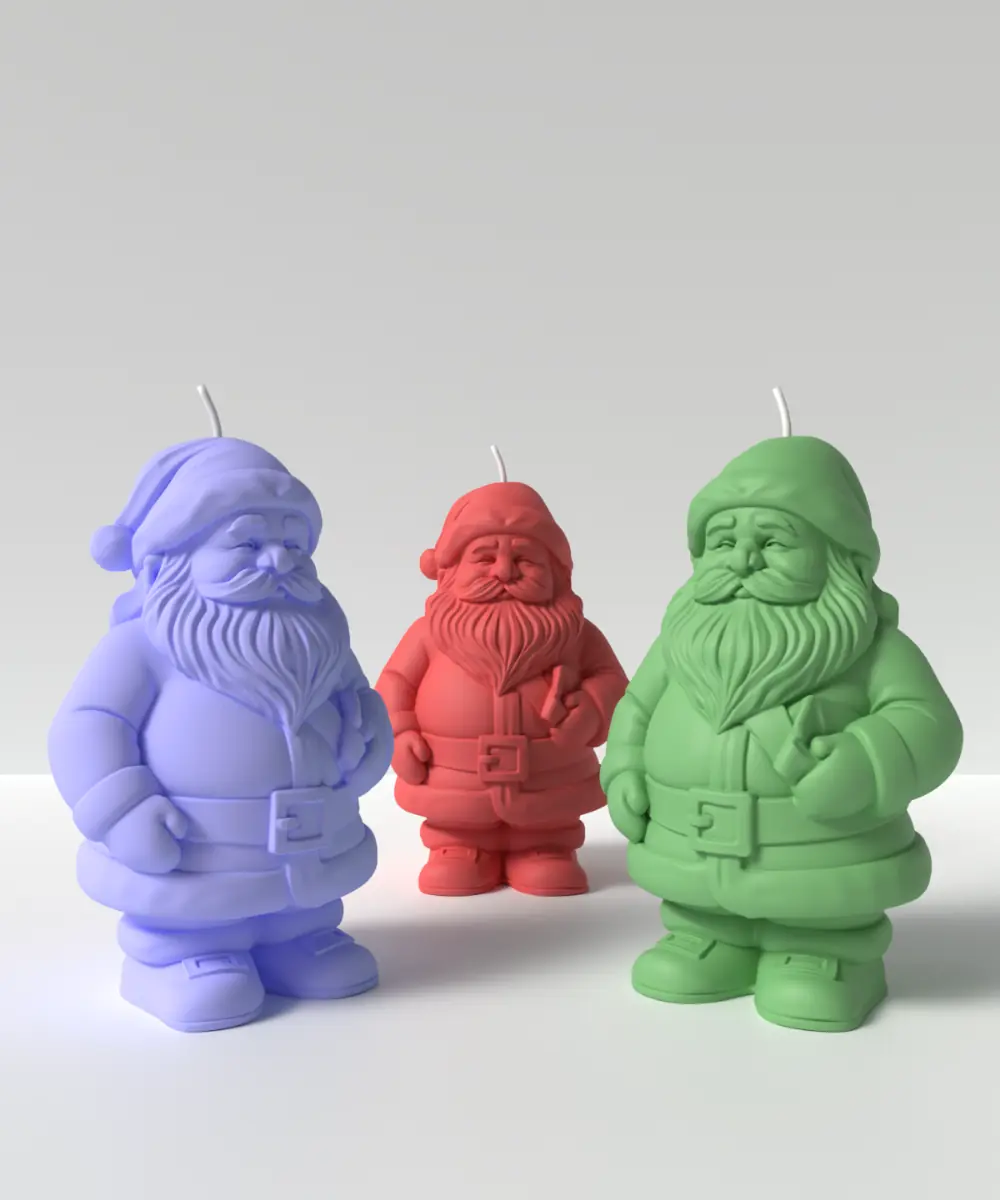

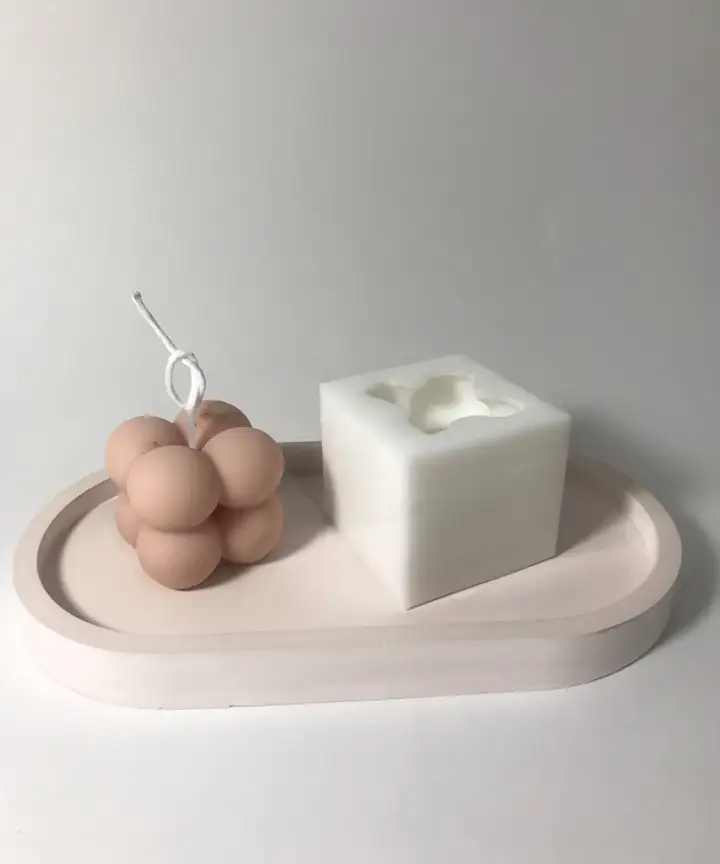 Mini Bubble Candle MoldView product
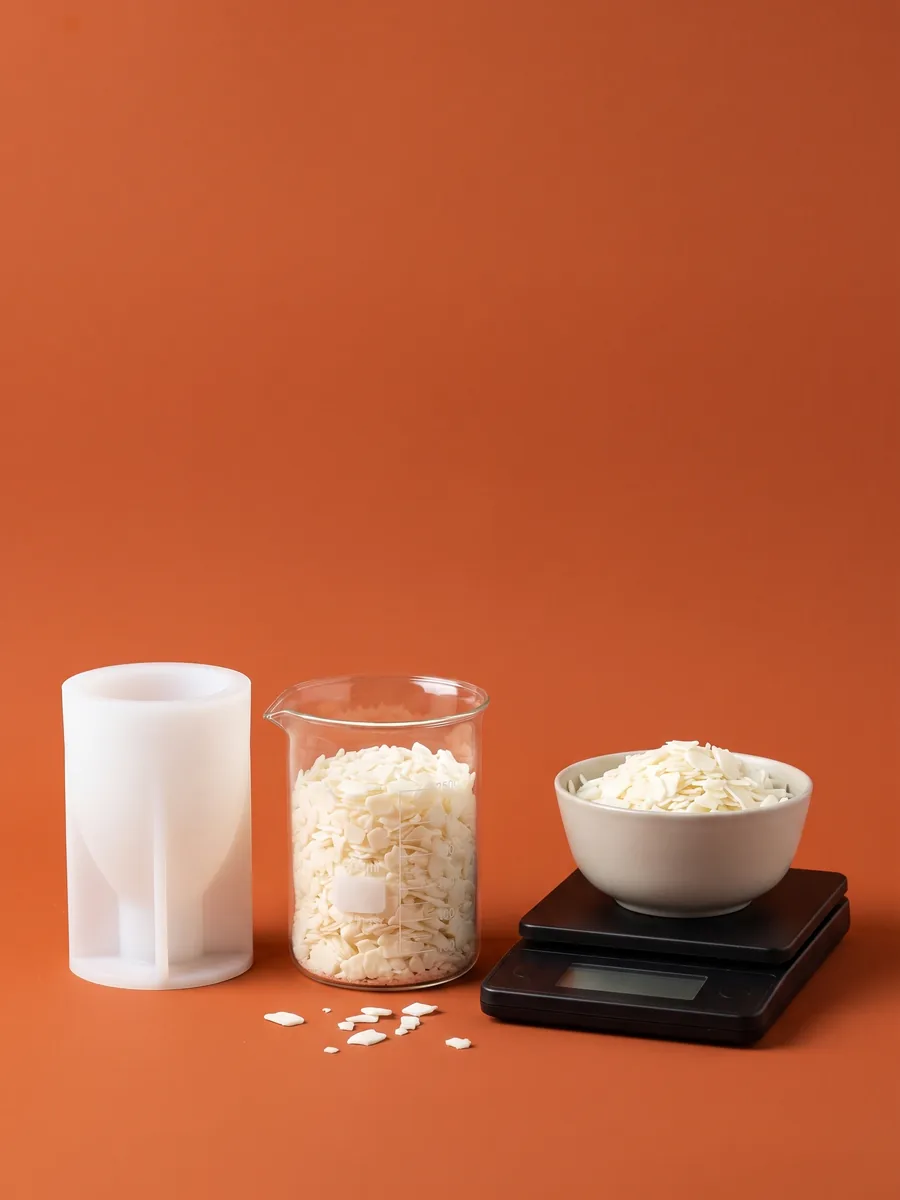
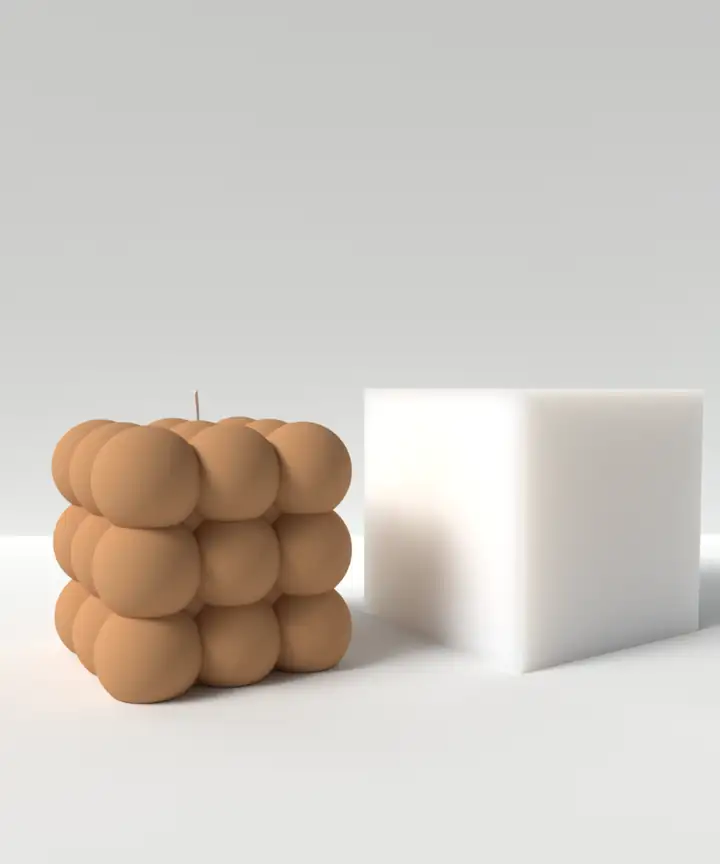 Large Bubble Candle MoldView product
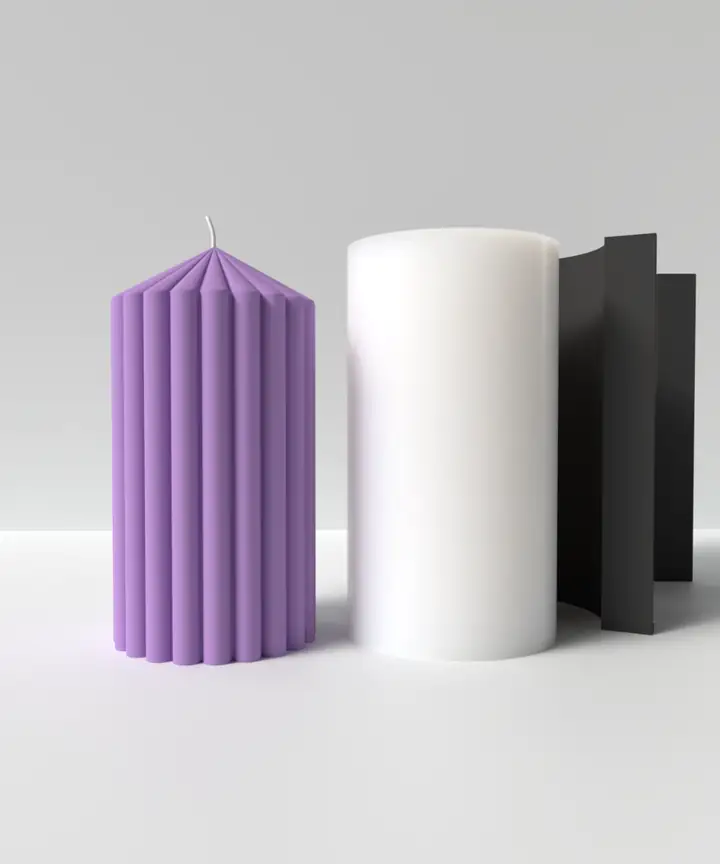 Medium Pillar Candle MoldView product