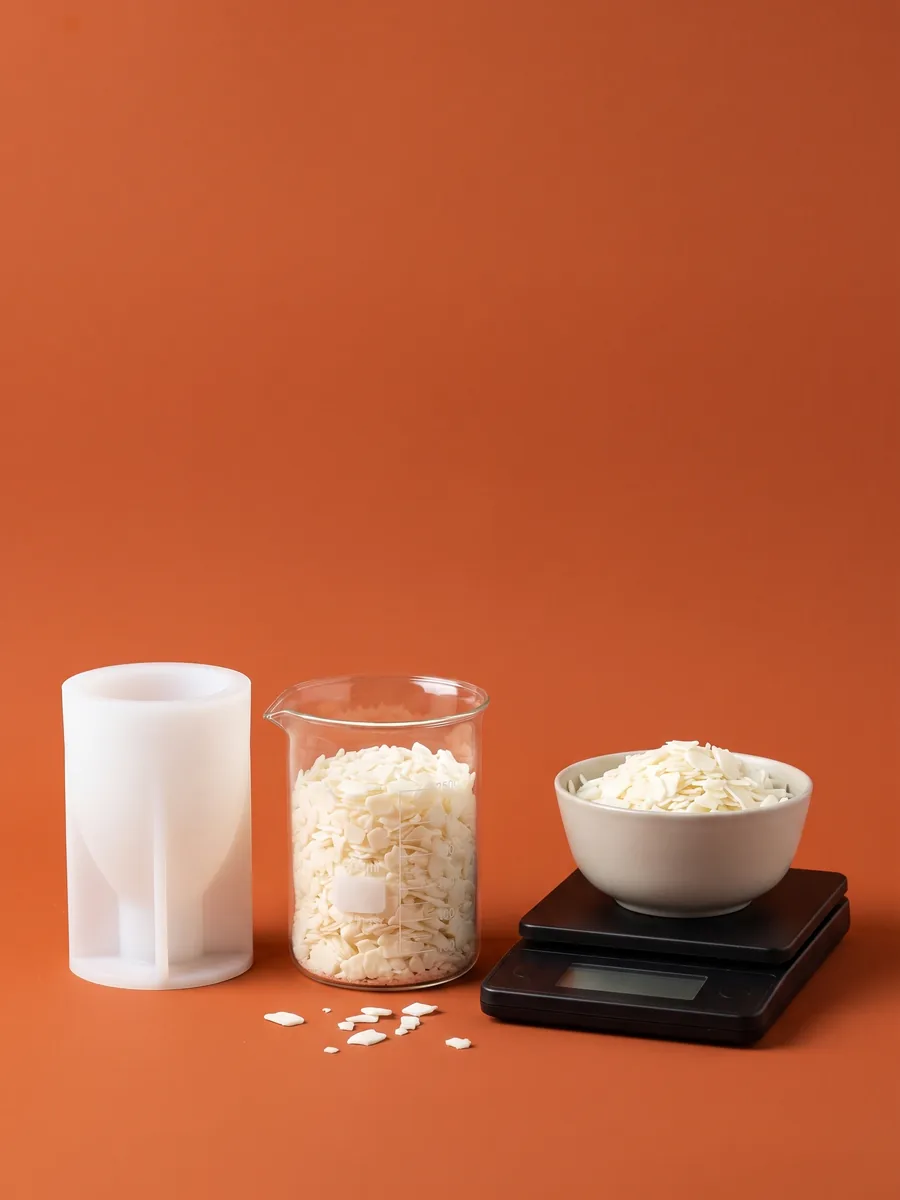
What Is Soy Wax? Types and What Each One Is Used For
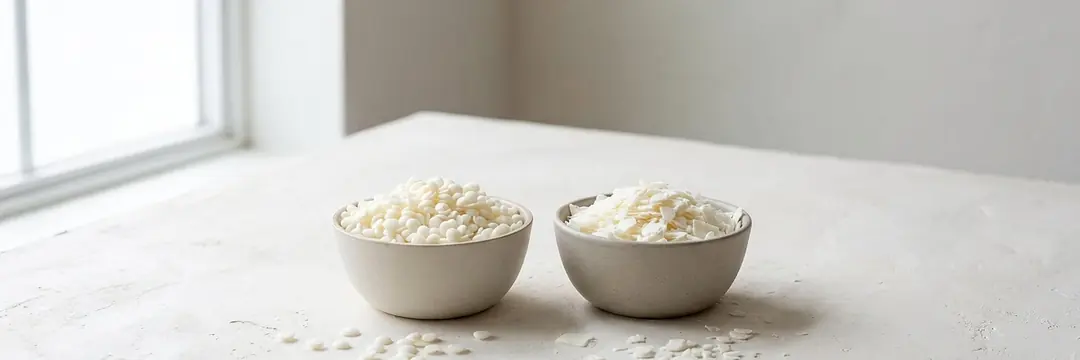
Soy wax is a plant-based candle material made by hydrogenating soybean oil into a solid. Soft formulations suit container candles; firm formulations suit freestanding figures. Pillar Soy Wax usually pours at 55–65 °C (up to 70 °C if the room is cold), while Golden is for containers. Melting, adding fragrance and pouring involve different temperatures; follow the instructions for each product.
In short
- For silicone molds: Pillar Soy Wax is hard, with a pouring temperature of 55–65 °C.
- For jars and glasses: Golden (melts at ~51–55 °C, fragrance oil saturation 8%) or Natural Soy Wax (melts at 65–70 °C).
- If you make both: American Soy Wax, for container and pillar candles.
- Fragrance oil 6–10%; let the candle rest at least 24 hours before burning, and 1–2 weeks for the strongest scent.
- The white crystals on the surface (frosting) are in the nature of soy wax and don't affect the burn.
In this guide
- What is soy wax, and what is it made from?
- How do soy wax types differ?
- Container or mold: which soy wax?
- At what temperature does soy wax melt, and at what temperature do you pour it?
- Why does soy wax frost and pull away from glass?
- How long to cure soy candles
- How do you identify pure soy wax, and what does MSDS show?
- Can soy wax and paraffin be mixed?
- Can you add stearin to soy wax?
- What are common questions about soy wax?
What is soy wax, and what is it made from?
According to CandleScience, harvested soybeans are cleaned, cracked, dehulled and rolled into flakes. Oil extracted from the flakes is hydrogenated: some unsaturated fatty acids become saturated, raising the melting point so the oil solidifies at room temperature. Remaining hulls generally become animal feed.
So commercial soy wax comes from a plant source, but it is a processed product; it isn't solid in its natural state. It's sometimes called "soy beeswax" in Turkish, but beeswax is a separate raw material made by bees. "Soy candle" is simply the name for a candle made with soy wax.
How do soy wax types differ?
| Use | Form | Temperature (product page) | Wrapping | |
|---|---|---|---|---|
| Pillar Soy Wax | Silicone molds, pillar candles | Pellets | Pour at 55–65 °C | 1, 5, 10, 20 kg |
| Golden Soya Wax | Jar and glass candles | Leaf (flakes) | Melts at about 51–55 °C | 1, 5, 10, 25 kg |
| Natural Soy Wax | Container candles | Block | Melts at 65–70 °C | 1, 5, 10 kg |
| American Soy Wax | Container and pillar candles | Not specified | Not specified | 1, 5, 10 kg |
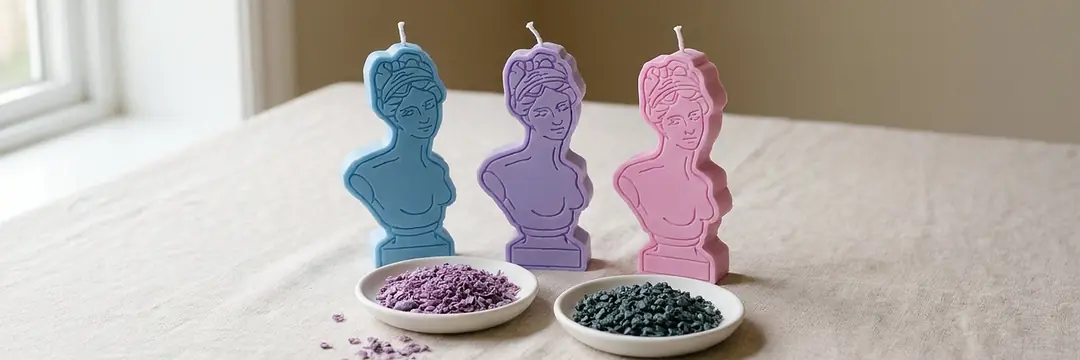
A casting formula developed for silicone molds: it comes out of the mold with a smooth surface and resists cracking and warping. It holds fragrance well and works with both hot and cold pour techniques. The pellet form is easy to weigh.
Go to productOff-white, opaque and unscented. Because it's softer than paraffin, it's used for container candles. The fragrance oil saturation ratio averages 8%; melt it in a double boiler, stirring constantly.
Go to productMade from 100% hydrogenated soybean oil. It has a slight natural soy scent; the product description specifies container use.
Plant-based; it gives a creamy, smooth surface and carries fragrance well. Used for both container and pillar candles.
Go to productReview the relevant safety data sheet (MSDS) pages for Pillar, Golden and American soy wax:
Container or mold: which soy wax?
Container soy wax is soft; it's made for candles that cling to the glass and stay in the container. In a candle that has to come out of a mold, that softness is a problem: the candle sticks to the mold, its corners break, and it may not hold its shape in hot weather. Pillar soy wax, on the other hand, is hard; it releases from the mold and stands on its own.
Golden or Natural Soy Wax in a mold
Soft container wax is hard to demold, fine details break, and the candle may lose its shape over time.
Pillar Soy Wax in a mold
The hard casting formula comes out of the mold smooth, keeps the details and holds fragrance well.
For step-by-step instructions, see How to Make Soy Candles for jar candles and Making Candles with Silicone Molds for molds. Wax melts, which also need to come out of the mold cleanly, need a hard wax too.
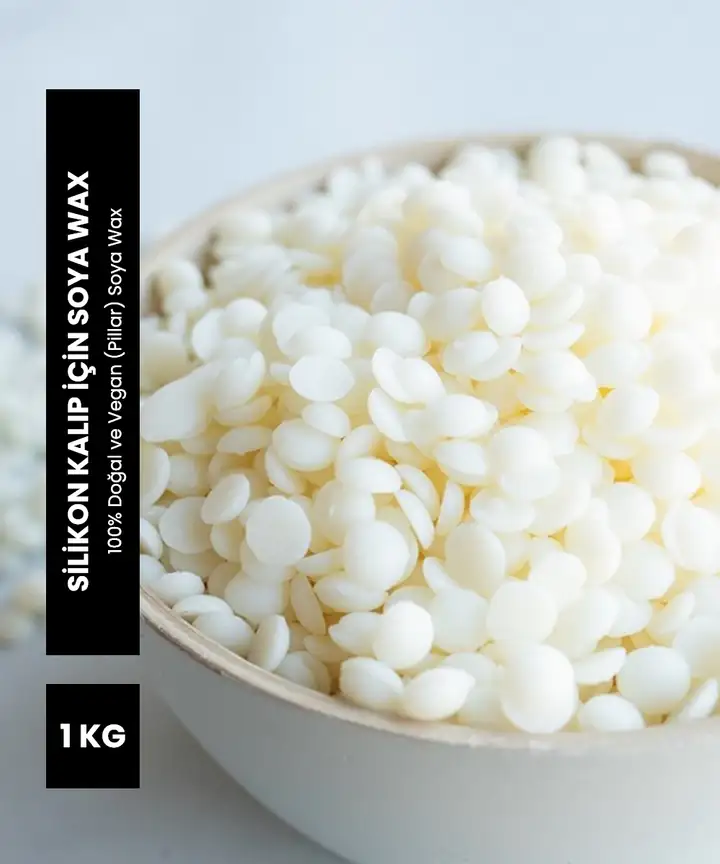 Silikon Kalıp İçin Soya Wax 1 Kg (Pillar Soy Wax)View
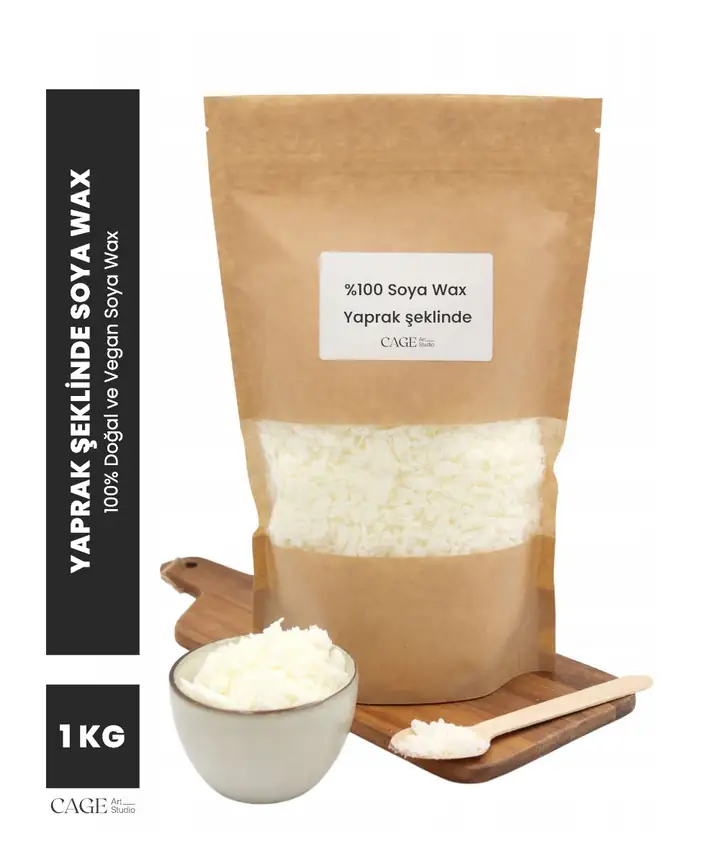 Golden Soya Wax 1 Kg (Yaprak şeklinde)View
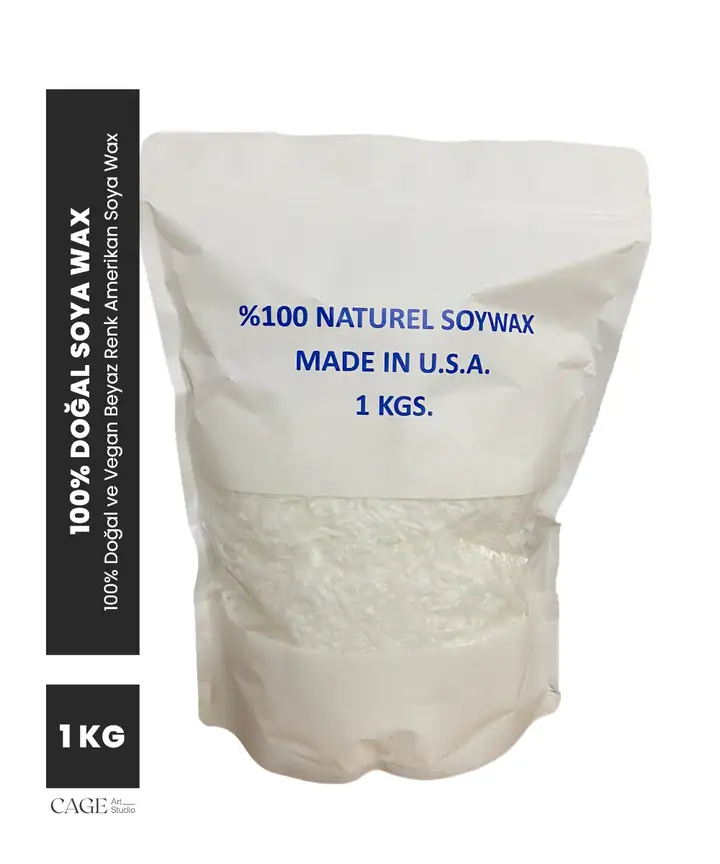 Amerikan Soya Wax %100 Natural 1 KgView
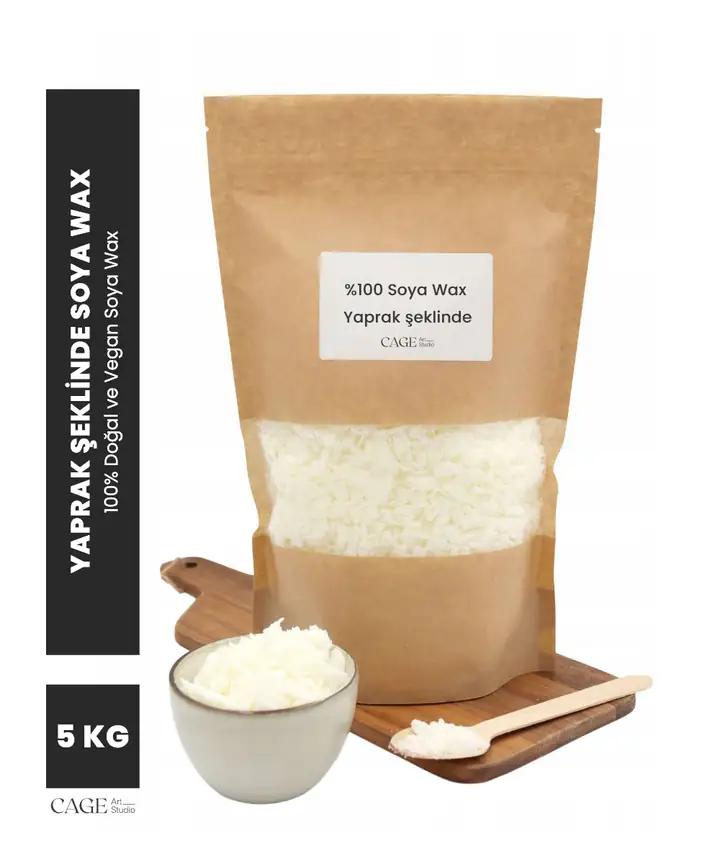 Golden Soya Wax 5 Kg (Yaprak şeklinde)View
At what temperature does soy wax melt, and at what temperature do you pour it?
Melting, fragrance addition and pouring are separate stages. Soy container guides describe heating and adding fragrance at 80–85 °C; that is not a shared specification for all products. Follow your wax instructions, mix gently after removing from heat and pour within the product’s range.
| Wax | Melting | Heating and fragrance oil | Pouring |
|---|---|---|---|
| Pillar Soy Wax | No value given here | Follow the product instructions | 55–65 °C (silicone mold) |
| Golden Soya Wax | About 51–55 °C | 80–85 °C: general soy sources | 55–60 °C: general container starting range |
| Natural Soy Wax | 65–70 °C | Follow the product instructions | Product instructions and test pours |
| American Soy Wax | Not specified | Follow the product instructions | Not specified; request product information |
Because the formulas differ, the melting points differ too. If this table and the product page disagree, go by the product page. Melting methods: How to Melt Candle Wax
Why does soy wax frost and pull away from glass?
As soy wax cools, it can shift into different crystal forms, producing white, crystalline patches on the surface and edges. This is called frosting. It's cosmetic and doesn't affect the scent or the burn. In 100% soy wax it often can't be prevented entirely; and frosting doesn't prove the wax is "pure" either.
Frosting (whitening)
Spots that look wet on the glass
Rough surface and sinking
How long to cure soy candles
The crystal structure of soy wax settles within a few days, and the fragrance oil distributes evenly through the wax. Our product page recommends waiting at least 24 hours before burning; foreign sources recommend 48 hours before a test burn and 1–2 weeks for the strongest scent. Paraffin is faster: 3–5 days. Some suppliers also note that the effect of resting is based on experience and its cause hasn't been proven yet.
While resting, keep the candles covered, at 18–25 °C, in a place without direct sun.
How do you identify pure soy wax, and what does MSDS show?
Telling by eye and hand isn't reliable: neither frosting nor a creamy look is proof on its own. What to look for:
Ask the seller for the MSDS; it lists the contents and safety information. The MSDS pages for our soy waxes are above.
The melting and pouring temperatures on the product page should hold on your own thermometer too. If no value is given, ask.
It should state clearly what the product is made for (container, pillar) and its form (leaf, pellets, block). With blend names like "soy paraffin," ask about the ratio.
MSDS is a safety data sheet that helps assess identity, safe handling and composition information. It is not a complete recipe or independent purity certificate. Match the document’s name to the wax purchased; if a blend is suspected, request the manufacturer’s composition statement and technical sheet. Appearance or scent comparisons at home cannot establish a precise purity percentage.
Pillar, Golden and American MSDS pages concern wax. IFRA documents concern fragrance use, not proof of pure soy wax. Distinguish document types and confirm the product match. See fragrance and dye ratios for fragrance calculations.
Can soy wax and paraffin be mixed?
Yes, soy–paraffin blends exist for candles and wax melts. Mixing two packs at home does not reproduce a manufacturer’s formula. Product class, existing additives and container or mold goals determine results. Our local sources give no verified common ratio for all these products, so we recommend no fixed percentage.
To trial a blend, read both technical instructions, record weights and ratio, and make a small sample. Do not set pouring temperature by averaging melting points. Reassess fragrance capacity and wick selection: a single-wax recipe does not guarantee the same burn in a blend. Do not label changed compositions as pure soy.
| Soy wax | Paraffin Wax | |
|---|---|---|
| Source | Soybean oil (plant-based, hydrogenated) | Refined crude oil |
| Look | Creamy, opaque; pastel colors | Hard, glossy; vivid colors |
| Curing | 1–2 weeks | 3–5 days |
| Burn assessment | Test with wick, fragrance and vessel | Test with wick, fragrance and vessel |
| Mold candles | With Pillar Soy Wax | With stearic acid |
For a detailed comparison, see our Paraffin Wax Guide; for the health question, see our Are Scented Candles Harmful? post.
Can you add stearin to soy wax?
Not every soy wax needs stearin. Pillar Soy Wax is designed for molds; Golden for containers. Do not transfer paraffin’s 10% additive ratio directly. Assess hardness, glass adhesion and wick behavior together; see what is stearic acid for details.
What are common questions about soy wax?
What does 'soy paraffin' mean?
'Soy paraffin' is an ambiguous trade term sometimes used for soy wax; alone it proves neither the presence nor absence of petroleum paraffin. Soy wax comes from hydrogenated soybean oil; a soy-paraffin blend is a separate formulation. Read the composition declaration; suitable grades serve container candles, molded candles and wax melts.
Which soy wax should I use for a silicone mold?
Pillar Soy Wax (Soy Wax for Silicone Molds). It's hard and releases from the mold smooth; its pouring temperature is 55–65 °C. Golden and Natural Soy Wax are for container candles.
At what temperature does soy wax melt?
It varies: Golden about 51–55 °C, Natural Soy Wax 65–70 °C. We give no Pillar melting value here; its pouring range is 55–65 °C. Melting and pouring are different stages.
What is American soy wax?
It's a plant-based, 100% natural soy wax; it gives a creamy, smooth surface and carries fragrance well. Because it can be used for both container and pillar candles, it suits those who do both jobs.
How much fragrance oil goes into soy wax?
6–10%, which means 60–100 g for 1 kg of wax. The fragrance oil saturation ratio of Golden Soya Wax averages 8%.
Can soy wax and paraffin be mixed?
Yes, soy–paraffin blends exist. Combining any two products at a random percentage does not reproduce them; formula-specific ratios, temperatures and wick tests are required. Our sources give no single ratio for all products.
How can you identify pure soy wax?
Color, scent or frosting alone do not prove purity. Review description, composition statement, technical sheet and matching MSDS together; MSDS alone is not a full formula or purity certificate.
Can you add stearin to soy wax?
It is not essential for all soy waxes. Pillar is ready for molds; do not apply paraffin’s 10% directly to container wax like Golden. Product-specific instructions and sample testing are required.
Start with the right soy wax
Explore Pillar, Golden and American soy wax by intended use and relevant technical documents.