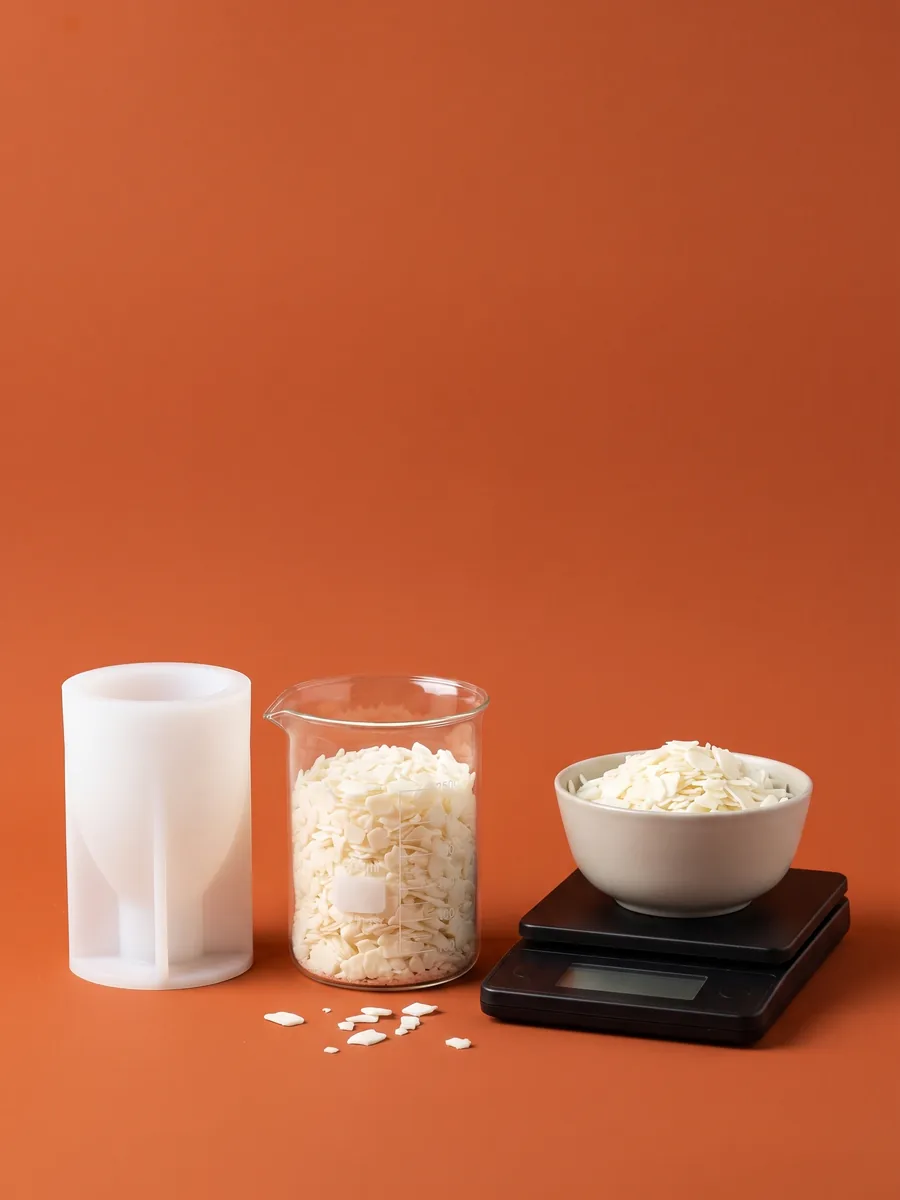
How to Make Scented Stones: Plaster Ratios and Fragrance Oil
Making scented stones comes down to mixing plaster with water, pouring it into a silicone mold and loading the porous stone with fragrance. The hard part is the measuring: most recipes say “a scoop of plaster” or “a few drops of fragrance oil.” In this guide we give the plaster, water and fragrance oil in grams and explain the reason behind every number.
In short
- Use casting or ceramic plaster; the ratio on manufacturer data sheets is 100 g powder to 65–70 g water.
- Sprinkle the plaster into the water, and weigh both on a scale.
- There is no established ratio for fragrance oil: make three test stones with 2, 4 and 6 g per 100 g of powder and compare them.
- Plaster sets in 15–25 minutes and warms up; demold the stone once the heat has passed.
- Track drying by weight: a stone made with 100 g plaster + 70 g water is dry when it drops to about 119 g.
- Do not dry above 49 °C. Keep scented stones away from children, and do not make shapes that look like food.
In this guide
- Materials for scented stones
- Which plaster for scented stones?
- Scented stone measurements: plaster, water and fragrance oil in grams
- Making scented stones step by step
- How long does a scented stone take to dry?
- How to paint and color scented stones
- How to refresh the scent when it fades
- Cracking, crumbling, oil stains: fixes
- Safety and gift packaging
- Frequently asked questions
Materials for scented stones
Casting plaster is sold at hardware stores and art supply shops; the molds and fragrance oils are available from us.
Ceramic or modeling plaster: white, fine-grained and porous. Ready-made scented stone powder can also be used.
Our candle fragrance oils work in scented stones too. You can find each fragrance oil's IFRA certificate on its product page.
Candle Fragrance OilsSmall molds with a flat base are easiest: rose, cloud, heart, seashell, bubble.
Silicone moldsFor weighing the plaster, water and fragrance oil. Fragrance oil amounts are small, so 0.1 g accuracy makes the job easier.
Precision scale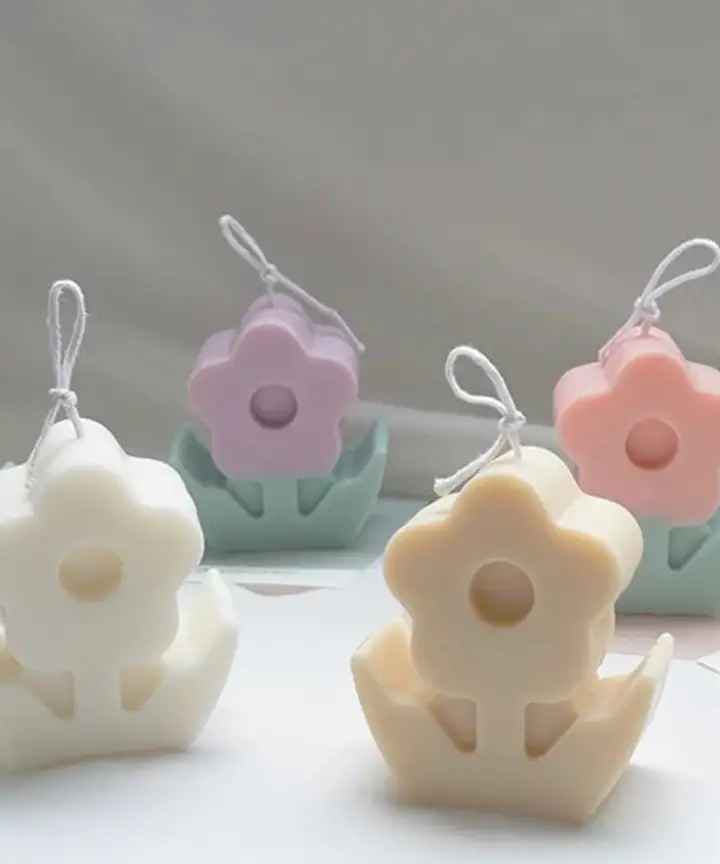 Rose Candle MoldView
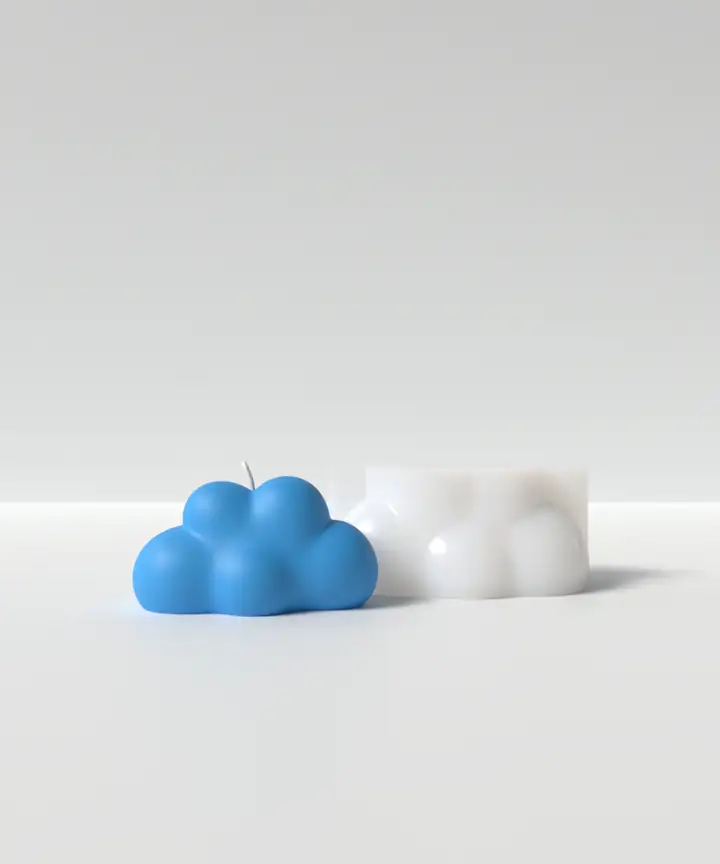 Mini Puffy Cloud Silicone MoldView
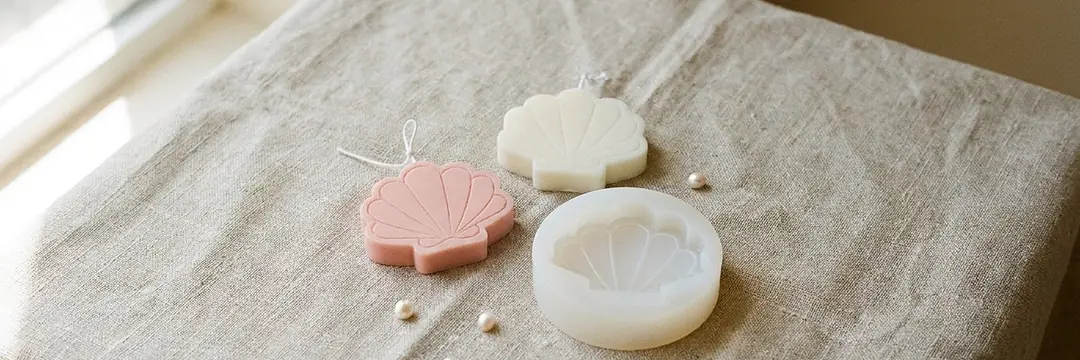
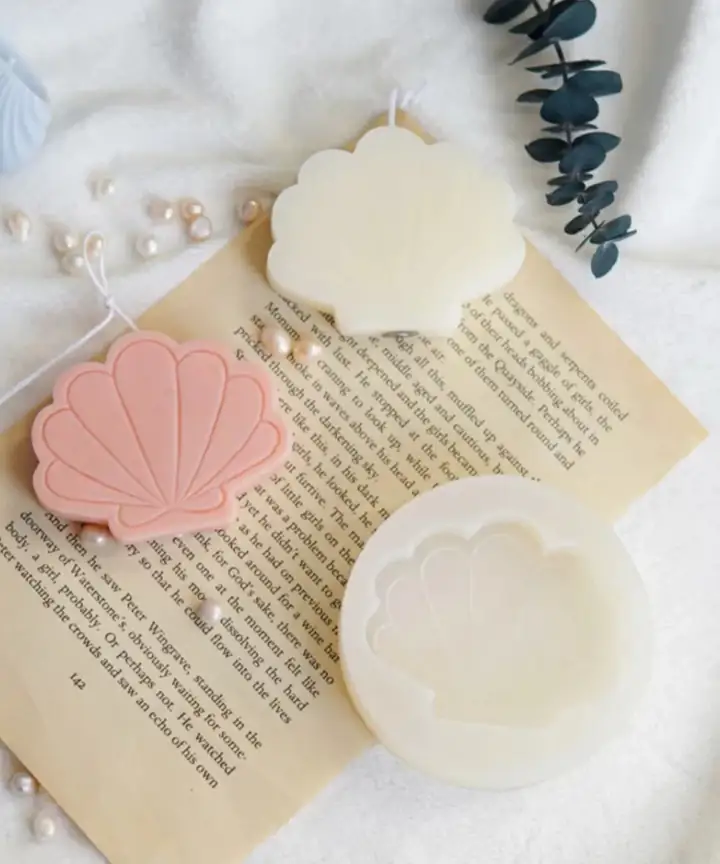 Seashell Silicone MoldView
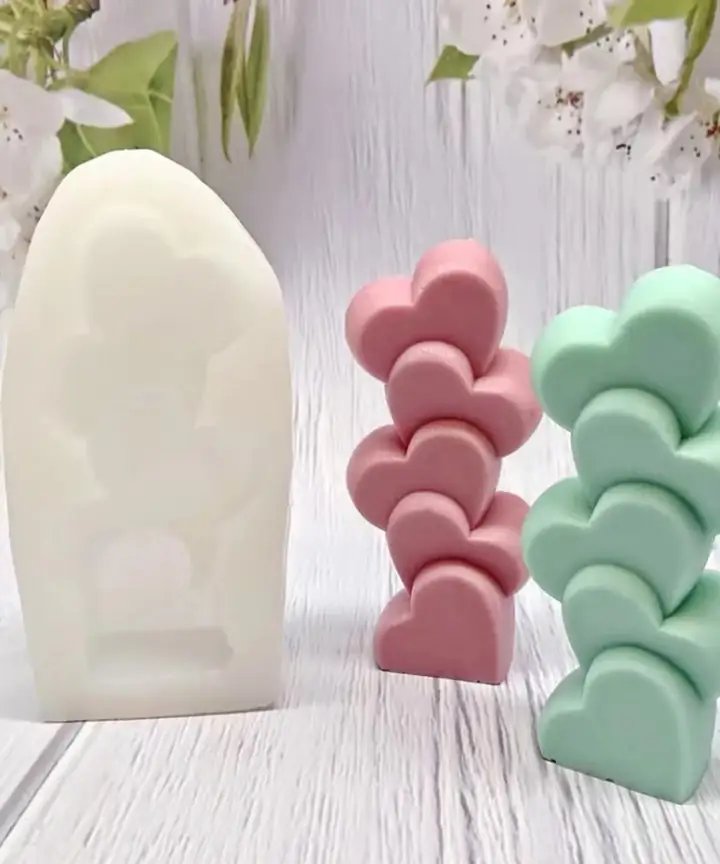 Heart Candle MoldView
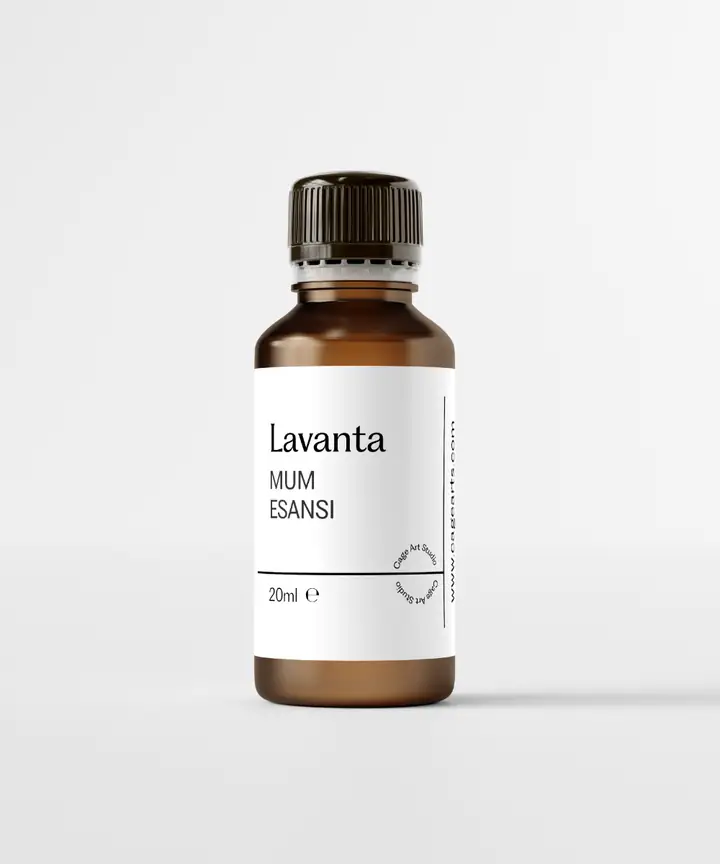 Lavender Candle Fragrance OilView
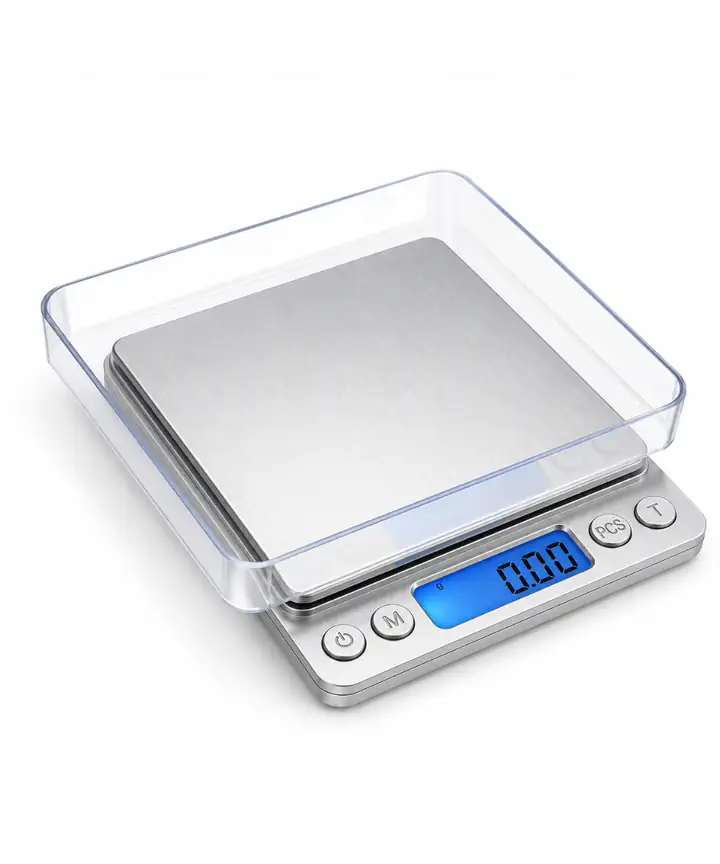 Mini Digital Precision Scale 0.1 g - 2 kgView
Which plaster for scented stones?
A scented stone holds fragrance because of its pores. As casting plaster hardens, the excess water in it evaporates and leaves many tiny pores behind; the fragrance oil settles into these pores and is released slowly. The same absorbency is why ceramic workshops make casting molds from plaster.
| Plaster type | Water per 100 g of powder | Note |
|---|---|---|
| Ceramic or casting plaster | 65–70 g (USG data sheets) | Porous, white; absorbs fragrance well |
| Ready-made scented stone powder | The ratio on the package | Some need much less water (e.g., 1 part water to 3 parts powder) |
| Construction plaster (gray plaster, wall plaster) | Not recommended | Made for walls; contains additives and is coarse-grained |
Do not use pottery plaster proportions for ready-made scented stone powders; their formulas differ, and excess water weakens them. We compare stone powder, plaster in how to use stone powder. For adding plaster to water, mixing and demolding, see the casting plaster in silicone molds guide.
Scented stone measurements: plaster, water and fragrance oil in grams
In plaster, the water ratio decides not only the consistency but the stone itself. The plaster maker USG states this clearly: the water ratio controls both the strength and the absorbency of the plaster. More water gives a more porous stone that absorbs more fragrance but is weaker and breaks easily. Less water gives a hard stone that is darker, bubbly and less absorbent.
There is some chemistry behind it, too: as it hardens, 100 g of plaster binds about 19 g of water into its crystal structure. If you used 70 g of water, the remaining 51 g or so has to evaporate, and it leaves pores behind as it goes.
How many grams for your mold?
Fill the mold with water and weigh the water, or divide the candle capacity on the product page by 0.82. Plaster powder equal to that water weight, plus water equal to 70% of the powder, fills the mold and leaves a small margin.
| Mold | Water equivalent | Plaster powder | Water (70%) | Fragrance oil (4% test) |
|---|---|---|---|---|
| Mini Puffy Cloud | ~46 g | 46 g | 32 g | 1.8 g |
| Rose | ~56 g | 56 g | 39 g | 2.2 g |
| Cloud | ~57 g | 57 g | 40 g | 2.3 g |
| Seashell | ~88 g | 88 g | 62 g | 3.5 g |
| Heart | ~117 g | 117 g | 82 g | 4.7 g |
Fragrance oil: how much?
Unlike candles, scented stones have no established fragrance oil ratio; even foreign sources talk in drops and spoonfuls. So instead of making up a ratio, we suggest a test plan: make three stones with the same plaster and water, change only the fragrance oil, and compare them after they dry.
| Test stone | Plaster | Water | Fragrance oil | Ratio to powder |
|---|---|---|---|---|
| A | 100 g | 70 g | 2 g | %2 |
| B | 100 g | 70 g | 4 g | %4 |
| C | 100 g | 70 g | 6 g | %6 |
After the stones dry, leave them in the same room for a few days, compare them and choose the lowest ratio that is strong enough for you. More fragrance oil does not always make a stronger scent; it can leave oily stains and yellowing on the surface. Also check the limits in the IFRA certificate of the fragrance oil you use; you can find the certificates on our fragrance oil product pages (e.g., Lavender IFRA).
When to add the fragrance oil?
Add the fragrance oil to the weighed water, whisk, and sprinkle in the plaster right away; the scent spreads through the stone. But plaster heats up as it hardens, drying takes days and some of the scent may evaporate. Fragrance oil does not mix with water: whisk again just before adding the plaster.
Once the stone is dry, drip the fragrance oil onto the back with a Pasteur pipette; the pores absorb it and the scent stays fresh. The same method is used for refreshing.
Making scented stones step by step
- 1
Get ready
Put on a dust mask and gloves. Wash and dry the molds and line them up on a flat tray. Keep the plaster and water at room temperature; warm water speeds up setting and cold water slows it down.
- 2
Weigh the water and fragrance oil
Weigh the water into the container first. If you will add the fragrance oil to the mix, tare the scale, weigh the fragrance oil in grams too and whisk.
- 3
Sprinkle in the plaster
Sprinkle the weighed plaster slowly and evenly over the water; do not dump it in all at once. Wait a short while until no dry islands of plaster remain on the surface, so the plaster can absorb the water.
- 4
Stir
Stir from the bottom of the container, slowly and without making foam, until it reaches a smooth, cream-like consistency. Stirring for a long time speeds up setting; stop once the lumps are gone.
- 5
Pour into the mold
Pour the mixture in a thin stream from the deepest point of the mold and tap the mold lightly on the table so the bubbles rise and pop.
- 6
Wait for it to set
Plaster hardens and warms up within 15–25 minutes. Do not touch the mold during this time.
- 7
Demold
Once the stone has hardened and the heat has passed, flex the mold to release it. Support thin tips (leaf, wing) with your finger.
- 8
Dry
Dry the stones in a shaded, ventilated spot, on a rack or paper. Weigh them every day; when the weight stops changing, the stone is dry.
- 9
Add scent and decorate
If you did not add fragrance oil to the mix, drip it onto the back of the dry stone. If you will paint, paint before adding scent and leave the back unpainted.
The bottom of the mold is the front of the stone. Before pouring, place the flower face down at the bottom of the mold, pour a thin layer of the mix over it first, then fill the mold.
How long does a scented stone take to dry?
This question mixes up setting and drying. Setting is the chemical hardening of the plaster and takes minutes; the USG data sheet targets 14–24 minutes, a little longer when mixing by hand. Drying is the evaporation of the excess water and takes days, depending on the stone's size and the room's temperature and humidity. Recipes that say “dries in 15 minutes” are talking about setting.
Measure drying instead of guessing: weigh the stone as soon as it comes out of the mold, and weigh it again every day. A stone made with 100 g plaster and 70 g water starts at about 170 g and drops to about 119 g as it dries. If the weight does not change for two days in a row, the stone is dry. If you added fragrance oil to the mix, the result will be a few grams higher.
Above 49 °C, plaster starts to lose its crystal water; the stone turns powdery, crumbles and cracks. Fragrance oil also evaporates quickly in the heat. A ventilated, shaded spot is the best dryer.
How to paint and color scented stones
Coloring the mix
Candle dye granules do not dissolve in water, so they do not work in plaster. Use powder pigment (oxide or mica) and add it to the water before the plaster. Start with a small amount for a test, for example 1 g per 100 g of powder, and judge the color on the dried stone: wet plaster looks dark and lightens as it dries. For a similar casting material, the manufacturer's pigment upper limit is 2% of the total mix.
Painting the dry stone
Once the stone is completely dry, paint it with water-based acrylic or glitter paints. Do not cover the whole surface with paint or varnish: paint and varnish close the pores, and the stone will not absorb fragrance oil. Painting the front and leaving the back raw protects both the look and the scent. On a name tag, write the name with a fine brush; on a magnet, glue the magnet to a corner of the back.
How to refresh the scent when it fades
A scented stone's scent fades over time as the fragrance oil in the pores evaporates; this is not a defect, it is the nature of the stone. Refreshing is easy: use a Pasteur pipette to drip a few drops of fragrance oil onto the back of the dry stone and leave the stone on paper until it absorbs the oil. If a shiny, wet patch remains on the surface, you used too much.
Fragrance oil that drips onto the front can leave marks and yellowing on a painted surface; the back is raw and absorbent.
Wait until the fragrance oil is fully absorbed before putting the stone in place; a wet stone stains furniture and fabric.
Place the stone on a small dish or coaster. The scent is stronger in closets, drawers and small rooms.
Vanillin scents can cause yellowing; on light-colored stones, drip them only on the back. For another flameless fragrance product, see our wax melt guide.
Cracking, crumbling, oil stains: fixes
Scented stone cracked
Stone crumbles like chalk
Bubble holes on the surface
Oily stain or yellowing
Safety and gift packaging
A scented stone looks innocent, but it contains two materials that need care: plaster and concentrated fragrance oil.
Plaster heats up as it sets, sometimes very quickly. Never take a cast of a hand, foot or any other part of the body with plaster.
Dry plaster dust can irritate the eyes, nose and throat. Work in a ventilated area, wearing a dust mask and goggles.
Plaster, fragrance oil and finished stones must be kept out of reach of children and pets. A scented stone is not a toy and must not be put in the mouth.
Do not make scented stones that look like candy, macarons or fruit. Products that children could mistake for food are banned in the EU and the UK; small pieces are a choking risk.
Do not apply fragrance oil to your skin undiluted, and work with gloves. If you will sell, a label under SEA (Turkey's equivalent of CLP) may be required, based on the fragrance oil's safety data sheet; we cover the details in our making and selling candles at home guide.
Gift packaging
Package the stone after it is completely dry and scented. An organza pouch, clear box or kraft box works well. On the label, write the fragrance oil's name and a short warning: “Not edible. Keep away from children.” For engagement favors, see our gift candle ideas; for a set with a candle holder, see our concrete and plaster candle holder guide. For a mold of your own design, you can write to our custom silicone mold service.
Frequently asked questions
Which plaster for scented stones?
Use ceramic or casting plaster: it is white, fine-grained and porous, and absorbs fragrance well. Ready-made scented stone powders also exist, but follow the water ratio on their package. Construction plasters are not recommended because they contain additives and are coarse.
What are the measurements for making scented stones?
For ceramic plaster, the ratio manufacturers give is 65–70 g of water per 100 g of powder; for ready-made powders, the ratio on the package applies. For small molds, powder equal to the mold's water weight, plus water equal to 70% of that powder, is enough.
How much fragrance oil goes into a scented stone?
There is no established ratio. Make three test stones with 2, 4 and 6 g of fragrance oil per 100 g of powder, compare them after they dry and choose the lowest ratio that is strong enough. Also check the fragrance oil's IFRA certificate.
When is fragrance oil added to plaster?
If you add it to the mix, add it to the weighed water before the plaster and whisk. For a fresher scent, you can drip the fragrance oil onto the back of the stone once it is completely dry.
How long does a scented stone take to dry?
Plaster sets in 15–25 minutes, but drying takes days depending on the stone's size. Weigh the stone every day; it is dry when the weight stops changing. Do not dry above 49 °C.
How do you refresh a scented stone's scent?
Use a Pasteur pipette to drip a few drops of fragrance oil onto the back of the dried stone and wait for it to absorb. Dripping onto the front can cause stains and yellowing.
How do you paint a scented stone?
Once it has dried, paint it with water-based acrylic paint, but leave the back unpainted; paint and varnish close the pores, and the stone will not absorb scent. To color the mix, use powder pigment, not candle dye.
Molds and fragrance oils for your scented stones
Rose, cloud, heart and seashell molds; IFRA-certified candle fragrance oils. All ship within 1–3 business days.