
How to Burn a Candle: First Burn, Wick Trimming and Tunneling
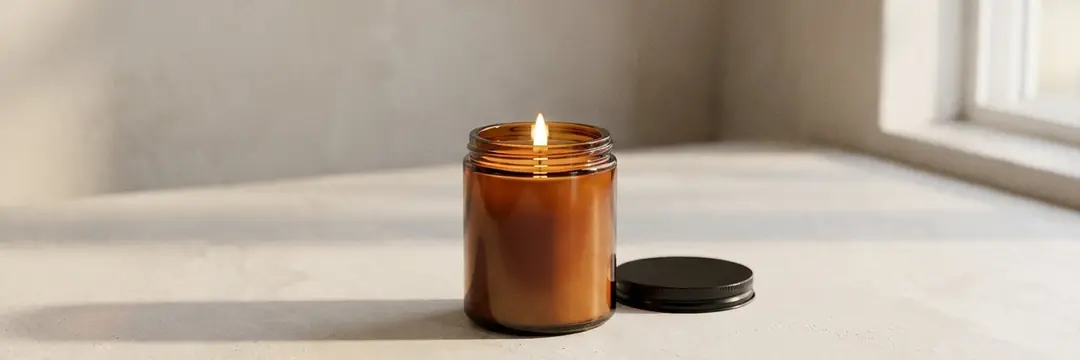
How do you burn a scented candle? Holding the lighter to the wick is only the beginning; whether the candle burns evenly to the end, fills the room with its scent and avoids tunneling depends on a few simple habits that start with the first burn. In this guide we cover everything with exact figures, from the first burn time to wick trimming, from rescuing a tunneled candle to safe distances.
In short
- On the first burn, keep it lit until the melt pool reaches the edge: about 1 hour for every 2.5 cm of diameter.
- Burn it for 4 hours at most at a time, and let it cool for at least 2 hours before lighting it again.
- Trim a cotton wick to 5–6 mm and a wooden wick to 3–5 mm before every burn.
- Keep a burning candle 30 cm from flammable items and 7.6 cm from other candles.
- Don't use water to put it out: a candle snuffer or a gentle puff is enough.
- Stop burning when about 1.3 cm of wax is left at the bottom of the jar.
In this guide
- Why is the first burn the most important one?
- How many hours should a candle burn at most?
- How many mm should you trim the wick?
- How do you burn a candle with a wooden wick?
- How do you fix a tunneling candle?
- How do you put out a candle?
- Safe distances and placement
- When should you stop burning a candle, and how do you store it?
- Frequently asked questions
Why is the first burn the most important one?
The first burn of a candle sets the limit for all later burns. If the melt pool doesn't reach the edge of the vessel the first time, the candle "remembers" that limit: each burn it melts the same narrow area and a wall of unused wax is left at the edges. This is called tunneling, and preventing it on the first burn is much easier than fixing it later.
Rule: about 1 hour for every 2.5 cm of vessel diameter. For example, the top inner diameter of our 150 g frosted amber glass is 6.4 cm, and our 250 cc amber jar is 7 cm. Set your time accordingly before you light the candle:
| Vessel diameter | First burn time |
|---|---|
| 5 cm | About 2 hours |
| 6.4 cm | About 2.5 hours |
| 7 cm | About 3 hours |
| 9 cm | About 3.5 hours |
| 10 cm and up | Runs into the 4-hour limit; choose a double-wick candle |
- 1
Trim the wick
When the candle is cold, trim a cotton wick to 5–6 mm and a wooden wick to 3–5 mm.
- 2
Choose the spot
Choose a flat, heat-resistant, draft-free surface, at least 30 cm from flammable items.
- 3
Burn until the pool reaches the edge
On the first burn, allow about 1 hour for every 2.5 cm of diameter.
- 4
Put it out within 4 hours
Put it out with a candle snuffer or a gentle puff; don't use water.
- 5
Cool it and repeat
Wait at least 2 hours before lighting it again, and trim the wick again.
If you can't set aside 2–4 hours for the first burn, leave the candle for another day. A 20-minute first burn can waste the edges of the candle.
How many hours should a candle burn at most?
The rule from the U.S. National Candle Association (NCA) is clear: 4 hours at most at a time. On a long burn the wick grows and mushrooms, the flame gets bigger and soots, and the vessel overheats. After 4 hours, put the candle out and let it cool for at least 2 hours before lighting it again.
To measure your candle's total use time, follow the weighing and timing method in how long a candle burns.
How many mm should you trim the wick?
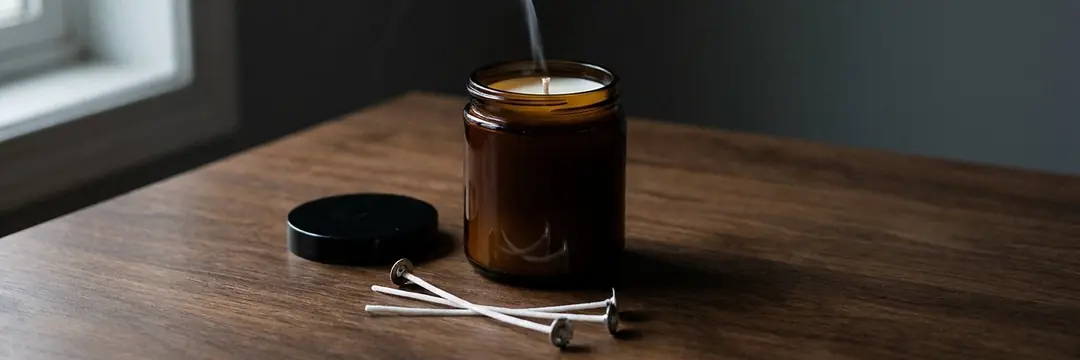
A long wick burns on its own rather than with the candle: the flame gets bigger, flickers, soots and blackens the glass. Trim a cotton wick to 5–6 mm before every burn, when the candle is cold. Check it before the first burn too; the candle may have arrived with a long wick.
A wick trimmer, nail clippers or small scissors. Don't let the trimmed bit fall onto the wax.
When the candle is cold and the wax is solid. A wick bit cut in the liquid pool falls into the pool.
If the flame grows while burning, put the candle out, trim the wick when it cools and relight it.
If you see a match, wick trimming or other debris in the pool, remove it once the candle has cooled; these can burn like a second wick.
How do you burn a candle with a wooden wick?
A wooden wick is made of thin layers of wood; it gives a wide, horizontal flame and a soft crackle. It is used only in container candles and behaves differently from a cotton wick in a few ways:
- 1
Trim to 3–5 mm
Trim the wooden wick to 3–5 mm before every burn. Break off the charred part with your fingers or a napkin.
- 2
Hold the flame for a few seconds
A wooden wick lights a little slower than cotton. Hold the lighter to the side of the wick and wait a few seconds until the flame spreads along the wick.
- 3
Let the pool form on the first burn
In a properly wicked wooden-wick candle, the pool is expected to reach the edge in 2–3 hours; don't put it out in that time.
- 4
The crackle is normal
A soft crackle is the nature of a wooden wick. If the flame gets very big and smokes, put the candle out and shorten the wick.
If you make your own candles, wick and vessel choice are the two decisions that affect the burn most. With wooden wicks, you can use two wicks side by side for a higher flame; for choosing thickness, see the How to Choose a Candle Wick guide.
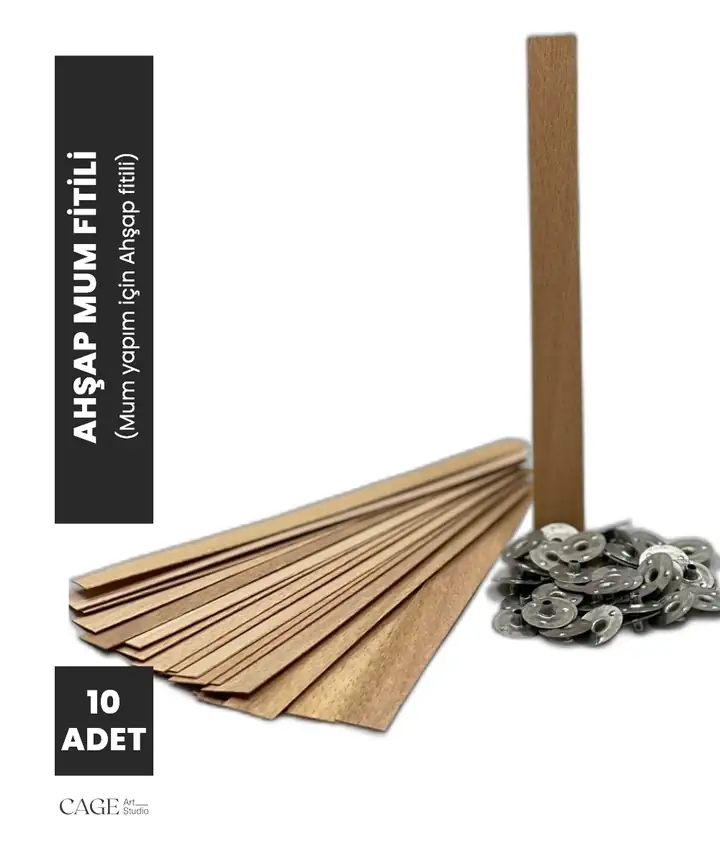 Ahşap Mum Fitili 10 AdetView
 Hazır Çıtçıtlı Mum Fitili 8 CmView
 Golden Soya Wax 1 Kg (Yaprak şeklinde)View
 Buzlu Amber Cam Mum Bardağı – 150 Gram Mum KapasitesiView
 250cc Amber Cam Mum Kavanozu - Siyah Metal KapaklıView
How do you fix a tunneling candle?
Once a tunnel has formed, a single long burn is not always enough. Proceed according to the depth of the tunnel:
Light tunnel: a thin ring at the edge
On the next burn, keep the candle lit until the pool reaches the edge, but don't go over 4 hours. A thin ring at the edge can melt away on its own within 3–4 burns.
Deep tunnel: foil method
- 1
Use only in a glass vessel
Don't use this method on candles taken out of their mold that stand on their own, or in plastic or wooden containers.
- 2
Wrap the foil
Wrap aluminum foil around the mouth of the vessel so that it covers the top of the wax wall at the edge. Leave an opening in the middle wide enough that the flame never touches the foil.
- 3
1–2 hours, in plain sight
Light the candle and don't leave its side. The foil reflects heat to the edge and the wax at the edge melts. Don't go over 1–2 hours.
- 4
Remove the foil carefully
Put the candle out. The foil and glass are very hot; remove the foil with a cloth after the candle has cooled.
The foil method heats the glass much more than normal. Don't use it on thin, cracked or non-heat-resistant glass; put the candle on a heat-resistant base and don't leave its side.
Very deep tunnel or a drowning flame
If the wick is too thin for the vessel, the candle keeps tunneling no matter what you do. In that case you can scrape off the wax at the edge and use it like a wax melt in an electric warmer (What is a wax melt?). If you make your own candles, choose a wick one size thicker in the next batch; the reasons and other problems are in the Candle Making Tips guide.
How do you put out a candle?
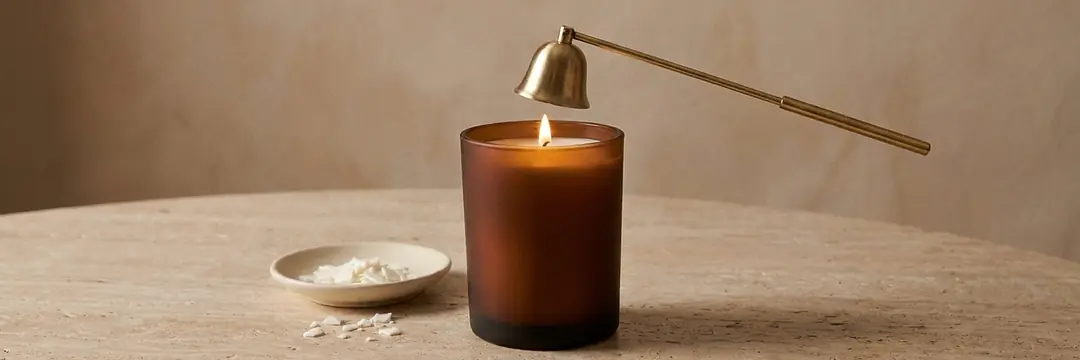
There are two safe ways to put out a candle: a candle snuffer (a small cap on a long handle) or a gentle puff. Never use water: hot wax splatters when it meets water, and hot glass can crack from sudden cooling.
Don't
Pouring water on the candle, moving the candle while the wax is liquid, leaving the room while the wick is still glowing.
Do
Put it out with a snuffer or a gentle puff, make sure the wick is no longer glowing, and don't move the candle until the wax has set.
Safe distances and placement
The NCA's safe burning rules are short and simple:
Put the candle out when you leave the room and before you go to sleep. Don't use a candle as a night light.
At least 30 cm from anything that can burn, such as curtains, beds, books and furniture; at least 7.6 cm from other candles.
A flat, heat-resistant surface and a sturdy candle holder. Away from drafts, fans and air conditioner airflow.
Burn it at a height they can't reach, in a place where it can't be knocked over.
Don't burn candles in a car. Don't leave flammable decorations such as paper, packaging or dried flowers around the candle.
When should you stop burning a candle, and how do you store it?
In a jar or glass candle, stop burning when about 1.3 cm of wax is left at the bottom; lower than that, the flame can overheat the base of the glass. For pillar candles taken out of the mold, this limit is 5 cm. You can scrape out the remaining wax and use it in a wax melt warmer, and keep the vessel you've cleaned for a new candle.
How do you store a scented candle?
Store the candle with the lid on, in a cool, dry place out of the sun. Sunlight fades dyes and speeds up yellowing in fragrances that contain vanillin; frequent temperature changes can cause fragrance oil to seep onto the surface. Amber glass reduces the effect of light.
How many hours does a candle burn?
Burn time depends on the amount of wax, the type of wax and the wick; check the time on the product label. Trimming the wick regularly and following the 4-hour rule preserves this time: according to the NCA, trimming the wick on long burns can extend burn life by up to 25%.
Frequently asked questions
How do you burn a scented candle?
Trim the wick to 5–6 mm, put the candle on a flat, heat-resistant surface, and on the first burn keep it lit until the pool reaches the edge. Burn it for 4 hours at most at a time, then let it cool for at least 2 hours.
Why does the first burn matter?
If the pool doesn't reach the edge on the first burn, the candle remembers that limit and hollows out from the middle with each burn (tunneling). Burn it for about 1 hour for every 2.5 cm of diameter.
Why does a candle tunnel, and how do you fix it?
A short first burn or a thin wick for the vessel causes tunneling. For a light tunnel one long burn is enough; for a deep tunnel, wrap the mouth of the vessel in foil and burn it for 1–2 hours, in plain sight.
How many mm should you trim the wick?
A cotton wick is trimmed to 5–6 mm before every burn, a wooden wick to 3–5 mm. A long wick means a big flame, soot and blackened glass.
How many hours should a candle burn at most?
4 hours at most at a time. Let the candle cool for at least 2 hours before lighting it again.
How do you burn a candle with a wooden wick?
Trim the wick to 3–5 mm and break off the charred tip, hold the lighter to the side of the wick and wait a few seconds. On the first burn, keep it lit until the pool reaches the edge, that is, about 2–3 hours.
How do you put out a candle?
With a candle snuffer or a gentle puff; never with water. Make sure the wick is no longer glowing and don't move the candle until the wax has set.
How do you use a soy candle, and is it different?
A soy candle is burned with the same rules: a long first burn, the 4-hour limit, a 5–6 mm wick. Soy soot is close to white, so it is hard to notice; that is why trimming the wick regularly matters.
Make your own candle, burn it right
Cotton and wooden wicks, soy wax and amber glass jars; shipped within 1–3 business days.