
Are Scented Candles Harmful? Soy, Paraffin and Beeswax
Are scented candles harmful? The short answer: the research is limited and not enough to declare any one wax “harmless” or “harmful”; in practice, what makes the difference is soot, ventilation, fragrance oil quality and, of course, the flame itself. In this guide we cover, with sources, what a candle produces as it burns, how soy, paraffin, beeswax and coconut wax differ, and the rules for safe use.
In short
- No clear evidence shows which wax is “healthier”; the emission research is limited and mixed.
- The main cause of soot isn't the wax type: a long wick, a big flame and drafts. Before every burn, trim the wick to 5–6 mm.
- Fragrance oil must be IFRA compliant and weighed in grams; under IFRA, candles are in Category 12.
- Burn for at most 4 hours at a time, keep it 30 cm away from flammable items, and ventilate the room.
- If there's asthma, scent sensitivity, a baby or a pet: unscented candles, ventilation and, if needed, a doctor's advice.
In this guide
- Are scented candles harmful?
- What happens as a candle burns?
- Why do candles soot? Wick length and flame
- Soy, paraffin, beeswax, coconut: the differences
- What does the research say, and what doesn't it say?
- Fragrance oil quality: IFRA and allergen labels
- Safe burning rules
- Asthma, babies, pets: who should be careful?
- Frequently asked questions
Are scented candles harmful?
The internet often claims that natural candles make breathing easier, strengthen memory, improve sleep, or that paraffin candles cause cancer. We could not verify any of these claims with a reliable source, so this guide contains neither health promises nor scare tactics. A candle is a source of light and scent, not a treatment tool.
Here is the realistic picture: every candle uses wax as fuel as it burns and releases combustion products into the air. How much and what kind of products come out is determined mostly by wick length, flame size, drafts, and the quality and amount of the fragrance oil. The research on the effect of wax type is scarce and its results don't agree with each other.
What happens as a candle burns?
A candle's fuel is the wax, not the wick. The flame melts the wax, the liquid wax is drawn up the wick, and it vaporizes in the heat of the flame and burns. When combustion is complete, mostly carbon dioxide and water vapor are produced. When combustion is incomplete, unburned carbon particles, that is, soot, form.
Fragrance oil and dye burn in the flame along with the wax. That's why what goes into the candle and how much matters: too much fragrance oil and dye means more fuel than the wick can burn. The result is a mushroom-shaped clump on the wick tip, a big flame and soot.
Why do candles soot? Wick length and flame
Soot is the visible sign of incomplete combustion. According to the troubleshooting guides from CandleScience and Candle Shack, the most common causes are:
A long wick gives a big, flickering flame. Trim it to 5–6 mm before every burn.
A wick too thick for the container deepens the melt pool and enlarges the flame. Go down one size.
Windows, air conditioners and fans make the flame flicker; a flickering flame soots.
Going above the recommended ratio overloads the wick. Keep fragrance oil between 6–10%.
| Symptom | What does it mean? | What to do |
|---|---|---|
| Flame about 2.5 cm, calm | Wick is right | Carry on like this |
| Flame taller than 5 cm and flickering | Wick too long or too thick | Put it out and trim it once it cools |
| Mushroom clump on the wick tip | Too much fuel | Trim it; if it continues, reduce the fragrance oil and dye |
| Black ring on the glass | Soot | Check wick length and drafts |
It does; it's just hard to see. According to Candle Shack, soy soot is whitish and paraffin soot is black. So the look of “no soot” doesn't remove the need to trim the wick.
Wicks with lead cores are banned in the US: the metal core may contain at most 0.06% lead (16 CFR 1500.17). Our cotton wicks are made of 100% raw cotton and our wooden wicks of natural wood. For wick selection in detail, see how to choose a candle wick.
Soy, paraffin, beeswax, coconut: the differences
The term “natural candle” is generally used for candles made from plant-based (soy, coconut, palm) or animal-based (beeswax) wax. But a scented candle contains fragrance oil and dye as well as wax; the word “natural” alone doesn't tell you how a candle will burn. The comparison below is about differences in use, not health.
| Paraffin Wax | Soy wax | Beeswax | Coconut | |
|---|---|---|---|---|
| Source | Refined petroleum | Hydrogenated soybean oil | Honeybee comb | Coconut oil, often a blend |
| Fragrance oil load (typical upper limit) | %6–10 | %10–12 | %3–6 | %10–12 |
| Soot color | Black, easy to see | Whitish, hard to see | No data in the source | No data in the source |
| Curing | 3–5 days | 1–2 weeks | No data in the source | 7–14 days |
| Color | Vivid tones | Pastel tones | Natural yellowish | No data in the source |
Paraffin Wax
It is obtained by refining crude oil; it is economical, takes vivid color, and gives a hard, smooth surface. We found no strong evidence confirming claims that “paraffin is toxic” for normal home use; with paraffin too, what matters is the wick, the flame and ventilation. When making candles, melting paraffin in a ventilated space and not breathing its vapor directly is a general precaution. Details are in our paraffin guide.
Soy wax
A plant-based wax obtained by hydrogenating soybean oil; it comes from a renewable source and is widely used in container candles. It burns cleanly with the right wick, but it isn't soot-free. Safety data sheets for our products: Golden, Pillar, American.
Beeswax
A natural wax that honeybees make for their combs; it has a light honey scent and a yellowish color. It doesn't carry fragrance oil as well as soy and is traditionally burned with a square-braid cotton wick; wooden wicks are not recommended. We found no source supporting claims such as beeswax purifying the air.
Coconut and palm wax
Coconut wax is mostly sold as a blend with other waxes and carries fragrance oil well. NorthWood recommends adding fragrance oil above 93 °C in these blends; curing recommendations vary from 7 days to 2 weeks. For palm wax, the typical fragrance oil upper limit is 6–8%, and wooden wicks are not recommended.
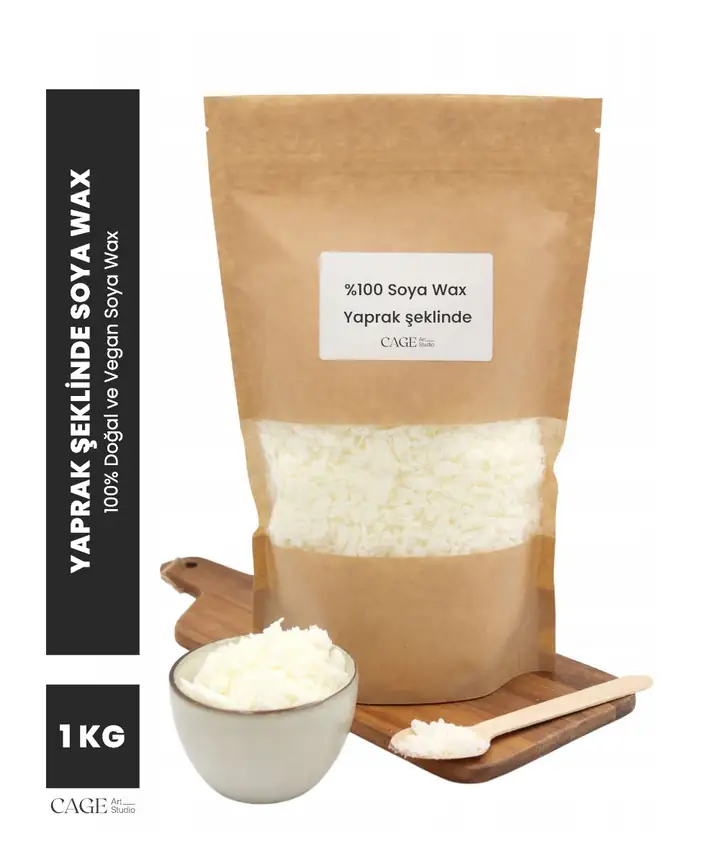 Golden Soya Wax 1 Kg (Yaprak şeklinde)View
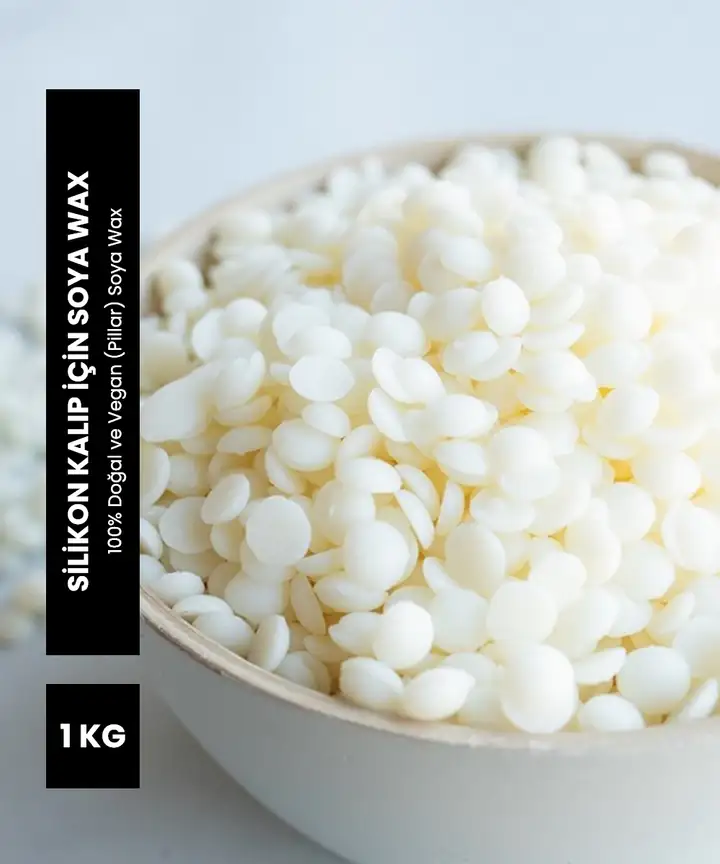 Silikon Kalıp İçin Soya Wax 1 Kg (Pillar Soy Wax)View
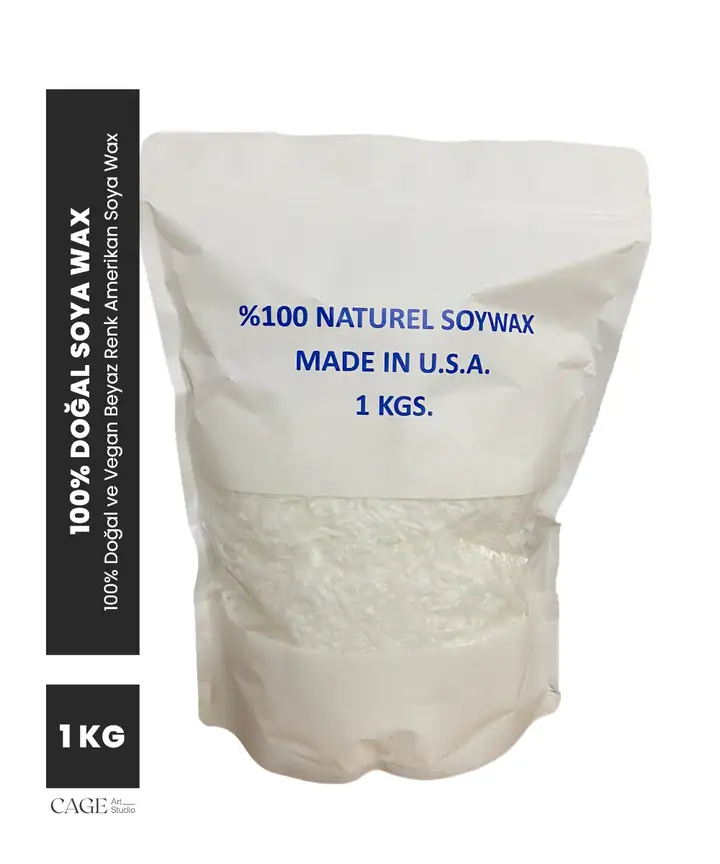 Amerikan Soya Wax %100 Natural 1 KgView
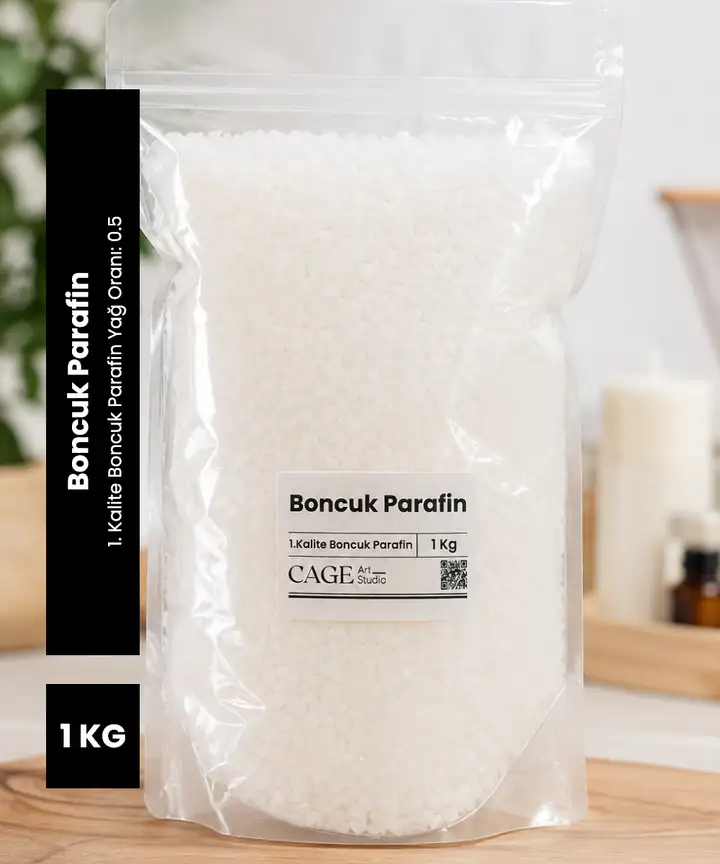 Boncuk Parafin 1 kgView
 Hazır Çıtçıtlı Mum Fitili 8 CmView
See what candles are made of to compare raw material sources and candle components.
What does the research say, and what doesn't it say?
Studies on what candles emit as they burn are few, their test conditions differ from one another, and their results sometimes contradict each other. So categorical statements like “soy candles are healthy” or “paraffin candles are toxic” go beyond today's knowledge. The practical conclusion we draw: how you use a candle matters more than the type of wax.
Claims you often hear
“Paraffin candles cause cancer.” “Natural candles are good for the airways.” “Soy candles never soot.” “Beeswax purifies the air.” We couldn't find a reliable source supporting any of these.
What the sources support
Every candle soots when it doesn't burn properly, and the color of the soot varies with the wax. Wick length, drafts and the amount of fragrance oil directly affect the flame. Candle fragrance oils are limited per usage category according to IFRA standards.
A candle is a decor and scent product; it carries no promise of relaxation, sleep or treatment. If you have a health concern, get the information from your doctor, not from a candle seller.
Fragrance oil quality: IFRA and allergen labels
The component of a scented candle that needs the most care is the fragrance oil. Fragrance oils made for candles are assessed against the standards of IFRA, the International Fragrance Association. Every fragrance oil has a certificate of conformity, and this certificate shows the highest ratio allowed per product category. Candles and wax melts are in Category 12: air fresheners that don't touch the skin.
Example: the certificate for our Apple Cinnamon Candle Fragrance Oil (IFRA Amendment 51) sets no limit for Category 12, while for the lip products category it says 0%. In other words, a fragrance oil suitable for candles is not suitable for skin: don't apply candle fragrance oil to your skin. The limit on the certificate is a ceiling, not a recommended ratio; use 6–10% in candles. Other certificates: Lavender Candle Fragrance Oil, Rose Candle Fragrance Oil, Mandarin Candle Fragrance Oil and on all our fragrance oil pages.
Allergen labels: SEA and CLP
Some fragrance ingredients can cause skin allergies in sensitive people. That is why the CLP Regulation in the EU, and the SEA Regulation in Turkey that is aligned with it, govern the labeling of candles sold. If a sensitizing fragrance ingredient exceeds 0.1% in a candle (0.01% for some strong sensitizers), the name of the substance and the warning “may produce an allergic reaction” (EUH208) must be written. If total sensitizers exceed 1%, an exclamation-mark pictogram, the signal word “Warning” and the H317 statement are required. The calculation is done using the data in the fragrance oil's safety data sheet. If you sell candles, see our article making and selling candles at home for details.
Fragrance oils differ in density; measuring by spoon or drop throws the ratio off. Use a precision scale and don't exceed 10%: too much fragrance oil means both sweating and soot. Ratio table: candle fragrance oil and dye ratios.
Safe burning rules
A candle's most concrete risk is fire. The rules below are based on the safety recommendations of the National Candle Association (NCA):
Never leave a burning candle unattended; put it out when you leave the room and before you go to sleep.
At least 30 cm away from curtains, bedding, books and furniture; leave at least 7.6 cm between two candles.
Trim it before every burn; remove matches and wick trimmings from the pool.
Then put it out and let it cool for at least 2 hours. On the first burn, burn for about 1 hour per 2.5 cm of diameter.
A heat-resistant, flat surface; don't burn it near drafts, fans or air conditioners.
Stop burning when 1.3 cm of wax is left in a container candle, or 5 cm in a pillar candle.
Don't put a candle out with water; water makes hot wax spatter, so use a candle snuffer. Don't move a candle while the wax is liquid, and don't use a candle as a night light or in a vehicle. For the first burn and tunneling, see how to burn a candle.
Asthma, babies, pets: who should be careful?
Some people are more sensitive to strong scents and smoke. The reason for this sensitivity varies from person to person and isn't a question a blog post can answer. Still, a few common-sense precautions work in every home:
Choose an unscented or lightly scented candle, and if you feel discomfort, put it out and ventilate the room. If your complaint continues, consult your doctor.
Don't burn a candle in a baby's room while the baby sleeps, and keep candles out of children's reach. On scent, go by your pediatrician's advice.
Cats jump on tables and tails can knock over a flame. Put the candle where they can't reach it; ask your veterinarian about reactions to scents.
How do you ventilate?
You don't want a draft next to a burning candle, because a flickering flame soots. Place the candle away from windows and air conditioners; ventilate by cracking open a window away from the candle or after you put the candle out. Rather than burning it for a long time in a small, closed room, prefer a larger, airy space.
Frequently asked questions
Are scented candles harmful?
There isn't enough research to give a firm “yes” or “no”; the available studies are few and their results are mixed. In practice, what reduces risk is clear: keeping the wick at 5–6 mm, burning without drafts, ventilating the room, and using IFRA-compliant fragrance oil at 6–10%.
Do paraffin or soy candles burn cleaner?
Both burn clean with the right wick and sooty with the wrong one. Soy soot is less visible because it's whitish, while paraffin soot is black. There is no clear evidence showing which is better from a health standpoint.
What is a natural candle?
The term is usually used for candles made from plant-based wax such as soy, coconut and palm, or animal-based wax such as beeswax. A scented natural candle also contains fragrance oil and dye; read the wax type and the fragrance oil separately on the label.
What's the difference between beeswax and coconut wax?
Beeswax is a hard wax made by bees, has a light honey scent and carries little fragrance oil (typical upper limit 3–6%). Coconut wax is usually sold as a blend, carries more fragrance oil (10–12%) and is cured for 1–2 weeks.
Can candle scent cause headaches?
Some people are sensitive to strong scents. In that case, put the candle out and ventilate the room, try an unscented or more lightly scented candle; if complaints continue, consult your doctor.
Is it OK to burn candles in a home with babies and pets?
Only under supervision, out of their reach and not while they sleep. On reactions to scent, go by the advice of your pediatrician or veterinarian.
Do you need to ventilate the room while burning a candle?
Yes, but without creating a draft next to the candle: crack open a window away from the candle or ventilate after you put the candle out. Drafts make the flame flicker and increase soot.
Know what you're using when you make candles
IFRA-certified fragrance oils, soy waxes with published safety data sheets and 100% cotton wicks: all in one order, shipped in 1–3 business days.