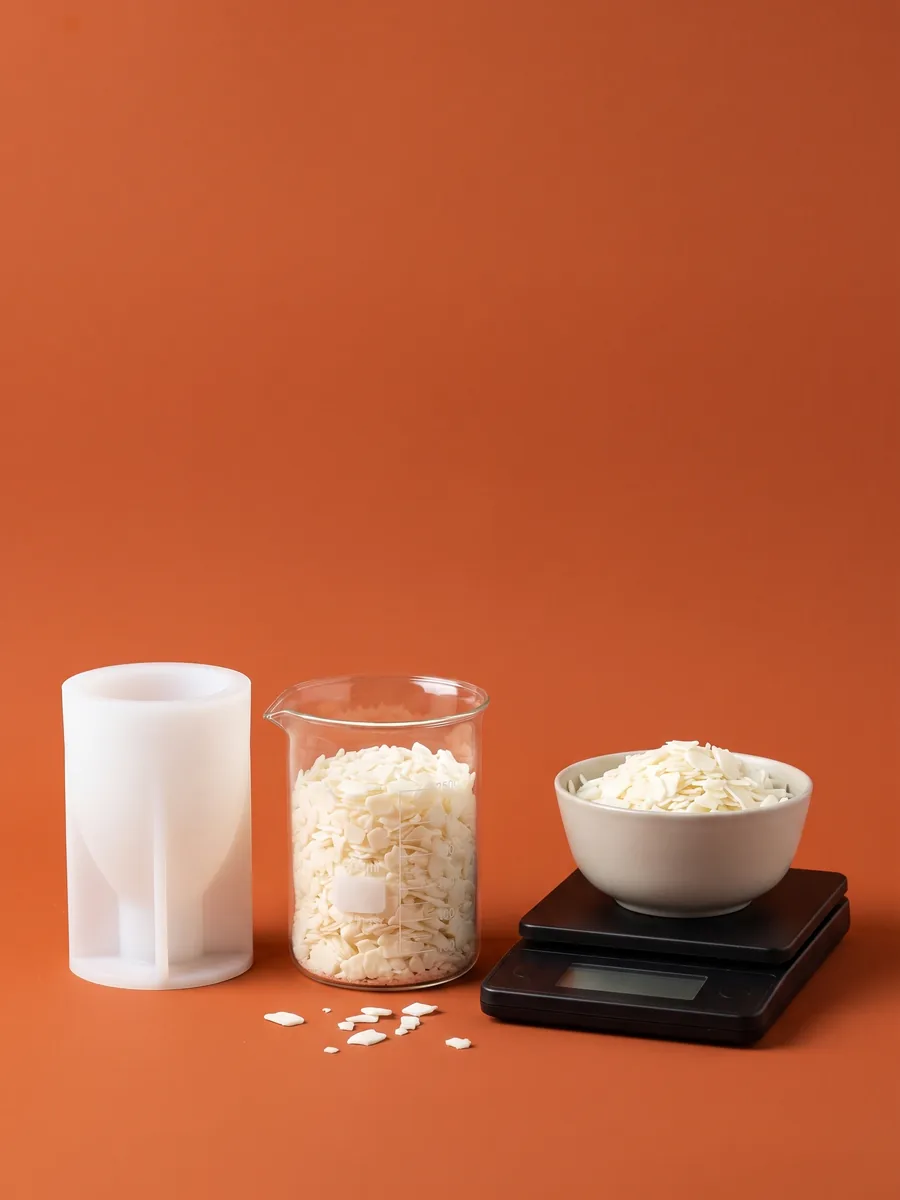
How to Get a Candle Out of a Silicone Mold Without Breaking It

How do you get a candle out of a silicone mold? The answer comes down to two things: patience and peeling. Once the candle has fully cooled, you flex the mold opening and peel the mold off the candle; you don't pull the candle. In this guide we explain when to demold, how to do it step by step and why candles break, with examples from our own molds.
In short
- Usually 3–5 hours, depending on the mold size: demold when the mold is cool, the base is hard and the second pour has set.
- Don't pull the candle; peel the mold off the candle. Flex the opening first to let air in.
- If it's stuck, about 5 minutes in the fridge; the freezer can crack the candle.
- Hard wax for mold candles: Pillar Soy Wax (pour at 55–65 °C; up to 70 °C in a cold room) or paraffin + 10% stearic acid.
- Wait at least 24 hours before burning a demolded candle.
In this guide
- When can you take a candle out of the mold?
- How long to leave a candle in the mold before removing it?
- How to remove a candle from a silicone mold, step by step
- Fridge or freezer: which is right?
- Why does a candle break when you take it out of the mold?
- Choosing a wax that releases easily from molds
- How to get candles out of polycarbonate and rigid molds
- After demolding: wick, curing and mold care
- Frequently asked questions
When can you take a candle out of the mold?
Wax shrinks as it cools and pulls slightly away from the mold wall. If you demold the candle before that shrinking is complete, the inside is still soft; thin parts break off and fingerprints show on the surface. So instead of watching the clock, look for these three signs:
The outside of the mold no longer feels warm to your hand; it has come down to room temperature.
The surface at the mold opening, that is, the base of the candle, doesn't take a mark when you press it with a fingernail.
The surface of the second pour you made around the wick has also fully hardened.
Once you see all three signs, demold the candle, but don't leave it in the mold for days either. As we note in our mold use & care guide, the habit of "I'll demold it tomorrow" shortens the mold's life.
How long to leave a candle in the mold before removing it?
With Pillar Soy Wax, candles usually come out of the mold after 3–5 hours; the time depends on the size of the candle, the type of wax and the room temperature. Other times: for thick candles, the second pour is made 1–2 hours after the first pour or once the candle has fully cooled; shrinkage around the wick becomes clear within 24 hours; our product pages recommend waiting at least 24 hours before burning.
How size makes a difference, with examples from our own molds:
| Mold | Candle capacity | What to watch when demolding |
|---|---|---|
| Mini Bubble | ~47 g, 3.5 cm | Small and compact; the fastest-cooling group, good for first tries |
| Eric Gill Sculpture | ~106 g, 15 × 5 cm | Thin, tall figure; the tips break off while still warm, so wait for it to cool completely |
| Medium Pillar | ~393 g, 14 × 7.1 cm | Thick body, the inside cools later than the outside; it shrinks around the wick and needs a second pour |
| Large Spiral | ~557 g | Comes uncut; peel the mold off the candle by rolling it back. This group waits the longest |
| Factor | Effect on cooling | What to do |
|---|---|---|
| Candle size | The inside of a thick candle sets long after the outside | For large candles, decide by the three signs, not by touch |
| Room temperature | A warm room takes longer; fast cooling in a draft causes cracks | Cool on a flat surface away from drafts |
| Wax type | Mold wax shrinks evenly, container wax sticks | Use Pillar Soy Wax or paraffin with stearic acid |
| Pouring temperature | Pouring too hot shrinks too much; pouring too cold makes demolding harder | Stick to your wax's pouring temperature |
All pouring temperatures are in one chart in our candle wax pouring temperature post.
How to remove a candle from a silicone mold, step by step
- 1
Let it cool completely
The outside of the mold shouldn't feel warm to your hand, the base of the candle shouldn't take a mark when pressed with a fingernail, and the second pour should be fully hardened too.
- 2
Remove the rubber band and wick holder
Remove the rubber band or tape on slit molds, the tape over the wick hole and the wick holder at the mold opening.
- 3
Flex the mold opening
Pull the rim of the mold opening outward with your fingers to separate it from the candle. Once air gets in, the vacuum effect is gone and the candle loosens by itself.
- 4
Peel the mold off the candle
Don't pull the candle out of the mold; peel the mold off the candle, rolling it back like taking off a sock. Don't pull the candle out by its wick.
- 5
Open slit molds at the slit
On molds with a side slit, spread the slit open and take the candle out. If a mold without a slit is a struggle every time, you can cut a small slit in the back with a utility knife.
- 6
If it's stuck, 5 minutes in the fridge
If the candle still won't release, leave the mold in the fridge for about 5 minutes; the wax shrinks a bit more and comes away. Don't put it in the freezer.
- 7
Trim the wick
Trim the wick so 0.5 cm is left on top of the candle, and flush on the base.
- 8
Clean the mold right away
Wipe the mold with a paper towel, wash it with lukewarm water and a little dish soap, dry it and store it flat.
Once you have started peeling the mold from the opening, gently push the wick hole end inward. The candle slides up through the mold; don't pull the candle out by its wick while you do this.
We explain pouring into the mold itself, inserting the wick and the second pour in our making candles in silicone molds guide.
Fridge or freezer: which is right?
Sources are split on this: some recommend the fridge for a stuck candle, others the freezer. Fast cooling is known to cause cracks in plant-based waxes. That's why we recommend a short time in the fridge.
Freezer, or a long time in the fridge
The outside of the candle cools much faster than the inside, stress builds up and the candle can crack. Plant-based waxes are especially sensitive to this. Don't use the freezer to cool candles.
About 5 minutes in the fridge
If the candle has fully set but is stuck in the mold, leave the mold in the fridge for about 5 minutes. The wax shrinks a bit more and comes away from the mold. Then demold it at room temperature.
Why does a candle break when you take it out of the mold?
Candle broke or a thin part snapped off
Candle stuck in the mold and won't come out
Cracks after demolding
Step-like lines and dull spots on the surface
Sinking in the middle or around the wick
For other mold candle problems, see our candle making tips post.
For depressions around the wick and internal voids, check the second-pour timing and temperature for your wax type in our guide to candle sinkholes.
Choosing a wax that releases easily from molds
When a candle won't come out of the mold, the cause is usually the wax, not the method. A mold candle has no container; it needs to be hard to hold its shape and to come away from the mold cleanly as it cools.
| Wax | Pouring | Release from the mold |
|---|---|---|
| Pillar Soy Wax | 55–65 °C | Made for silicone molds; releases smoothly with no additives |
| Paraffin + 10% stearic acid | About 70 °C | Stearic acid hardens it, makes it opaque and eases demolding |
| Golden Soya Wax | Container wax | Soft and sticks to the mold; not suitable for molds |
| Gel candles | Melts at 90–95 °C | Used in containers; doesn't hold its shape out of the mold |
Just melt the stearic acid together with the paraffin and stir. For paraffin types and stearic acid, see our paraffin guide, and for which materials can be poured into molds, see our what can you pour into silicone molds post.
 Pillar Soy Wax for Silicone Molds 1 kgView
 Stearic Acid 1 kgView
 Large Bubble Candle MoldView
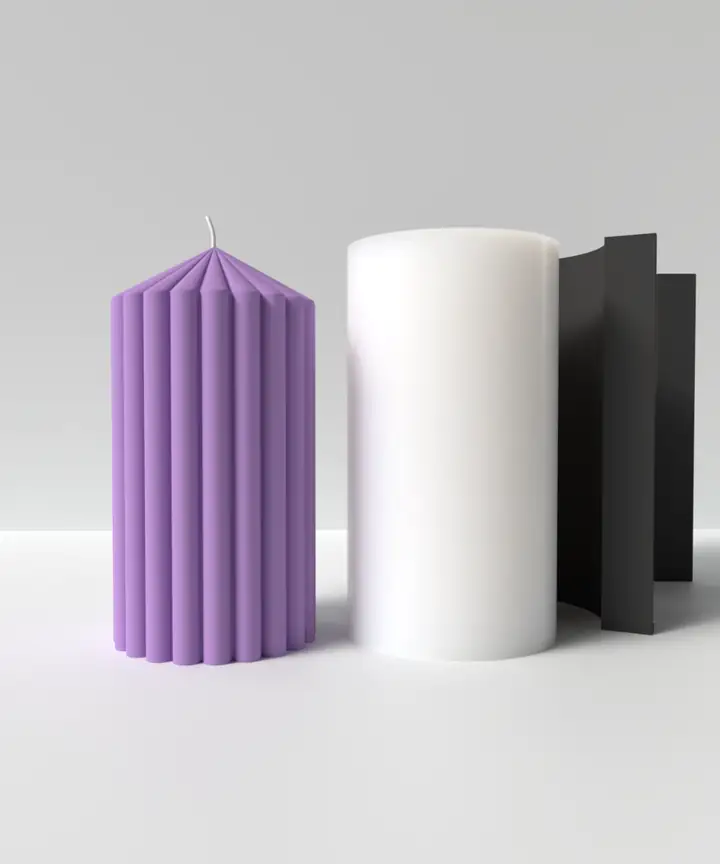 Medium Pillar Candle MoldView
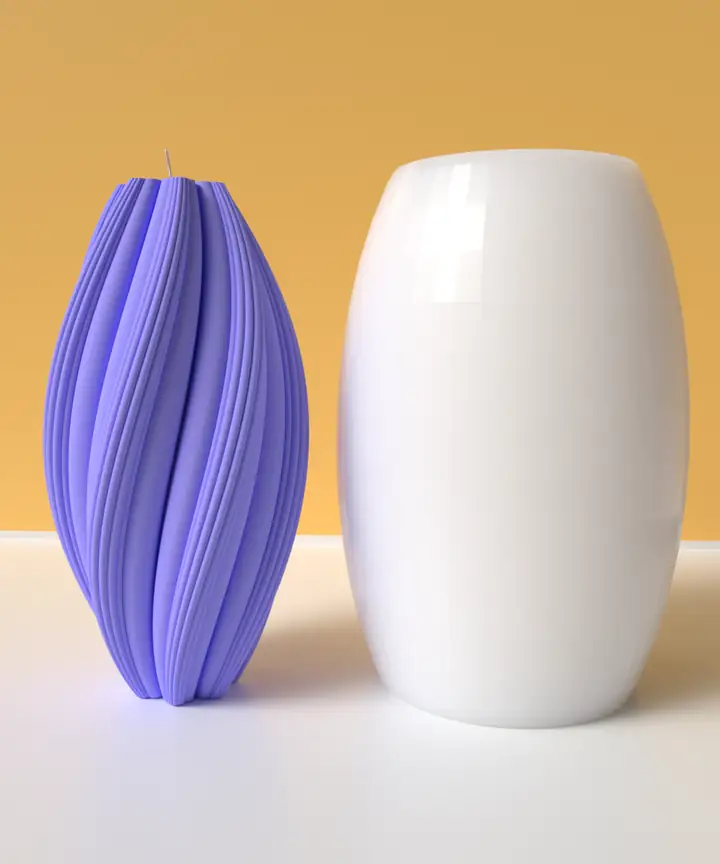 Large Spiral Candle MoldView
 Venus Candle MoldView
How to get candles out of polycarbonate and rigid molds
A silicone mold flexes; it peels off the candle. Rigid molds don't flex, so the candle only slides out once it has shrunk and pulled away from the wall as it cools. That's why patience matters even more with a rigid mold.
How do you get a candle out of a polycarbonate mold?
We don't sell polycarbonate molds; this section is for information only. Polycarbonate gives glossy pillar candles with sharp edges and lasts a long time, but because it's rigid, it may need a mold release spray. Once the candle has fully cooled, turn the mold upside down and let the candle slide out under its own weight; use the wick only for light support. If it's stuck, leave the mold in the fridge for a short time.
Glass and metal molds
The logic is the same for glass and metal molds: full cooling, turning upside down and, if needed, a short time in the fridge. Washing metal molds with soapy water can leave rust or dark marks on the base of the candle. Silicone flexes to release, comes in slit options and allows undercut figures, making it the easiest choice for beginners: candle molds.
After demolding: wick, curing and mold care
Leave 0.5 cm on top and trim it flush on the base. If the candle doesn't stand straight, check the base surface; if the second pour overflowed, the level is off.
Wait at least 24 hours before burning. In scented soy candles, the scent becomes stronger over a few days.
Wipe off residue with a paper towel and wash with lukewarm water, a little dish soap and a soft sponge. Don't use a dishwasher, scouring pads or solvents.
Dry the mold thoroughly and store it flat, without stacking, on a cool shelf out of the sun.
All the cleaning and storage steps are in our mold use & care guide. You can find how much wax a mold holds with the silicone mold candle calculator.
Frequently asked questions
When can you take a candle out of the mold?
When the outside of the mold has come down to room temperature, the base of the candle doesn't take a mark when pressed with a fingernail, and the second pour has fully hardened too. With Pillar Soy Wax this usually takes 3–5 hours.
How long to leave a candle in the mold before removing it?
With Pillar Soy Wax, usually after 3–5 hours; a 47 g mini bubble cools much faster than a 557 g spiral candle. For thick candles, the second pour is made 1–2 hours after the first pour or once the candle has fully cooled; only after that does the candle come out. Don't leave the candle in the mold for days.
Why does a candle break when you take it out of the mold?
The most common causes are demolding the candle while it's still warm inside, using a soft wax made for containers, cooling the candle quickly in the freezer, and pulling the candle out of the mold. Peel the mold off the candle instead.
My candle is stuck in the mold. What should I do?
First wait a little longer, then flex the mold opening to let air in. If that doesn't work, leave the mold in the fridge for about 5 minutes. If it happens with every pour, switch the wax to Pillar Soy Wax or paraffin with 10% stearic acid.
Should you put a candle in the freezer to get it out of the mold?
No. Sudden cooling can crack the candle; plant-based waxes are especially sensitive to this. A short wait in the fridge is enough for a stuck candle.
How do you get a candle out of a polycarbonate mold?
Polycarbonate doesn't flex; the candle slides out once it shrinks slightly and pulls away from the mold wall as it cools. When the candle has fully cooled, turn the mold upside down and use the wick for light support; if it's stuck, a short wait in the fridge helps.
Can you burn a candle right after demolding?
As our product pages say, wait at least 24 hours before burning. For scented soy candles, a longer cure gives a better scent.
For candles that come out of the mold flawless
Silicone candle molds, Pillar Soy Wax, stearic acid, wicks and fragrance oils: all in one order, shipped in 1–3 business days.