Can You Plant in Concrete Pots? Drainage, Water and Sealers
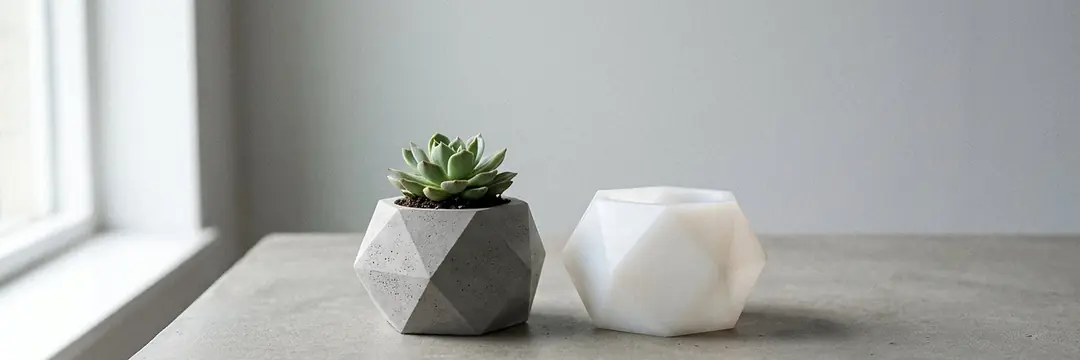
You can plant in concrete pots when the material is suitable, curing is complete and drainage is provided; use unverified castings as decorative outer pots with draining inner pots. Quikrete’s 3–4 days of moist curing applies only to its planter method. Follow your concrete’s instructions; stone powder and plaster are different materials.
In short
- Hardening does not make a porous casting waterproof.
- Water an inner pot separately and return it after draining.
- Gravel cannot replace a drainage hole or an open water outlet.
- Check curing and coating wait times separately.
- Choosing succulents or artificial flowers does not change material suitability.
Can you plant in concrete pots, and which material suits?
Yes, a properly prepared concrete pot can hold live plants, but not every concrete-looking object is the same material. Stone powder and plaster may look alike. Identify the casting material and its technical instructions first. If uncertain, use a separate inner pot to keep water away from the decorative body instead of filling it directly with soil.
| Material | Live plant | Succulent | Artificial flower |
|---|---|---|---|
| Concrete / cement-based mortar | Assess curing, drainage and coating suitability | Same preparation; less watering does not remove the need for an outlet | Can be used as dry decor |
| Commercial stone powder | Know the formula and water resistance; prefer an inner pot | Use an inner pot and prevent standing water | Avoid continuous wetting |
| Plaster | Do not assume direct wet use is suitable; use an inner vessel | Keep watering water away from plaster | Dry use is a more suitable starting point |
Succulents do not change a pot’s technical properties. Water needs vary by species, but accumulated water still needs managing. This is not a plant-care calendar; it plans water contact with decorative castings. Compare materials in our stone powder and plaster guide.
Do concrete and stone powder pots let water through?
Concrete is porous and may absorb water or show damp marks. A hard-looking pot can still have hairline cracks in its base or walls. Paint may hide water marks but does not prove waterproofing. Conduct the first watering where you can control water, rather than on valuable wooden furniture.
A stone powder’s name alone cannot establish water resistance. Commercial blends may use different binders. Do not apply concrete strength values to plaster or stone powder. If the manufacturer gives no water-contact suitability, varnish does not supply that missing information.
Keeping the plant in a drained inner pot and removing it for watering reduces constant water contact with the casting. Empty any water collected in the outer pot; two vessels do not remove the need to check.
How should you assess curing and washing before watering?
Curing develops strength; it is different from a surface looking dry. Quikrete’s planter project gives 3–4 days of moist curing before use. This is not a universal planting schedule for decorative mortars. Fast-setting products, standard concrete and plaster need their own instructions; follow your bag first.
Coatings have separate wait conditions. Sources specify full curing, about 28 days, for some penetrating silane/siloxane systems. Other coatings have different application times. Unmolding day is not automatically coating or planting day; both material and coating conditions must be met.
Craft planter guides note that new cement may be alkaline and release lime into soil. They suggest washing for several days or changing water daily, but give no validated pH threshold for every mortar and plant. We therefore claim no exact pH, neutralization date or universal plant suitability. Where uncertain, limit direct contact with an inner pot.
Can gravel replace a drainage hole in concrete pots?
| Option | What it provides | What it does not provide |
|---|---|---|
| Inner pot with drainage holes | Draining excess water separately and inspecting the vessel | Does not automatically remove water left in the outer pot |
| Drainage hole in the body | An outlet if made appropriately | Does not replace curing, material strength or coating |
| Gravel in a pot without holes | Creates a separate layer inside | Does not create a drainage path outside |
Plan a drainage hole for the model and material. Sources mention drilling after curing, but random drilling into thin, brittle objects can crack them. If unfamiliar with the equipment or method, use a ready-drained inner pot. This article does not teach silicone mold making or modification.
Gravel in a hole-free vessel still leaves no route for water to escape. Do not call drainage solved without checking excess water. A removable inner pot lets you inspect underneath after watering. Avoid a tight fit that puts stress on thin decorative edges when removed.
Does varnish waterproof a concrete pot?
Varnish or protective coating may reduce staining and absorption, but not every product waterproofs. For interior contact with soil and irrigation water, that use must be explicitly supported. Do not present a general decorative varnish as a technical waterproofing system for constant wetness.
Coats, dilution and drying time depend on the selected sealer; do not copy another product’s ratios.
Early coating can trap moisture and cause whitening under the film. Check that the surface meets coating conditions first. Cage Art Studio offers no concrete, stone powder or varnish for sale here; browse molds and casting guides. Return to making concrete pots for preparation.
How do you prepare a decorative pot for live plants?
- 1
Identify the casting material
Clean the mold with lukewarm water and a soft cloth, and store it only once it is completely dry. Confirm whether the pot is concrete, stone powder or plaster. If unknown, do not assume water resistance; choose a decorative outer vessel with a separate inner pot.
- 2
Complete curing and drying instructions
Follow the mortar or casting system’s instructions. Strength sufficient for unmolding does not mean readiness for planting or coating. Check the coating’s wait conditions separately.
- 3
Check surface and vessel
Resolve cracks, loose pieces, dust and residue before use. Assess new concrete’s washing needs with material and plant suitability; do not impose one wait time on every pot.
- 4
Fit a drained inner pot
Choose a nursery pot with drainage holes that fits and removes easily. Do not wedge it in; leave access for removal and water checks.
- 5
Water separately
Remove the inner pot, water according to the plant’s needs and let excess drain. Empty collected water from the decorative vessel; do not leave the inner pot standing in it.
- 6
Observe initial use
Check the exterior, base and furniture contact area for damp marks. Use suitable base protection; if the coating deteriorates or cracks appear, stop water contact and reassess.
Do not confuse listed exterior dimensions with space for an inner pot. K1’s 6.8 cm height and 12 cm diameter, and K3’s 6.8 cm height and 11.5 cm diameter describe the cast item. They do not establish the exact inner diameter or root volume. Measure usable space before choosing an inner pot.
Can the pot be used outdoors and in winter?
Outdoor rain, prolonged wetness and freezing need separate assessment. A concrete appearance or one varnish coat does not guarantee winter durability.
If outdoor and frost suitability is unknown, keep the pot as sheltered, dry decor. Do not hide growing cracks or flaking with fresh paint alone. Read why stone powder cracks for similar symptoms and what to cast in silicone molds for compatibility.
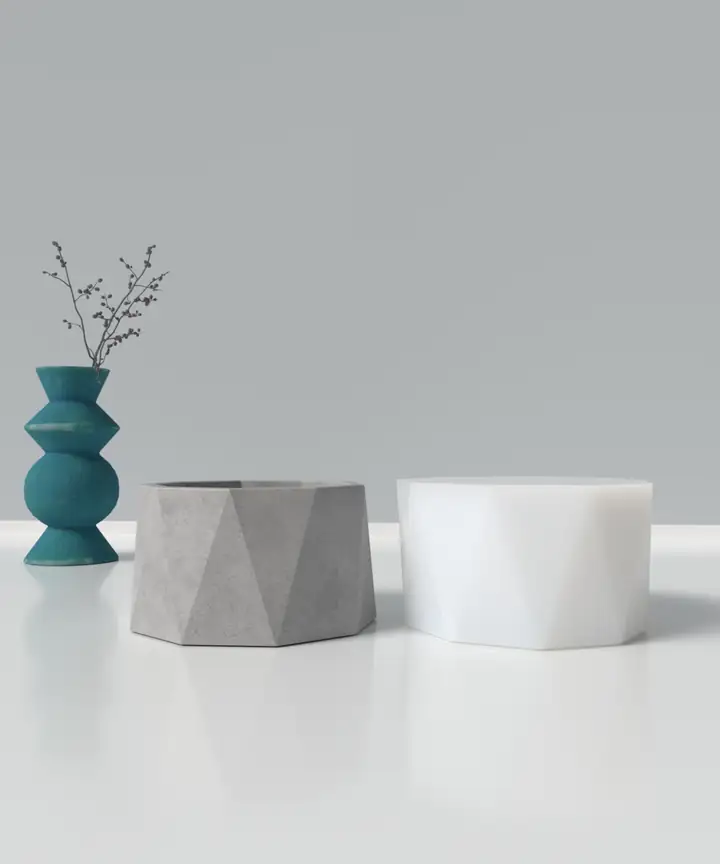 Concrete Planter Mold - K1View
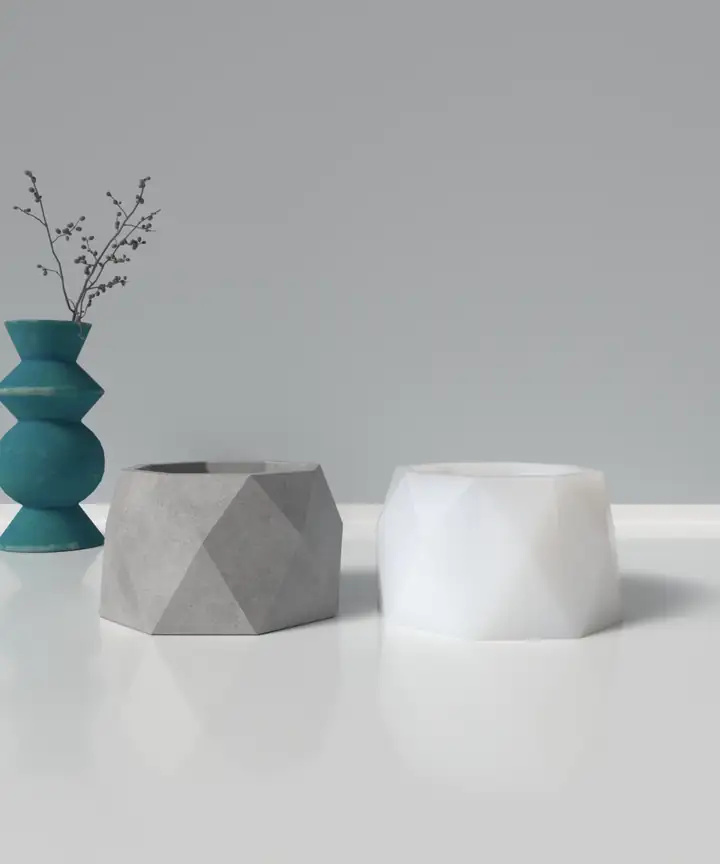 Concrete Planter Mold K3View
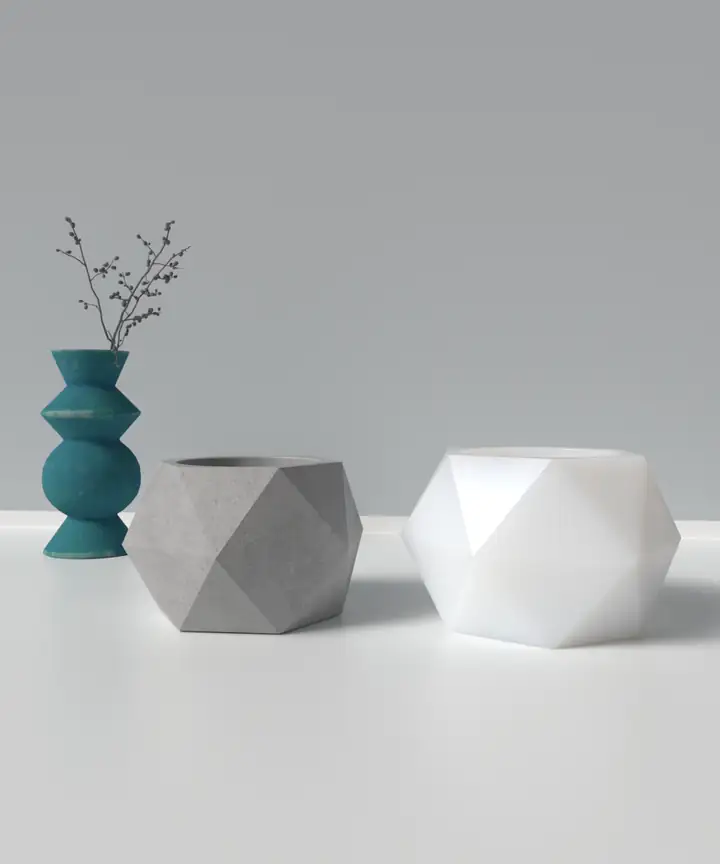 Geometric Concrete Planter MoldView
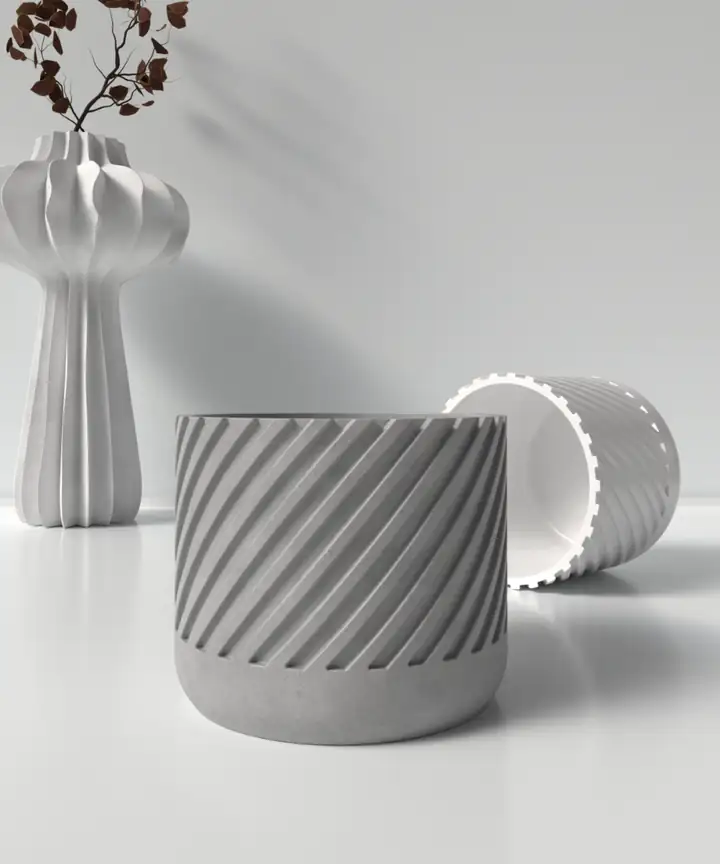 Large Concrete Planter Mold K8View
What are common questions about flowers in concrete pots?
Can you plant directly in concrete pots?
Consider it with suitable material, complete curing, drainage and a suitable coating if needed. For decorative castings of uncertain material, a drained inner pot gives more control than direct soil contact.
Can plants go in stone powder pots?
Stone powder is a commercial name; formulas differ in water resistance. Without manufacturer confirmation for constant water and soil contact, use an inner pot or artificial flowers instead of direct planting.
Does concrete let water through?
Porous concrete may absorb water; density, cracks and coating affect results. Hardening or painting alone does not prove waterproofing; observe initial use.
Should you add gravel to a pot without drainage holes?
Gravel creates no outlet. Remove a drained inner pot for watering, return it after draining and empty water collected in the decorative outer vessel.
Can plaster pots hold artificial flowers?
Yes, as dry decor; this differs from live plants needing water. Follow material and coating instructions and do not treat the pot as a water-filled vase.
Choose materials that suit your project
Choose molds, wax and accessories for your intended use, and record the first sample’s results as you go.